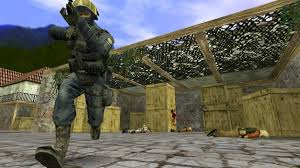

Few titles in the history of electronic entertainment have managed to capture the collective imagination of gamers quite like CS 1.6. What began as a collaborative effort between Minh ‘Gooseman’ Le and Jess Cliffe has evolved into a global phenomenon that serves as the foundation for the entire tactical shooter genre. The game’s enduring appeal lies in its perfect balance between accessibility and a high skill ceiling, allowing players from all walks of life to engage in high-stakes digital combat that rewards strategy and teamwork above all else.
In the modern era of gaming, where software is often bloated with intrusive microtransactions and heavy launchers, many enthusiasts yearn for a simpler time. This has led to a massive resurgence in players looking to download CS 1.6 Clean, seeking a version of the game that remains faithful to the original 1999 vision. By stripping away the modern distractions, players can focus on the core elements: crosshair placement, utility usage, and the adrenaline-pumping tension of a 1v1 clutch situation. This ‘clean’ approach ensures that performance remains consistent, providing a level playing field where victory is determined by merit alone.
The Philosophy of Tactical Realism
Counter-Strike’s brilliance is rooted in its philosophy of ‘tactical realism.’ Unlike its contemporaries that featured health kits and power-ups, CS introduced a system where every point of damage mattered. The inclusion of armor and helmets became a crucial economic decision, while the recoil patterns of the weaponry demanded hundreds of hours of practice to master. This realism extended to the audio design; the sound of a footstep on metal or the distinct click of an empty magazine could provide vital information, turning the game into a sensory experience where awareness was just as important as aim.
Map Design: The Architecture of Competition
The architecture of Counter-Strike maps like de_dust2, de_inferno, and de_train is legendary. These maps are not merely environments; they are carefully balanced puzzles. A few seconds’ difference in the time it takes for a Counter-Terrorist to reach a ‘choke point’ compared to a Terrorist can define the entire meta of a map. Designers had to account for sightlines, ‘wall-bangable’ surfaces, and verticality. This meticulous attention to detail is why certain maps have remained in competitive rotations for over two decades with only minor visual overhauls. They represent the peak of competitive level design.
The Social Fabric: LAN Cafes and Online Communities
Before the era of high-speed home internet, Counter-Strike was the king of the LAN cafe. In cities across the globe, from Seoul to Stockholm, smoke-filled rooms were packed with teenagers shouting callouts and celebrating victories. This localized competitive scene birthed the first professional organizations. The community aspect of CS is unique; it fostered a ‘modding’ culture that produced iconic game modes like Surf, Kreedz (KZ), and Zombie Mod. These community-driven creations expanded the game’s lifespan indefinitely, offering something for everyone, whether they wanted to compete at the highest level or just relax and master movement mechanics.
The Economics of War
The ‘Buy Menu’ is perhaps the most influential mechanic Counter-Strike introduced to the FPS genre. Managing a team’s economy across 30 rounds is a game within a game. Understanding when to ‘save’ (not buying weapons to accumulate wealth) and when to ‘force buy’ (spending remaining funds on low-tier gear in hopes of an upset) adds a psychological layer to matches. Professional teams often employ coaches specifically to manage these strategic nuances, proving that Counter-Strike is as much a test of intellect and fiscal management as it is a test of reflexes.
Psychology and the Mental Game
High-level Counter-Strike is a psychological battleground. The concept of ‘clutching’—winning a round when you are the last person alive on your team—requires a level of mental fortitude that few other games demand. Players must manage their heart rates, predict enemy movements based on limited information, and maintain focus under extreme pressure. This mental rigour is why the game has such a dedicated following in the world of sports psychology. The ‘flow state’ achieved during a perfect round of CS is a feeling many players chase for years, contributing to the game’s addictive and rewarding nature.
Legacy and the Transition to Counter-Strike 2
As we move into the era of Counter-Strike 2, the franchise continues to set benchmarks for the industry. The transition to the Source 2 engine brought volumetric smoke and improved sub-tick networking, but the heart of the game remains rooted in the principles established in the late 90s. The legacy of CS is one of consistency. While other franchises reinvent themselves every year with mixed results, Counter-Strike has stayed true to its identity. It remains the ultimate test of skill, a digital sport that has outlived its rivals and continues to thrive as the world’s premier tactical shooter.