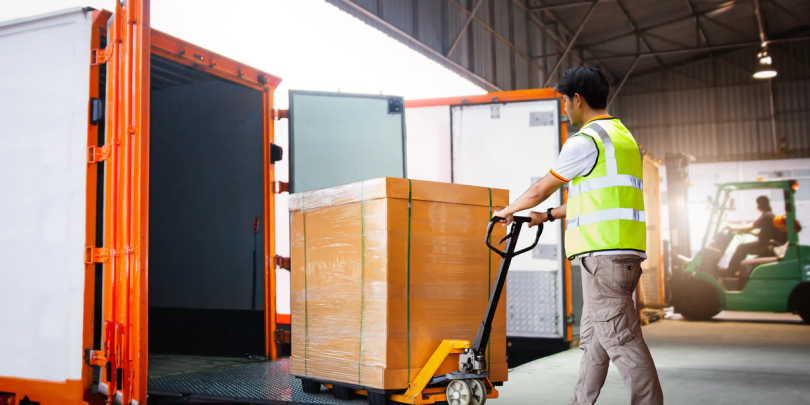

The pallet jack is one of the most widely used pieces of material handling equipment in warehouses, retail backrooms, and distribution centres. Compact and operator powered, it moves palletized loads across short distances where a forklift would be excessive. Understanding how a pallet jack works, and how to operate one safely, helps a facility move goods efficiently while protecting both staff and stock.
How a Manual Pallet Jack Works
A manual pallet jack, sometimes called a hand pallet truck, uses a hydraulic pump connected to the steering handle. Pumping the handle raises the forks beneath a loaded pallet, and a release lever lowers them. Because the lifting action is hydraulic, an operator can raise several thousand pounds with modest effort. The forks slide into the openings of a standard pallet, lift it clear of the floor, and roll it on load wheels to its destination.
Steering, Maneuverability, and Narrow Aisles
Maneuverability matters most in tight spaces. A unit with a wide steering arc can turn a load within a narrow aisle, which is valuable where storage density is high. Narrow chassis models are built to pass through standard doorways and between closely spaced racking, allowing an operation to use floor space that a larger truck cannot reach.
Built-in Scales and Weighing Accuracy
Some pallet trucks include an integrated weighing scale. This feature lets an operator weigh a load at the point of pickup, removing a separate trip to a floor scale. Built-in weighing supports shipping accuracy, inventory control, and freight cost verification. For facilities that ship or bill by weight, an on-board scale reduces handling steps and the chance of error.
Safe Operation and Maintenance
Safe use begins with respecting the rated capacity printed on the unit. Operators should centre the load, pull rather than push where possible for better control, and keep their feet clear of the wheels. Routine checks of the hydraulic seals, load wheels, and fork condition keep a pallet jack reliable. Worn wheels or a leaking pump reduce both safety and performance.
Choosing the Right Unit
Selecting a pallet jack means matching capacity, fork length, and chassis width to the pallets and aisles in use. Buyers should also weigh added features, such as an integrated scale, against the tasks the equipment will perform. A well matched unit lowers labour strain and supports steady, predictable throughput.
The manual pallet jack remains a foundation of efficient material handling. Knowing its mechanics, weighing capability, and safe operation allows a facility to select and use the right equipment with confidence.