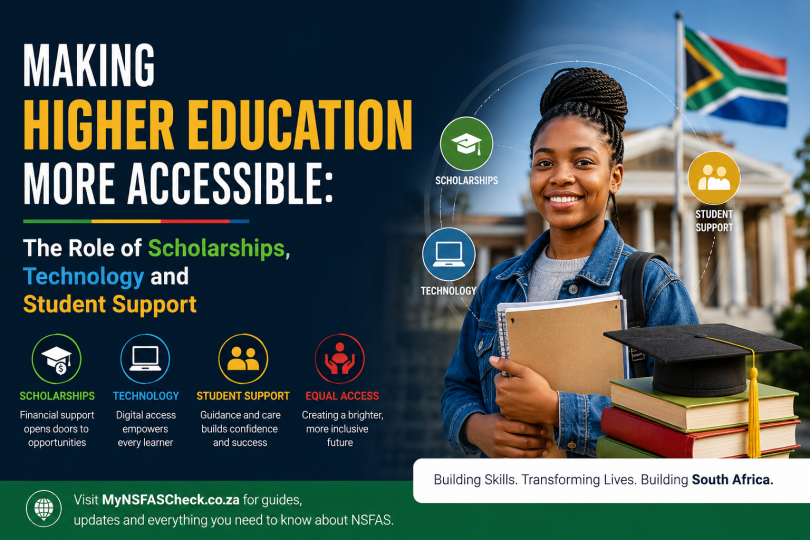

Higher education can open doors to better career opportunities, higher earning potential and personal growth. Yet for millions of students, entering and completing university or college remains difficult because of financial pressures, limited access to technology and a lack of adequate support.
Making higher education more accessible therefore requires more than simply increasing the number of available places. Students also need financial assistance, affordable learning resources, reliable technology and support systems that help them remain on track throughout their studies.
South Africa provides an important example of how these different elements can work together to improve access to higher education.
Financial Barriers Remain a Major Challenge
The cost of higher education extends far beyond tuition fees. Students may need to pay for accommodation, transportation, textbooks, internet access, food, devices and other everyday expenses.
For students from low-income households, these costs can become a significant barrier even after they secure admission to an institution.
Scholarships and bursaries can help bridge this gap. In South Africa, the National Student Financial Aid Scheme (NSFAS) plays an important role in providing financial support to eligible students attending public universities and TVET colleges. According to NSFAS, eligible funding can include registration and tuition costs as well as approved allowances for areas such as learning materials, living expenses, personal care, transport or accommodation.
This illustrates an important point: making education accessible is not only about paying tuition. Students need support for the wider costs associated with participating successfully in higher education.
Scholarships Can Turn Admission Into Opportunity
Scholarships and bursaries can make a significant difference for students who might otherwise be unable to continue their education.
However, students often face difficulties finding suitable funding opportunities. Some scholarships are limited to particular fields of study, institutions, academic achievements or financial circumstances.
Educational institutions and student-support organisations can help by making information about funding opportunities easier to find and understand. Students should also learn about eligibility requirements, application deadlines and the documentation they may need before submitting an application.
In South Africa, students seeking NSFAS funding can use the official application process and monitor their funding information through the myNSFAS platform. The South African government also encourages applicants to check their application status through the NSFAS portal.
For students looking for practical information about NSFAS applications, funding statuses, allowances and related processes, resources such as Nsfas Status Check can provide additional guidance alongside official sources.
Technology Is Becoming Essential to Education
Technology has changed how students access lectures, research materials, assignments and academic support. Online learning platforms, digital libraries and educational applications can allow students to learn beyond the traditional classroom.
But technology can also create another form of inequality.
A student who has a reliable laptop, high-speed internet and a quiet place to study may have a very different educational experience from someone relying on a mobile phone and limited mobile data.
This is why digital accessibility should be considered an important part of higher-education policy.
Universities and colleges can help by providing computer laboratories, affordable internet access, digital learning resources and device-support programmes. Students can also benefit from open educational resources that reduce dependence on expensive textbooks.
South Africa’s student-financial-aid system already recognises that educational costs can include learning materials and other study-related needs. NSFAS funding information, for example, includes learning materials among the approved areas of support for eligible students.
Student Support Should Continue After Admission
Getting accepted into university is only the beginning.
Students can face academic, financial, technological and personal challenges throughout their studies. Without appropriate support, these challenges can contribute to poor academic performance or students leaving their programmes before graduation.
Universities can improve student outcomes by providing accessible academic advising, tutoring, counselling, career guidance and financial-aid support programs.
Digital support can complement these services. Online portals can help students access important information, submit documents, monitor applications and communicate with institutions without having to visit an administrative office for every question.
For example, NSFAS has increasingly incorporated digital systems into its student-funding processes. Its 2025–26 strategic plan describes digital infrastructure, data partnerships and technology-enabled payment systems as part of efforts to provide more student-centred services.
TVET Colleges Also Have an Important Role
Accessibility should not be viewed exclusively through the university system.
Technical and Vocational Education and Training (TVET) colleges provide alternative pathways into further education and skills development. For students interested in practical and career-oriented programmes, TVET education can offer an important route into employment and further study.
South Africa’s NSFAS system supports eligible students at both public universities and public TVET colleges.
Providing clear information about these options is therefore essential. Students should understand that higher education can take different forms and that choosing a TVET college rather than a traditional university can be a strategic decision based on their career objectives.
Building a More Accessible Higher-Education System
A genuinely accessible higher-education system requires several pieces to work together.
Financial support can reduce the burden of tuition and essential study-related expenses.
Technology can expand access to educational resources and make administrative processes easier.
Academic and personal support can help students overcome challenges after they enrol.
Clear information enables students to understand their options and make informed decisions.
Alternative education pathways, including TVET colleges, can provide opportunities for students whose goals may not align with a traditional university degree.
No single solution can remove every barrier. Instead, governments, educational institutions, scholarship providers, technology organisations and student-support platforms all have a role to play.
The Future of Accessible Higher Education
South Africa’s experience demonstrates why access to higher education should be viewed as a complete journey rather than a single admission decision. A student may need financial assistance to enrol, technology to participate in learning, accommodation to remain near campus and reliable support to complete their qualification.
Organisations such as NSFAS are an important part of this ecosystem, while digital platforms and educational information resources can help students navigate complicated processes.
For students, the most important step is to research available opportunities early, understand the requirements and keep track of application and funding information throughout the academic journey.
Ultimately, making higher education more accessible means giving students more than a place in a classroom. It means giving them the financial resources, technology, information and support they need to succeed once they get there.