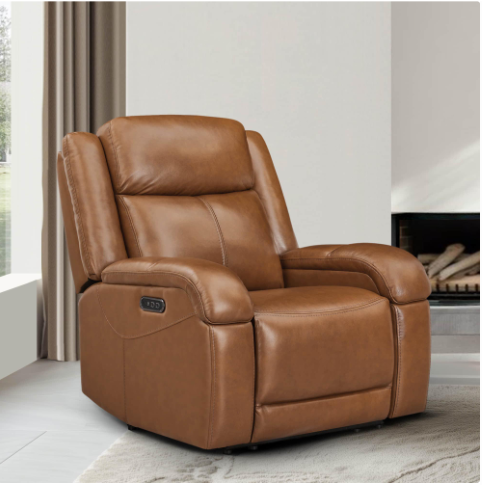

Few pieces of furniture carry as much baggage as the recliner. It is the chair people picture in a basement den, next to a lamp and a television remote, and for years that picture was accurate. Then apartments shrank, open-plan living became normal, and the chair had to justify itself against a sofa, a dining setup, and a home office that all wanted the same square footage. The question worth asking now is not whether a recliner is comfortable, because it usually is, but whether it earns the corner it occupies.
The answer depends on motion. A recliner chair that only leans back is a one-purpose seat. One that reclines, swivels, and glides serves several purposes in the same footprint, which changes the calculation entirely. This article looks at where that flexibility pays off, when it does not, and how to judge a chair in the store without being distracted by the fabric.
The Case for a Chair That Does More Than Lean Back
The first thing a recliner must do is support a body for more than a few minutes. That sounds obvious, yet many models are tuned for the showroom glance rather than the hour-long sit: soft cushions that collapse, backs that angle so far the head is unsupported, armrests too low to rest an elbow on. Before comparing motion features, test the static support. Sit upright, then lean back without the footrest, and notice whether your lower back stays in contact with the seat back. If there is a gap you could slide a hand into, the chair will leave your back aching after a long evening.
A swivel base lets the seat turn toward whatever is happening in the room: the television on one wall, the conversation on another, the window behind you. In an open-plan space, that rotation replaces the need to angle the chair before guests arrive. A gliding or rocking motion adds a second behavior that matters more than it sounds, because small rhythmic movement helps people settle. Parents use it instinctively in nurseries, and readers tend to rock without noticing.
Where the Extra Motion Earns Its Keep
The strongest case for a swivel recliner is a room with more than one focal point. If your living area combines a television wall, a kitchen island, and a reading corner, a fixed chair forces you to choose which one it faces permanently. A rotating seat lets the same chair join all three. The same logic applies to a home office that doubles as a lounge: turn the chair toward the desk during the day and toward the window in the evening, and you have avoided buying two pieces of furniture for one room.
Gliding matters most in households with infants and young children. The gentle forward-back motion is calming in a way that a static chair cannot match, and it does the work that a separate nursery rocker would otherwise do. If the chair is destined for a nursery that will later become a guest room, a glide-and-swivel model survives the transition better than a dedicated rocking chair.
When Simplicity Wins
One caution about swivels: they are less stable than a fixed base when someone pushes down on an arm to stand. If the chair will be used by someone with balance difficulties, a four-leg or platform base is the safer choice, with a swivel only if it locks. Comfort and safety are the same conversation in this category, and a chair that feels unsteady will simply not be used.
Not every room benefits from motion. A recliner placed against a wall in a formal sitting room, used mainly for reading and conversation, does not need to rotate, and paying for a swivel mechanism adds weight and cost without adding daily value. The honest test is to count how many directions you would realistically turn. If the answer is one, a straightforward recliner is the better purchase, and you can spend the difference on a better cushion or a headrest that actually adjusts.
Reading the Room Before Reading the Spec Sheet
Most recliner disappointments begin with measurements that were never taken. Before you shop, mark the intended footprint with painter’s tape and walk around it for a day. Pay attention to the clearance behind the chair and to the arc of the footrest when it extends. A chair that fits the wall but blocks the path to the kitchen will annoy you every evening, no matter how good the upholstery looks.
The Measurements That Actually Matter
Three figures decide whether a chair works: the width across the arms, the depth when fully reclined, and the distance from the floor to the seat. The first tells you whether it squeezes between a sofa and a doorway. The second tells you how much open floor the chair needs in front of it. The third tells you whether your feet will reach the floor when the chair is upright. Write those numbers down and compare them to your tape outline rather than to the room’s total dimensions, because empty floor is rarely as empty as it looks once a side table and a lamp join the arrangement.
Fabric, Frame, and the Sitting Test
Ask, too, who will move the chair. A recliner is heavy, and one that has to be dragged across a rug to face the window will stay where it was first placed. If you expect to reposition the chair, look for a swivel or a glider with a smooth base, or fit protective glides so the chair can be pushed rather than lifted.
Ask what the frame is made of. Hardwood and engineered hardwood hold screws and staples far better than softwood, and a chair that creaks within a year usually has a frame problem rather than an upholstery one. On fabric, think about the room rather than the catalog: a light woven textile in a sunny room will fade, and a smooth leather in a cold room will feel unwelcoming in winter. Sit for at least ten minutes in the store, with your shoes on, and try to stand up without using the arms. If that motion is difficult now, it will be more difficult later, which is exactly the kind of detail a ninety-second showroom visit misses.
Brands that build for small spaces tend to design around these constraints. CHITA LIVING, for instance, offers recliners with wall-hugging mechanisms and swivel bases aimed at apartments and open-plan homes, where clearance and rotation matter as much as cushioning. It is a useful reminder that the right chair for a compact room is often defined by how it moves, not by how much of the floor it covers.
Living With the Chair After Delivery
Placement is not a one-time decision. A recliner that faces the television on day one may end up facing the window by winter, and a model that swivels makes that change free. Keep the control panel, if there is one, on the side closest to where you sit, and route the cord along the wall rather than across the rug. If the chair has a gliding base, check that the floor beneath it is level; a slight slope will send the seat drifting, which is charming for about a week and irritating afterward.
Consider how the chair will look as the room changes. Furniture outlives paint colors and rug choices, and a chair chosen for a passing trend often looks dated while its mechanism is still perfectly good. A restrained silhouette in a neutral upholstery survives redecorating, and it makes the chair easier to sell or move to another room if your needs shift. The alternative, a strongly styled chair in a bold color, can be delightful in the right space but acts as a commitment to the room’s current scheme. If you are unsure, choose the quieter option and let the room’s other pieces carry the personality.
Maintenance is modest but worth doing. Vacuum the crevices monthly, rotate or flip the cushion if the design allows, and tighten the mechanism bolts once a year. Most squeaks come from a loose bolt rather than a worn part, and a five-minute check with a wrench prevents the kind of noise that makes people stop using a chair altogether.
Choosing a Seat That Adapts to the Room
A recliner still earns its space, but only when it matches the way the room is actually used. Count the directions you would turn, measure the footprint with tape before you shop, and sit long enough to know how the chair feels when you stand up, not just when you sit down. Those three habits prevent most of the regret that follows a furniture delivery.
The chair that works hardest is rarely the biggest or the most padded. It is the one whose motion fits the room: swivel where the room has several focal points, glide where there are children, and plain recline where there is only one good view. Chosen that way, a recliner stops competing with the sofa for floor space and starts doing a job nothing else in the room can do.