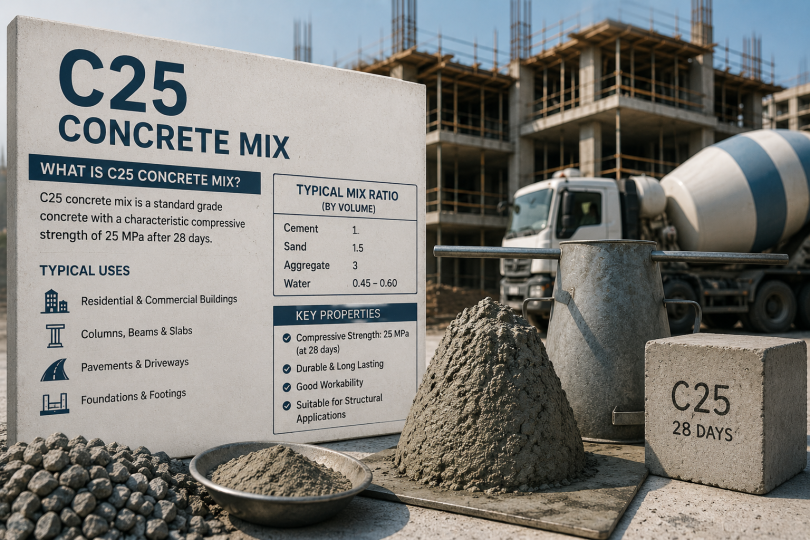

Whether you are watching a new house being built on your street or noticing a fresh driveway being laid next door, concrete is almost certainly involved. But not all concrete is the same. Different types of concrete are designed for different jobs, and choosing the wrong one can cause serious problems down the line.
One of the most commonly used types in the UK is the c25 concrete mix. If you have ever wondered what that label means, why it matters, and where it is used, this guide will explain everything in simple terms.
What Does “C25” Actually Mean?
The “C” in C25 stands for “compressive strength.” Compressive strength is how well a material can resist being squashed or crushed under pressure. The number 25 refers to the minimum force, measured in newtons per square millimetre (N/mm2), that the concrete can handle after it has fully set and cured.
In plain terms, C25 concrete is strong enough to cope with moderate loads and everyday wear. It sits in the middle of the concrete strength scale, making it suitable for a wide range of tasks without being unnecessarily expensive or heavy to work with.
Where Is C25 Concrete Commonly Used?

C25 is one of the most versatile concrete mixes available. It is regularly used in both domestic and commercial settings across the UK.
Common uses include:
- House foundations and ground floors where the structure needs solid, reliable support
- Driveways and pathways that need to handle the weight of vehicles over many years
- Patios and garden structures where weather resistance and durability are important
- Retaining walls that hold back soil or other materials
- Commercial flooring in warehouses, garages, and light industrial spaces
Its balance of strength and workability makes it a popular choice when a project does not require the very heaviest mixes but still needs a dependable result.
How Is C25 Concrete Made?
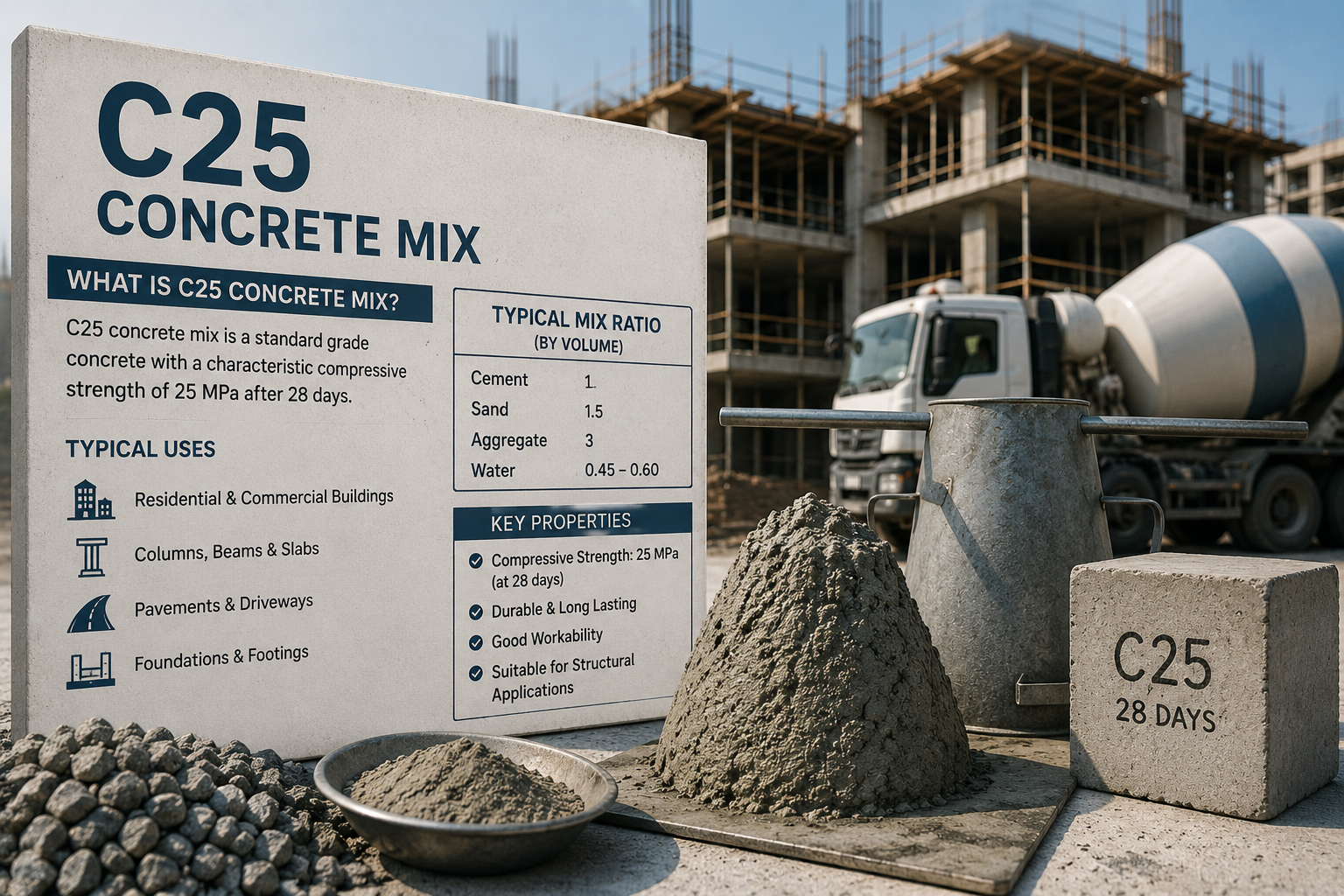
Concrete is made by mixing cement, water, sand, and aggregates (small stones or gravel) in specific ratios. The proportions determine how strong the final product will be once it hardens.
For C25 concrete, the mix is carefully designed so that the finished material achieves the target compressive strength after 28 days of curing. Curing is the process by which concrete gradually hardens and gains strength as the water in the mix reacts chemically with the cement.
Getting the proportions right is important. Too much water, for example, weakens the final product. This is why ready-mix concrete, which is prepared in a controlled environment and delivered to site, tends to produce more consistent and reliable results than mixing on the spot.
Why Does the Right Concrete Mix Matter?
Using the wrong concrete mix for a job can have real consequences. If a mix is too weak for the loads it will face, it may crack, crumble, or fail over time. If it is unnecessarily strong, it may cost more than needed and be harder to pour and work with.
For anyone planning a home improvement project or a commercial build, understanding the basics of concrete grades is a useful starting point. Talking to a supplier about your specific needs will help you choose the right product.
A c25 concrete mix is often the go-to recommendation for projects like driveways, domestic foundations, and general construction work in the UK, because it offers a reliable level of strength without overcomplicating the process.
What Should You Ask a Concrete Supplier?
If you are ordering concrete for a project, it helps to have a few key pieces of information ready:
- What is the concrete being used for? Different applications need different grades.
- How much do you need? Suppliers can help you calculate the volume required based on the dimensions of your project.
- Do you need it delivered the same day? Many ready-mix suppliers offer same-day delivery for urgent jobs.
- What access does the site have? This affects what type of delivery vehicle can be used and whether a concrete pump might be needed.
Being prepared with these details makes the ordering process straightforward and helps ensure the right product arrives on time.
The Bigger Picture
Concrete might not seem like the most exciting topic, but it is fundamental to how buildings, roads, and infrastructure are created all around us. Learning the basics of how it works and why different grades exist is a practical piece of knowledge, whether you are a student studying construction, a homeowner planning a project, or simply curious about the built environment.
Understanding simple concepts like compressive strength and mix grades helps people make better decisions and ask better questions when they need to work with materials like concrete.