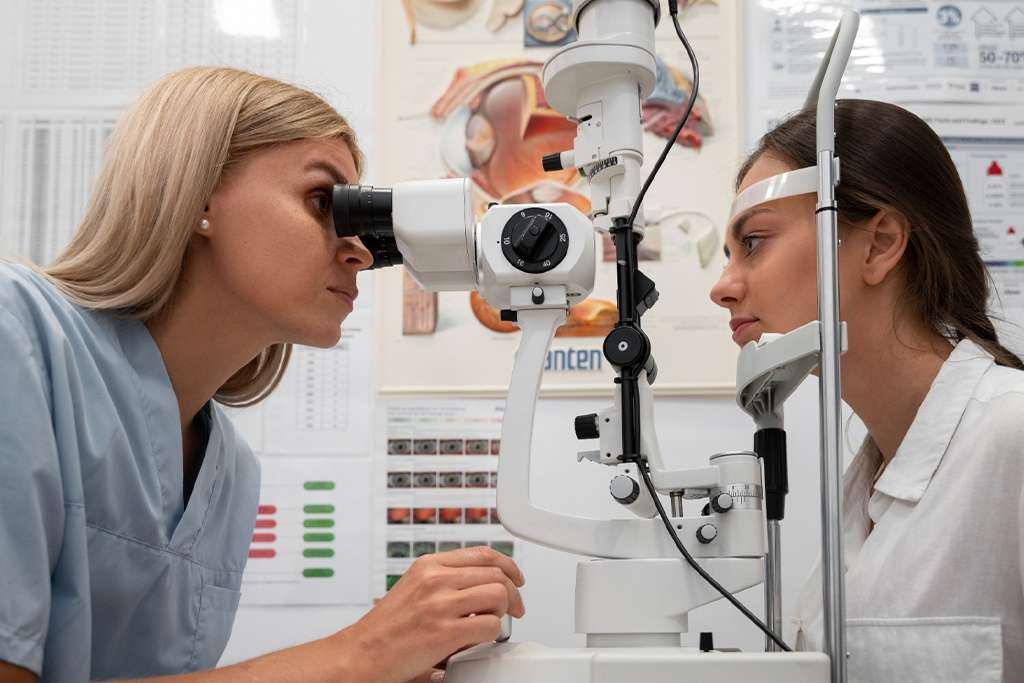
LASIK is a laser vision-correction procedure used to reduce dependence on glasses or contact lenses for suitable patients. However, not everyone with a refractive error is automatically a candidate. A detailed eye examination is essential before surgery to determine whether LASIK is safe and likely to provide a satisfactory result.
Preoperative testing examines more than just how clearly you can read an eye chart. Your ophthalmologist evaluates the cornea, tear film, eye pressure, prescription, pupil response, retina, and overall eye health. These tests help identify conditions that could increase surgical risks or affect the expected outcome.
Why Are Eye Tests Necessary Before LASIK?
LASIK changes the shape of the cornea permanently. Therefore, the surgeon needs accurate information about its thickness, curvature, strength, and shape before deciding whether laser treatment is appropriate.
What Pre-LASIK Testing Can Determine
Preoperative tests help doctors:
- Confirm your current vision prescription
- Check whether your prescription is stable
- Measure corneal thickness
- Examine corneal shape and curvature
- Detect dry-eye problems
- Assess eye pressure
- Check the retina and optic nerve
- Identify conditions that may affect healing
- Calculate the amount of corneal tissue that can safely be reshaped
A comprehensive evaluation helps distinguish patients who may benefit from LASIK from those who may need another vision-correction option.
1. Visual Acuity and Refraction Test
A standard vision test is usually one of the first parts of the assessment. It measures how clearly you can see at different distances and helps establish your current visual prescription.
Why Refraction Matters
During refraction, the eye specialist determines the degree of nearsightedness, farsightedness, or astigmatism. Your prescription may be checked using automated equipment and then refined manually.
The doctor may also compare your current prescription with previous records. A stable prescription is generally important because significant changes can affect the predictability of refractive surgery.
2. Corneal Topography and Tomography
Corneal mapping is among the most important evaluations before LASIK. These tests create detailed measurements or maps of the cornea, showing its shape, curvature, and structural characteristics.
What These Tests Look For
Corneal topography and tomography can help identify unusual patterns that may not be obvious during a routine eye examination. Conditions involving abnormal corneal shape may increase the risk of complications after corneal laser surgery.
The results also help surgeons plan treatment accurately by showing how the cornea is shaped before any tissue is removed.
3. Corneal Thickness Measurement
Corneal thickness, also called pachymetry, is another important part of LASIK evaluation. Because LASIK involves removing a controlled amount of corneal tissue, the surgeon needs to know whether sufficient tissue will remain afterward.
Why Corneal Thickness Is Important
A cornea that is too thin or has other structural abnormalities may make LASIK unsuitable. The surgeon considers thickness together with corneal shape, prescription, and planned treatment rather than using thickness as an isolated measurement.
This assessment supports safer treatment planning and can help identify patients who may be better suited to another refractive procedure.
4. Tear Film and Dry-Eye Evaluation
Dry eye is important to assess before LASIK because laser vision correction can temporarily affect the nerves involved in corneal sensation and tear production. Existing dry-eye symptoms may become more noticeable during the recovery period.
What May Be Checked
Your doctor may evaluate:
- Tear quantity
- Tear stability
- Eye-surface condition
- Symptoms of irritation or burning
- Corneal staining when appropriate
- Eyelid and tear-film health
If significant dryness is identified, treatment may be recommended before surgery. In some patients, improving the ocular surface first can make measurements more reliable and improve postoperative comfort.
5. Eye Pressure Measurement
An eye-pressure test, commonly known as tonometry, measures the pressure inside the eye. Elevated pressure can be associated with glaucoma and other eye conditions that require assessment before elective refractive surgery.
Why Eye Pressure Is Checked
A normal pressure reading does not by itself rule out glaucoma, so the result is considered alongside the appearance of the optic nerve, visual field, medical history, and other findings when necessary.
Identifying an eye condition before LASIK is important because the procedure is elective and should generally be considered only after existing eye problems have been appropriately evaluated.
6. Pupil Size Assessment
Pupil size can be measured under different lighting conditions as part of the preoperative evaluation. This may be particularly relevant when discussing visual symptoms that can occur in low-light environments.
Why Pupil Measurements Matter
Some patients may experience glare, halos, or difficulty with night vision following refractive surgery. Pupil size is only one factor among several that may influence these symptoms.
Your surgeon considers pupil measurements together with the corneal shape, treatment zone, prescription, eye health, and individual visual requirements when planning treatment.
7. Slit-Lamp Examination
A slit-lamp examination allows the ophthalmologist to closely examine the front and other visible structures of the eye using magnification and a focused beam of light.
What the Doctor Examines
The examination may assess the:
- Cornea
- Conjunctiva
- Iris
- Lens
- Eyelids
- Tear film
- Other anterior eye structures
This examination can identify problems such as corneal abnormalities, inflammation, infections, lens changes, or significant ocular-surface disease that may need attention before LASIK.
8. Retina and Optic Nerve Examination
Although LASIK primarily involves the cornea, checking the back of the eye is also important. The retina and optic nerve can have conditions unrelated to the refractive error that still affect overall eye health.
Why a Dilated Examination May Be Recommended
Depending on your history and examination findings, the ophthalmologist may examine the retina after dilating the pupils. This can help identify retinal abnormalities that might otherwise be difficult to see.
People with high levels of nearsightedness may receive particular attention because certain retinal problems can be associated with significant myopia.
9. Wavefront or Advanced Optical Measurements
Some refractive surgery evaluations include measurements of higher-order optical imperfections, sometimes described as aberrations. These measurements provide information beyond the basic glasses prescription.
How They Can Help
Advanced measurements may contribute to customized treatment planning in selected patients. However, not every patient needs every available test, and the exact testing protocol varies between clinics and surgical techniques.
The goal is to collect clinically useful information rather than perform unnecessary testing. Your ophthalmologist determines which measurements are relevant to your eyes.
What Happens During the Complete Evaluation?
A LASIK consultation usually combines several examinations rather than relying on one test. The doctor reviews your eye history, current prescription, previous procedures, medications, general health, and expectations before making a recommendation.
In Mumbai, patients considering LASIK surgery in Mumbai should look for a thorough preoperative assessment that includes appropriate corneal evaluation, ocular-surface examination, prescription measurement, and an overall eye-health check rather than choosing treatment based solely on convenience or cost.
Contact-lens wearers may also be asked to stop wearing lenses for a period before certain measurements because contact lenses can temporarily alter corneal shape. The required period varies depending on lens type and individual circumstances.
What If the Tests Show You Are Not Suitable?
Not being considered suitable for LASIK does not necessarily mean that vision correction is impossible. The reason for exclusion matters. Some issues, such as dry eye or an unstable prescription, may be addressed before reassessment.
Other patients may have corneal characteristics or eye conditions that make LASIK inappropriate. Depending on the situation, an ophthalmologist may discuss alternatives such as other laser techniques, phakic intraocular lenses, or continued use of glasses or contact lenses.
The safest approach is to choose the procedure that fits your eye health rather than trying to meet eligibility criteria for a particular treatment.
Questions to Ask Before LASIK
Before proceeding, patients should feel comfortable asking their ophthalmologist about the results of their tests and what those results mean.
Useful questions include:
- Is my prescription stable?
- Is my corneal thickness suitable?
- Does my corneal mapping show any abnormalities?
- Do I have dry eye?
- Are my retina and optic nerve healthy?
- What risks apply specifically to my eyes?
- Which procedure is most appropriate for me?
- Will I still need glasses after treatment?
- What should I expect during recovery?
Understanding these answers can help you make a well-informed decision.
Conclusion
Pre-LASIK testing is an essential part of determining whether laser vision correction is appropriate. The evaluation usually goes beyond a simple eyesight test and may include refraction, corneal mapping, thickness measurement, tear-film assessment, eye-pressure testing, slit-lamp examination, pupil assessment, and retinal evaluation.
No single test determines eligibility on its own. Your ophthalmologist considers the complete picture, including your eye health, prescription, corneal characteristics, medical history, and expectations. A thorough assessment helps support safer treatment planning and more realistic expectations about the results.
Frequently Asked Questions
1. How many tests are required before LASIK?
The number of tests varies according to the patient’s eyes, medical history, prescription, and surgical technique. A comprehensive evaluation commonly includes vision testing, corneal measurements, eye-surface assessment, pressure measurement, and examination of overall eye health.
2. Does LASIK testing hurt?
Most preoperative LASIK tests are painless and non-invasive. Some examinations may involve eye drops, including numbing or dilating drops. You may experience temporary blurred vision or light sensitivity after dilation, but serious discomfort is uncommon.
3. Can dry eye prevent LASIK surgery?
Significant dry eye may make LASIK unsuitable temporarily or permanently, depending on its severity and cause. Doctors may first recommend treatment to improve the eye surface before reassessing whether laser vision correction is appropriate.
4. Why is corneal thickness important before LASIK?
LASIK reshapes the cornea by removing a controlled amount of tissue. Measuring corneal thickness helps surgeons determine whether enough tissue can safely remain after treatment. Corneal thickness is assessed alongside shape, prescription, and other structural measurements.
5. Can someone fail the LASIK eye tests?
Yes. Some people may not be suitable because of corneal abnormalities, severe dry eye, unstable prescriptions, certain eye diseases, or other risk factors. Your ophthalmologist can explain whether another vision-correction option may be safer.