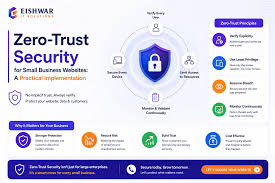

Small and mid-sized businesses have traditionally operated under a security model built on perimeter defense. The assumption was straightforward: keep the bad actors outside the network, and everything inside is safe. That assumption no longer holds. With remote work, cloud applications, and an expanding number of connected devices, the perimeter has effectively dissolved. Zero-trust architecture is the framework that replaces it, and contrary to popular belief, it is not reserved for enterprise organizations with dedicated security teams.
The core principle of zero-trust is “never trust, always verify.” Every user, device, and connection request is treated as potentially compromised until proven otherwise, regardless of whether the request originates inside or outside the network. For SMBs working with Technology Partner Services, this framework is increasingly accessible through managed service providers who can implement the necessary controls without requiring an in-house security department. The model shifts security from a one-time perimeter check to a continuous process of verification.
Getting started with zero-trust does not mean overhauling your entire infrastructure overnight. The most practical approach begins with identity. Multi-factor authentication is the foundational layer, and it should be enabled across every application your team uses, from email to cloud storage to accounting software. Identity verification controls who can access what, and without it, every subsequent zero-trust control is weakened. Most SMBs can deploy MFA within days, and the return on that investment in breach prevention is well-documented.
The next priority is device trust. Zero-trust architecture requires that only verified, managed devices gain access to company resources. An employee logging in from a personal laptop that has not been assessed for security posture represents an unacceptable risk under a zero-trust model. This is where Endpoint Security Solutions become operationally critical. Managed endpoint controls allow your IT provider to enforce configuration standards, push security patches, and monitor devices in real time, ensuring that the devices connecting to your network meet a defined security baseline before access is granted.
Network segmentation is the third pillar SMBs should address. Rather than allowing unrestricted lateral movement once a user is authenticated, zero-trust environments divide the network into smaller zones. If an attacker does compromise one account or device, segmentation limits how far they can move. For many SMBs, micro-segmentation starts with separating operational systems from general office traffic, isolating sensitive data environments, and restricting privileged access to only those users who genuinely require it for their role.
It is worth addressing the concern that zero-trust creates friction for employees. When implementation is thoughtful, the experience does not change significantly for users who are doing legitimate work from known devices. Single sign-on solutions, combined with risk-based conditional access policies, can reduce the number of authentication prompts while maintaining strong verification standards. The key is configuring policies that apply more scrutiny to unusual behavior, such as access attempts from unfamiliar locations or at unusual hours, while keeping routine workflows uninterrupted.
Industries handling sensitive client data have particular urgency here. Law firms, for example, are frequent targets because they hold confidential communications, financial records, and privileged legal documents. Dedicated IT Support for legal practices takes this into account, applying zero-trust principles within a framework that also addresses compliance requirements specific to the legal sector. The combination of regulatory obligation and high-value data makes law firms a clear case study for why zero-trust matters well beyond the enterprise level.
Zero-trust is not a product you purchase and deploy once. It is an ongoing security posture that requires monitoring, policy refinement, and regular review as your business evolves. For SMBs without internal security expertise, a trusted managed service provider handles that continuous operation on your behalf. If your organization is ready to move beyond perimeter-based security, reach out to Titan Technology Partners to learn more about how zero-trust can be implemented practically for your business.