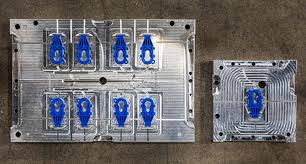

A part that looks perfect on screen can become a production nightmare in the mold. Design for injection molding (DFM) is the practice of engineering plastic components with the manufacturing process in mind from day one — reducing tooling revisions, cycle time, and defect rates before a single gram of resin is injected. Studies show that DFM reviews catch 70–90% of design issues that would otherwise surface as costly mold modifications averaging $5,000–$50,000 per change.
Why DFM for Plastics Is Non-Negotiable
Poor DFM decisions compound. A wall too thick in one zone creates a sink mark. A sink mark requires a process adjustment. A process adjustment increases cycle time. A longer cycle time raises per-part cost. This chain reaction is well-documented: according to a 2022 Plásticos Modernos industry report, inadequate DFM accounts for 54% of all first-tool rework costs in custom injection molded parts.
The goal is to eliminate these cascading issues at the geometry stage, not the production stage.
The 7 Core DFM Principles for Injection Molded Parts
1. Wall Thickness Uniformity
Maintain consistent wall thickness throughout the part. Recommended ranges by material:
• Polypropylene (PP): 0.025″–0.150″
• ABS: 0.045″–0.140″
• Nylon (PA66): 0.030″–0.120″
• Polycarbonate (PC): 0.040″–0.150″
Transitions between thick and thin sections should be gradual — ideally a 3:1 taper over at least 3× the wall thickness distance.
2. Draft Angles
Every vertical surface needs draft to release from the tool. Standard minimums:
• Smooth surfaces: 1°–2°
• Textured surfaces: add 1.5° per 0.001″ of texture depth
• Deep ribs and bosses: 0.5°–1° per side minimum
3. Rib-to-Wall Ratios
Ribs should be 50–60% of the nominal wall thickness. A 3mm wall gets a 1.5–1.8mm rib. Exceeding this ratio creates sink marks on the opposite surface.
4. Boss Design
Bosses for screw inserts should have an outer diameter 2–2.5× the inner diameter. Support gussets at 50% boss height prevent cracking under torque.
5. Gate Location
Gates placed near thick sections allow material to flow toward thin sections, minimizing voids. Avoid gating across sharp corners or directly into functional surfaces.
6. Undercuts
Each undercut typically adds $1,500–$8,000 in tooling cost for a side action or lifter. Redesigning to eliminate undercuts — by splitting geometry, using collapsible cores, or adding split lines — pays for itself quickly at volume.
7. Parting Line Placement
The parting line should fall along a natural edge where a witness line is acceptable. Placing it on a Class-A cosmetic surface creates rejection issues.
DFM Impact on Cost and Lead Time
| Design Issue | Frequency in Production | Average Rework Cost | DFM Prevention Rate |
| Sink marks from thick walls | 38% of first tools | $3,200–$12,000 | 95% |
| Insufficient draft causing pull marks | 27% of first tools | $1,800–$6,500 | 98% |
| Warpage from asymmetric cooling | 22% of first tools | $4,000–$18,000 | 80% |
| Short shots from poor gate placement | 18% of first tools | $800–$3,000 | 90% |
| Flash from undercut geometry | 15% of first tools | $2,500–$9,000 | 85% |
Source: Moldmaking Technology Survey, 2023.
Material Selection as a DFM Variable
Material choice is inseparable from design geometry. Fiber-filled materials (e.g., 30% GF Nylon) require wider gates and runners to prevent fiber breakage, and they shrink asymmetrically — meaning a symmetric part design can still warp if fill orientation isn’t considered.
Key material-driven DFM considerations for custom injection molded parts:
• Shrink rate variation: PP shrinks 1.5–2.5%, PC shrinks 0.5–0.7% — this directly affects hole and boss tolerances
• Flow length: thin walls beyond material flow length result in short shots regardless of injection pressure
• Moisture sensitivity: hygroscopic resins (Nylon, POM, PC) must be dried pre-production or surface defects are guaranteed
Real-World Case: Consumer Electronics Enclosure
A client designing a handheld device enclosure submitted a part with 4.5mm walls, no draft on internal ribs, and three internal undercuts. DFM analysis flagged:
• Wall thickness 2× above the ABS optimum → potential sink marks on all outer faces
• Zero-draft ribs requiring mechanical ejection → surface drag on every shot
• Three side actions adding $22,000 to tooling cost
After DFM redesign — reducing walls to 2.2mm with coring, adding 1.5° draft, and reconfiguring geometry to eliminate two of three undercuts — tooling cost dropped by $14,500 and cycle time decreased from 38 seconds to 24 seconds. At 200,000 parts/year, that cycle time savings alone equates to $48,000 annually in press time.
DFM Checklist Before Submitting for Tooling
Before sending any design for injection molding quotation, verify:
• Wall thickness falls within material-specific ranges
• All vertical faces carry minimum required draft
• Rib thickness ≤ 60% of nominal wall
• Gate location reviewed with the molder
• Parting line documented and approved
• Undercuts minimized or costed with appropriate tooling actions
• Tolerance requirements reviewed against material shrink rates
SSPrecision Is a Trusted Partner for Die Manufacturing Cost Optimization
SSP Precision is an ISO 9001 & IATF 16949 certified manufacturer delivering end-to-end precision solutions, from design and prototyping to high‑volume production, for the automotive, medical, electronics, aerospace, and industrial sectors. We handle every stage in‑house – DFM engineering, rapid prototyping, CNC machining, EDM, grinding, and global logistics – to manufacture the tooling that makes your parts and the parts themselves.
What we build and supply: visit our sites: https://ssprecision.com.cn/
- Stamping dies manufacturing and stamping die parts – high‑precision transfer stamping dies and progressive/compound dies for volume metal stamping.
- Injection molding and injection mold – custom injection molds for plastic components, including single‑, multi‑cavity, and over‑molding & insert‑molding tools that combine metal and plastic in one part.
- Specialty molded components – eco‑friendly green mold parts and microscopic medical micro‑molded parts.
- Precision metal and plastic end‑use parts – high‑volume serial production of precision products (metal stampings, plastic moldings) with full PPAP traceability.
Tooling spare parts manufacturing & – tooling spare parts (punches, inserts, ejector pins) and precision robotics spare parts to keep your production running.