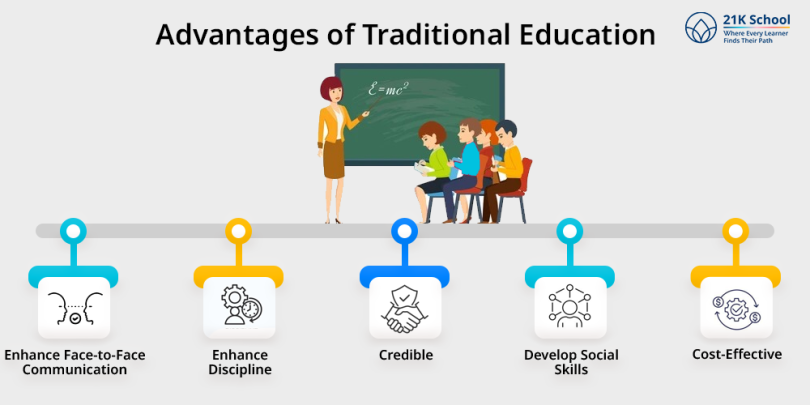

While many believe traditional classroom learning is the best way to measure learning by providing structure and interaction with the teacher and fellow students, in-home learning has its own list of benefits such as customized lesson planning and convenience. However, there is more to measuring learning effectiveness than simple academic gain. The effectiveness of a particular learning method will depend on several factors: how well it meets the particular needs of the learner, how well it can fit into the learner’s busy schedule and how well the method is tailored to the way the learner learns best.
The personalization advantage
Teaching individual students is often a major problem for classroom teachers caught with large classes. However, with home lessons there is no such problem, as there are never any more students than you want to teach at a time.
While working one-on-one with a student, tutors are often able to quickly identify where the student is going wrong and adjust their approach accordingly. This means that as much time as is necessary can be spent addressing a student’s weaker points, and spent quickly on material the student is already familiar with. One-on-one tutoring is very effective and students generally learn at a much faster pace than they would in a group tutoring environment.
However, in a traditional classroom, instruction typically doesn’t allow for more than a few moments of accommodation towards the individual learning needs of students. Visual learners can access additional diagrams and charts, kinesthetic learners engage in hands-on activities and movement, and auditory learners can participate in extended class discussions.
Scheduling flexibility breaks the industrial model
School schedules were often based on the calendar of past industrial or agricultural cycles and don’t fit the lives of most families today, and are not supportive of optimal student learning.
Some students are morning larks, while others are afternoon sun-lovers, or even night owls. Online home study programs accommodate students’ natural patterns of activity.
No need to travel to an expensive music school! Lessons are held in your home as the parent is typically around due to work or other family members. As long as both the student and parent are flexible with their schedules around work, school, other activities etc. the student and parent tend to be more committed and participative because nobody wants to let each other down!
The focus factor
Classroom instruction is often subject to various distractions. For example, there are other students around you, possibly participating in the lesson or just hanging out and talking, as well as other students that may need assistance from you. Interventions such as fire drills and other events that require action of all students and teachers as well as regular passing in the hallway and school announcements can all affect a regularly scheduled schedule and cause unforeseen changes in the way a classroom is run. These changes can easily interfere with a lesson and cause it to receive less than optimal attention and take up less than optimal time to teach. As a result, incorporating technology into a classroom can make instruction more efficient.
The video was recorded in my home when I studied using my usual environment. Recording in my home environment reduced external distractions whilst still demonstrating how and where I can spend time to more in depth study. The video shows my effective learning space, sitting position, lighting conditions and the amount of background noise that I find acceptable for my study routines.
It is important to note that there are some limits to this advantage. Some students actually thrive in the environment and peer interaction of a classroom. As such, home tutoring is best suited for those students who can stay motivated and engaged in their school work without the structure and push of an actual classroom.
What gets lost
In addition to possibly missing out on extracurricular activities commonly offered to children outside of the home such as sports or music lessons, homeschoolers may also miss out on the traditional classroom environment where learning can occur through social interaction and group learning exercises. In a typical classroom, children learn a great deal from one another through their questions, their different perspectives, and their unique approaches to problem solving.
Tutoring sessions can complement a student’s academic work by focusing on their specific learning needs, in an in-home setting with greater intensity than in a group setting. However, these individualized tutoring sessions necessarily lack the benefits of group work, which are an integral component of many students’ academic experiences. This type of learning environment fosters students’ communication skills and affords them the opportunity to reap exposure to different perspectives. Moreover, through group work, students develop crucial social skills, such as negotiation, shared problem solving, and project management that are particularly important for language students and for students who engage in debates. Tutoring sessions can also play a role in class settings, such as through peer review sessions.
The money question
Whereas many forms of education or study help for students might be in the price range for a “middle class” family to pay i.e. programs paid for in part by the public school system like after school or study hall, there are many forms of tutoring that can cost THOUSANDS OF DOLLARS in the first year alone for in home tutoring.
While there is currently significant cost associated with utilizing instructional aids for classroom use due to overcrowding in many public schools, the growth of educational apps and learning platforms is beginning to chip away at this issue.
When each approach dominates
In-home learning is frequently more successful than tutoring for a student who needs extra help in a particular subject, who has a busy schedule or prefers quiet learning environment.
This is especially useful for test preparation, remediation, and/or acceleration for a student above grade level. There are, of course, some children who do extremely well in the traditional schooling model, receiving adequate encouragement and instruction by teachers and academics in a classroom setting with their peer group, as well as the additional resources, quality music programs, sports, clubs, etc. that a public or private school can offer.
Most educational programs incorporate the best of traditional school learning with private home tutoring. In the school setting, students experience a well-rounded academic program and take part in discussions with the teacher and other students. Additional tutoring outside of school is used to assist the student with completing his or her school work and to reinforce review of material, often focusing on a specific academic subject or set of skills. Neither approach is perfectly suited for every family, but both have advantages that make them an effective educational option for many students.