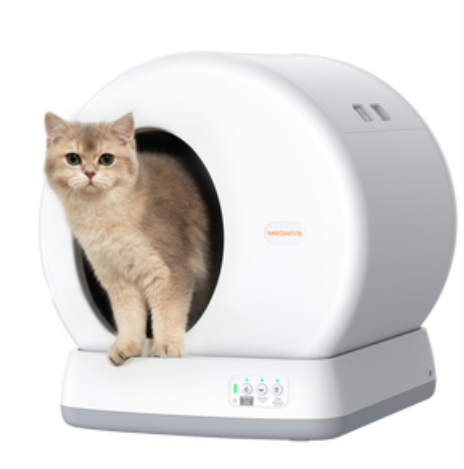

Veterinary clinics see the aftermath of rushed purchases more often than owners expect. A cat with a sore paw from a pinch point, a kitten frightened out of using the box at all, a senior who suddenly stops eliminating because the machine is too loud and too fast. None of these animals arrived with a broken device. They arrived with a device that was never really suited to them. The uncomfortable truth is that a safe self cleaning litter box is not a fixed product category with a universal answer. Safety is a match between a specific machine and a specific cat, and the gap between the two is where most problems begin. This guide approaches the decision the way a careful clinician would: identify where things fail, test before you trust, and keep watching after the purchase.
Where Automatic Boxes Actually Fail
Most incidents do not come from dramatic mechanical failure. They come from small mismatches that compound over weeks of daily use. A sensor that reads a lightweight cat as an empty box, a delay tuned for a fast adult applied to a slow senior, a shell opening that fits a full-grown cat but not a growing one. Understanding these failure modes turns a vague worry into a concrete checklist.
Sensor Blind Spots
Weight plates and infrared beams are reliable until they are not. Dust film on an emitter, a litter mat that partially covers a sensor window, or a cat that enters and exits along the edge of the detection zone can all produce a false “clear” signal. The machine is not malfunctioning in an obvious way, which makes the problem harder to catch. Watch the first several cycles with your own eyes rather than trusting the app log. If the drum starts before your cat has fully cleared the opening, the detection threshold needs adjusting or the unit needs returning.
Cycle Timing and the Anxious Cat
A box that begins rotating seconds after a cat leaves feels efficient to a human and startling to an animal. Cats are sensitive to movement in their elimination space, and a cycle that starts too soon can teach a cat to rush, hover at the entrance, or avoid the box entirely. A safe self cleaning litter box should offer a delay long enough for the cat to walk away at its own pace, and it should let you extend that delay as you learn your cat’s habits. Efficiency is not the goal here; calm is.
Mechanical Pinch Points
Rakes, rotating drums, and closing doors all create the possibility of catching a tail, a paw, or long fur. The difference between a safe design and a risky one is usually what happens after contact: a drum that reverses on resistance, a rake that stalls rather than forcing, a door that yields instead of locking. Ask directly what the mechanism does when it meets an obstacle. If the answer is vague, treat that as a no. A manufacturer who has thought carefully about entrapment will describe the behavior without prompting.
A Fifteen-Minute Vetting Routine Before You Commit
You do not need a laboratory to assess a box. You need a few deliberate observations and a willingness to walk away. Start with the manual. Look for explicit instructions on weight limits, recommended litter type and depth, and behavior during a power interruption. A manual that skips these topics is telling you something about how much the manufacturer prioritized safety.
Then run the machine empty and listen. Note how loud the motor is, how fast the drum turns, and whether the cycle has a gentle ramp or a sudden start. Place a small weight in the drum and confirm the box refuses to cycle, then remove it and watch how quickly the machine resumes. These simple tests reveal more about real-world behavior than any promotional video. If the unit ships with an app, open it during these tests and watch whether the reported state matches what you just saw with your own eyes. A mismatch is worth a call to support before the return window closes.
Ask about the warranty and the return policy as part of the same conversation. A manufacturer confident in its safety design will usually offer a return window long enough to test the unit with a real cat, not just a box on a table. Treat a short window and a vague warranty as a reason to slow down, especially for a machine that will run unattended for years.
Reading the Manual Like a Safety Document
The most useful sections are rarely the feature highlights. Look for the troubleshooting table, the weight-range footnotes, and any warning about cats with limited mobility. Those passages reveal the scenarios the engineers actually anticipated. A manual that addresses a cat re-entering mid-cycle, a power outage during rotation, and a sensor that needs periodic cleaning is a manual written by people who expected things to go wrong.
Checking the Physical Enclosure
Open the box and look at the gaps. Can a paw slip between the drum edge and the housing? Is the entrance wide enough for a large cat to turn around without scraping its sides? Does the litter bed sit at a depth that keeps waste away from the mechanism? These are not aesthetic questions. A cramped interior forces awkward movement, and awkward movement is how cats get caught. Measure your cat nose to tail base and compare it to the usable interior rather than the exterior footprint.
Living Safely With Automation After Purchase
Buying well is only the first half. The weeks after installation decide whether the machine becomes a normal part of your cat’s routine or a source of stress. Introduce the box gradually, keep the old pan available during the transition, and run the new unit manually for the first few days so your cat can investigate without being startled. A box that cycles only when you press a button is far less threatening than one that moves on its own schedule.
Once the cat is using it consistently, build a short maintenance habit. Wipe the sensors weekly, check the drum seal monthly, and confirm the weight reading with a known load whenever the box reports an unexpected number. Keep the litter at the recommended depth and stick to the type the manufacturer specifies, because soft clumping litter can smear and confuse resistance-based sensors. Manufacturers such as Meowant publish maintenance intervals for their units, and following them closely is the easiest way to keep detection accurate.
Pay attention to behavioral changes as much as mechanical ones. A cat that suddenly avoids the box, vocalizes near it, or eliminates just outside the entrance is communicating something. It may be a sensor problem, a litter problem, or a health problem, and automation can mask all three. When behavior shifts, switch the box to manual mode and give the cat a plain pan while you investigate. The machine should serve the cat, not the other way around.
It helps to know what a healthy routine looks like before anything goes wrong. Note how often your cat uses the box, how long it stays, and whether it digs before or after. Those baseline observations are what let you recognize a change quickly. A cat that used to spend a minute covering its waste and now leaves in seconds may be telling you the mechanism startled it, while a cat that strains without producing anything needs a vet visit rather than a software update.
Keep a written record during the first month and any time you change settings. The log does not need to be elaborate, just the date, the observation, and what you adjusted. Patterns that are invisible in daily life show up clearly in a short written history, and that history is also the most useful evidence you can give a manufacturer when a sensor starts misbehaving.
Safety Is a Match, Not a Label
No box is safe in the abstract. It is safe for a particular cat at a particular stage of life, in a particular home, with an owner who watches the first cycles and reacts when something looks wrong. The failure modes are predictable, the vetting routine is short, and the maintenance habits are simple. What matters is whether you treat the purchase as a decision to be tested rather than a convenience to be trusted.
Look for detection that waits, mechanisms that yield, and documentation that anticipates trouble. Then introduce the box slowly, keep watching, and let your cat’s behavior guide the timeline. Automation can make life easier, but only when the animal inside it is safe, calm, and confident enough to keep using it.