
Portable devices are getting smaller, thinner, and more comfortable to use. From wearable health monitors to wireless sensors, many products now need a power source that is not only reliable but also light enough to fit into compact designs. This is one reason why a lightweight polymer battery has become a practical choice for modern electronics.
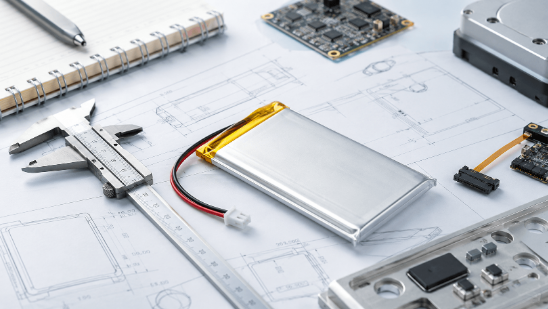
A polymer battery uses a soft pouch structure, which makes it more flexible in shape than many traditional battery formats. For product designers, this means the battery can fit into thinner and lighter devices without taking up too much internal space.
What Is a Lightweight Polymer Battery?
A lightweight polymer battery is usually a rechargeable lithium polymer battery designed with a slim and flexible structure. Unlike cylindrical cells, polymer batteries can be made in flat, thin, or customized shapes.
This makes them useful for products where weight and size matter. Instead of forcing the product to fit a standard battery shape, engineers can often choose a polymer battery that better matches the device structure.
For compact electronic products, this flexibility can improve both design and user experience.
Why Portable Devices Need Lighter Batteries
In portable devices, every gram matters. A battery that is too heavy can make a product uncomfortable, bulky, or difficult to carry. This is especially important for wearable electronics, medical devices, and handheld tools.
For example, a smart watch needs to sit comfortably on the wrist. A tracking device needs to be small enough to attach to equipment or personal items. A medical sensor may need to stay on the body for long periods. In these cases, a lightweight polymer battery helps reduce total product weight.
Lighter batteries also give designers more freedom. They can create slimmer cases, smaller enclosures, and more comfortable products without giving up basic power performance.
Common Applications in Modern Electronics
A lightweight polymer battery is widely used in devices that require compact and stable power. Wearable devices are one of the most common applications. Fitness trackers, health monitors, smart rings, and smart glasses all need batteries that are thin, light, and reliable.
IoT devices also use polymer batteries. Wireless sensors, asset trackers, electronic tags, and smart home devices often need a small battery that can support long standby time.
Other applications include portable medical devices, Bluetooth accessories, smart cards, handheld terminals, and compact consumer electronics. In each case, the battery needs to support the product without adding unnecessary weight.
Main Advantages of Lightweight Polymer Battery Design
The biggest advantage of a lightweight polymer battery is its balance between weight, shape, and performance. It can provide stable power while keeping the product slim and easy to carry.
Another advantage is customization. Polymer batteries can often be made with different dimensions, capacities, wire lengths, connectors, and protection circuits. This is useful for OEM and ODM product development.
The soft pouch design also makes polymer batteries suitable for flat or irregular spaces. This helps engineers make better use of limited internal space.
For many compact electronics, the goal is not simply to use the largest battery possible. The goal is to choose a battery that fits the device, supports normal use, and keeps the product comfortable.
What to Consider Before Using One
A lightweight battery also has trade-offs. Because the battery is usually smaller and thinner, capacity may be limited compared with larger battery types. Product designers need to balance battery weight, runtime, charging frequency, and power demand.
Safety is also important. A quality polymer battery should include proper protection against overcharging, over-discharging, and short circuits. For commercial products, testing and production consistency are also important.
Buyers should also check whether the battery supplier can support sample development and stable mass production. A good sample is only the first step. Long-term product reliability depends on consistent battery quality.
A Practical Choice for Compact Product Design
A lightweight polymer battery is a practical power solution for portable devices that need a slim and comfortable design. It is especially useful for wearables, sensors, smart cards, medical electronics, and other compact products.
The best battery is not always the one with the highest capacity. It is the one that matches the product’s size, weight, safety requirements, and real power demand. For many modern electronic devices, a lightweight polymer battery helps achieve a better balance between performance and design.