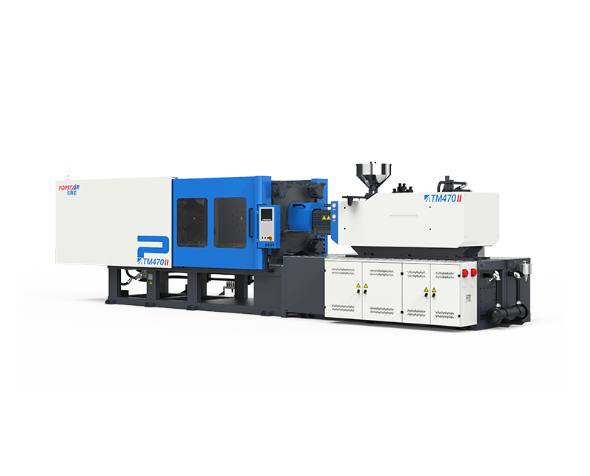

Thin-wall packaging rewards speed and precision, yet it punishes any loss of process stability. At Topstar, as Product Marketing Manager with deep expertise in high-performance molding systems, I work with manufacturers who must fill long, thin flow paths in fractions of a second while still holding weight, dimensions, and surface quality within tight limits. Configuring an Injection Molding Machine for this duty means matching injection dynamics, clamp behavior, plasticizing consistency, and control response to the demands of thin-wall geometry—without allowing short-term speed to undermine long-term repeatability. When the plastic injection molding machine is set up correctly, high output and stable quality reinforce each other rather than trade off.
High-Speed Injection Capability of the Injection Molding Machine for Thin-Wall Fills
High-speed injection capability is the first requirement for an Injection Molding Machine filling thin-wall packaging. Long flow lengths and thin sections cool rapidly; incomplete fills, hesitation marks, and weak weld lines appear unless the melt reaches the end of the cavity before the flow front freezes. The machine must therefore deliver high injection velocity and the pressure needed to maintain that velocity against rising resistance as the cavity fills. Topstar configures the Injection Molding Machine so that acceleration, peak speed, and pressure limits support the fill time required by the part design.
A plastic injection molding machine intended for thin-wall work typically needs responsive hydraulics or full-electric drive systems that can execute short, aggressive injection profiles without lag. When injection dynamics match the geometry, the process gains the fill window that thin-wall packaging demands. Speed alone, however, is not enough; the same plastic molding machine must also hold that profile stably from shot to shot.
Clamp Force, Platen Rigidity, and Mold Stability on the Injection Molding Machine
Clamp force, platen rigidity, and mold stability protect thin-wall packaging from flash and dimensional drift on the Injection Molding Machine. High injection pressures used to fill thin sections generate significant separating forces. If the clamp cannot hold the mold closed uniformly, flash appears at the parting line and cavity thickness varies. Soft or poorly supported platens amplify deflection under load, undermining the very precision the packaging requires. Topstar specifies clamp capacity and platen design on the Injection Molding Machine so that force is applied evenly across the projected area of thin-wall multi-cavity tools. A rigid plastic injection molding machine structure keeps the mold geometry consistent under peak pressure and supports stable cavity conditions cycle after cycle. Clamp and structural stability are therefore not secondary to injection speed; they are the mechanical foundation that allows aggressive fill without sacrificing part integrity on a packaging-dedicated plastic molding machine.
Plasticizing Consistency and Melt Quality on the Injection Molding Machine
Plasticizing consistency and melt quality determine whether the Injection Molding Machine can supply uniform melt for every thin-wall shot. Variations in melt temperature, viscosity, or shot size immediately show up as weight scatter, incomplete fills, or surface defects when walls are thin and cycle times are short. The screw, barrel temperature profile, and recovery settings must therefore produce a homogeneous, correctly plasticized shot within the limited time available between injections. Topstar optimizes screw design and plasticizing parameters on the Injection Molding Machine for the resins commonly used in thin-wall packaging. A well-tuned plastic injection molding machine recovers a consistent shot volume at a stable temperature, so injection starts from the same melt state every cycle. Melt quality is a primary stability lever: without it, even excellent injection and clamp performance cannot prevent shot-to-shot variation on a plastic molding machine running thin-wall work.
Closed-Loop Control and Process Monitoring on the Injection Molding Machine
Closed-loop control and process monitoring allow the Injection Molding Machine to hold thin-wall parameters inside a narrow window. Injection velocity and pressure profiles, switch-over position, holding pressure, and cushion must repeat with minimal deviation. Open-loop or loosely tuned systems allow drift that thin-wall parts cannot absorb. Real-time feedback and tight control loops correct small disturbances before they become defects. Topstar implements responsive closed-loop control on the Injection Molding Machine so that critical segments of the injection and holding phases stay on target. When the plastic injection molding machine actively manages velocity-to-pressure transfer and cushion consistency, weight and dimensional distributions tighten. Process monitoring further supports stability by highlighting trends in peak pressure, fill time, or recovery that signal developing issues. Control quality turns a capable plastic molding machine into a stable thin-wall production system.
Cycle Coordination and Thermal Stability Around the Injection Molding Machine
Cycle coordination and thermal stability around the Injection Molding Machine protect thin-wall packaging quality over long runs. Short cycles leave little time for mold temperature recovery; local hot or cold spots change flow and shrinkage. Inconsistent cooling or poorly balanced circuits create cavity-to-cavity differences that show up as weight or dimension scatter. Robot take-out timing must also clear the mold promptly without forcing unnecessary open time that lengthens the cycle or cools the tool unevenly. Topstar treats the Injection Molding Machine as the center of a coordinated cell: mold temperature control, cooling capacity, and automation are specified to keep thermal and handling conditions steady. A plastic injection molding machine configured for thin-wall packaging performs best when the surrounding process does not reintroduce variation after each shot. Thermal and cycle stability complete the configuration that allows high speed without sacrificing the consistency that packaging customers require from a plastic molding machine.
Balancing Speed and Stability on the Injection Molding Machine for Thin-Wall Packaging
Configure an injection molding machine for thin-wall packaging by combining high-speed, high-pressure injection capability with rigid clamp and platen performance, consistent plasticizing and melt quality, tight closed-loop control of injection and holding, and coordinated thermal and cycle stability across the cell. Speed fills the thin sections; stability keeps every shot inside specification. When engineered together, the plastic injection molding machine delivers the output rates packaging-wall packaging demands without the scrap and rework unstable processes generate. Topstar configures the Injection Molding Machine and supporting systems so thin-wall producers don’t have to choose between fill capability and repeatability. By matching injection dynamics, structural rigidity, melt preparation, and control response to the geometry and resin, we help manufacturers run a plastic molding machine that is both fast and stable under real production conditions.