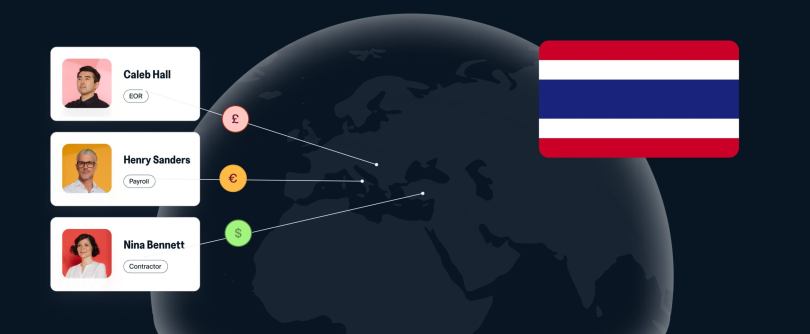

If you have never hired anyone in Thailand before, the process can feel like reading a map written in a language you do not speak. There are recruiters, labor laws, tax obligations, and employment contracts — and each one comes with its own vocabulary. This guide breaks everything down from the beginning, so you can make informed decisions without needing a law degree or a decade of HR experience. Think of it as a starting point, not an exhaustive manual.
What Does “Staffing” Actually Mean?
Before diving into Thailand-specific details, it helps to understand what staffing means as a concept. Staffing is the process of finding, selecting, and placing workers inside a business. It covers everything from writing a job description to signing an employment contract. Some companies manage this entirely in-house. Others bring in specialists — firms that do nothing but connect employers with candidates.
A staffing firm, sometimes called a recruitment agency, acts as a connector between employers and job seekers. These firms maintain databases of vetted professionals and use their networks to match the right person to the right role. They save time and reduce guesswork. More importantly, they bring expertise about what fair compensation looks like in a given market, which skills are currently in demand, and how long a realistic search typically takes. Without that knowledge, a company new to Thailand might underpay, overpay, or simply never reach the right candidates at all.
Finding Senior Talent: What a Headhunter Actually Does
Not every hire is a straightforward process. For senior leadership roles, niche technical positions, or situations where a company needs to replace someone confidentially, businesses often turn to an executive search professional — commonly known as a headhunter. Unlike general recruiters who post job listings and wait for applications to arrive, a headhunter actively contacts candidates who may not even be looking for a new position.
Working with a head hunter thailand service gives companies access to passive talent pools that never appear on public job boards. This matters most when you need someone with very specific experience — say, a bilingual supply chain director with regional ASEAN logistics knowledge. Advertising that role publicly might produce dozens of irrelevant applications. A headhunter, by contrast, identifies four or five highly qualified individuals and presents only those profiles. ADI Sourceing offers this kind of targeted executive search across multiple industries operating within the Thai market, making the process far more precise than a general job posting ever could be.
Building a Technology Team Without Setting Up a Full Office
Many foreign companies want to tap into Thailand’s growing pool of software developers, data analysts, and IT professionals — but they do not want the overhead of establishing a local legal entity. Renting office space, registering a company with Thai authorities, and managing payroll from abroad is expensive, slow, and administratively demanding. For businesses that simply want reliable technical output, that burden is rarely worth it.
This is exactly where IT Outsource Thailand services come in. Outsourcing, in this context, means hiring a local team or individual contractors through a third-party provider rather than placing them directly on your own payroll. The provider handles employment administration. You receive the work. Consider a startup building a mobile app: rather than hiring five developers as permanent employees, they engage an outsourcing partner who already employs those developers and simply assigns them to the project. ADI Sourceing structures these arrangements so that international clients can scale their technical teams up or down without long-term commitment or unexpected administrative complications.
Key advantages of this approach in Thailand include:
- Access to English-speaking developers familiar with international project standards
- Lower operational costs compared to hiring equivalent talent in Western markets
- Flexibility to bring specialists on for specific projects rather than permanent roles
- No requirement to navigate Thai labor law or set up local payroll infrastructure independently
Understanding the Employer of Record Model
Suppose you want to hire a single marketing coordinator based in Bangkok — not a whole team, just one person. Setting up a legal entity in Thailand for one employee is almost never worth the cost or the wait. Registration alone can take months. This is precisely the scenario the Employer of Record model was created to address.
An eor employee is someone who works for your business in practice but is legally employed by a third-party organization — the Employer of Record. That third party registers as the legal employer in Thailand, manages payroll, withholds income taxes, handles social security contributions, and ensures every clause in the employment contract complies with Thai labor law. You direct the worker’s daily responsibilities. The EOR manages every administrative layer underneath. This model is especially popular with companies testing demand in a new market before committing to a permanent local structure. If circumstances change, winding down the arrangement is dramatically simpler than dissolving a registered company.
Choosing the Right Approach for Your Situation
The right staffing solution depends on what you are actually trying to accomplish. For one or two employees who need to start quickly, and where your business has no Thai legal entity, an Employer of Record arrangement is usually the fastest compliant path forward. For building a technical team with flexibility and minimal administrative burden, an outsourcing arrangement makes more sense. For senior leadership hires where quality and confidentiality matter above all else, a dedicated executive search will consistently outperform any job board.
Many businesses use more than one model at the same time. A company might engage ADI Sourceing to run a headhunter search for a country director while simultaneously placing six developers through an IT outsourcing arrangement under the same provider. Combining approaches is not unusual — it simply requires clear coordination and an honest assessment of which problem each solution is meant to solve. The firms that get this right tend to be those that ask specific questions before choosing a method, rather than defaulting to whatever seems most familiar.
Conclusion
Hiring in Thailand does not have to feel overwhelming. Once you understand the basic concepts — what a headhunter does differently from a general recruiter, how outsourcing removes administrative barriers to building a technical team, and why the Employer of Record model exists for lean or early-stage international expansion — the options become genuinely clear. Each approach solves a distinct problem, and matching the right tool to the right situation is the core skill. Start by identifying what you need, then find the right structure to support it. To learn more about how ADI Sourceing can support your workforce goals, visit https://www.adiresourcing.com/.
Contact Us
Address: 120 Kasemkij Building, Room No. 907, 9th Floor, Silom Road, Suriyawongse, Bangrak, Bangkok 10500
Phone: +66 2632 9388
Email: info@adiresourcing.com
Website: https://www.adiresourcing.com/