

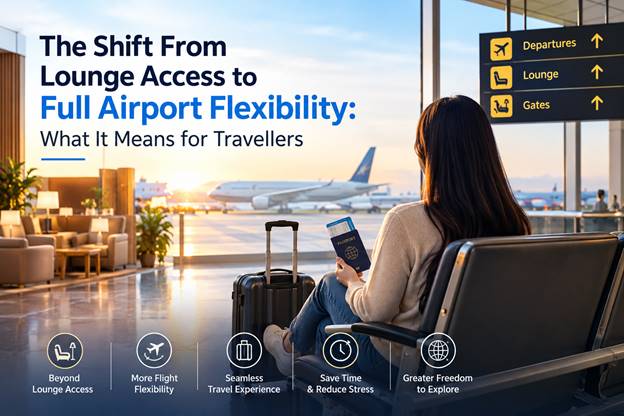

There is a specific kind of disappointment that hits when you walk up to the airport lounge with full confidence and find a queue longer than the one at the boarding gate, especially during the peak hours. Seats gone, buffet picked clean. This was supposed to be the upgrade.
This is not a one-off anymore. Lounge overcrowding has surged over 40% since 2024, and banks responded by restricting access rather than fixing the experience. ICICI, Axis, and Flipkart Axis all raised spend thresholds or pulled access entirely. DreamFolks, which processed over 25 million lounge visits annually, ceased major operations in late 2025. What was a guaranteed perk is now a moving threshold most cardholders no longer qualify for.
The Problem Was Never Just the Queue
The deeper issue is that not everyone wants a lounge to begin with. Someone rushing for an early flight wants coffee and a sandwich, not a buffet queue. Someone with three hours to kill wants to browse, shop or decompress before boarding. The airport experience is personal and shifts every single trip.
Yet every card still hands you the same fixed lounge pass as though one size fits every traveller and every journey. And at the 68 airports across India with no lounge at all, that pass is worth nothing. Cardholders flying to smaller cities are simply left with no benefit, no fallback, no alternative.
What the Numbers Are Actually Saying?
HDFC Bank alone reported over 12 million lounge visits through its credit card programme in FY 2024-25. That volume from a single bank’s cards explains why the infrastructure buckled. Lounges built for a fraction of that footfall were never going to hold up.
Banks know this. The spend thresholds being added are not coincidental. They are a deliberate attempt to filter out casual users and restore some version of the experience that made lounge access worth having. The traveller who gets squeezed out is the one who got a credit card with travel benefitsfor the lounge, spends normally, and now does not hit the quarterly threshold to unlock it.
For that person, the best credit card for international travel or domestic use that they signed up for has become a regular card with not much else going for it.
What Flexibility Actually Looks Like?
The more useful model emerging in the co-branded travel credit card space is one where the cardholder decides what the airport benefit means on any given day.
The Scapia credit card, issued in partnership with Federal Bank and Bank of Baroda, has built this into how airport privileges work. The Scapia Federal credit card requires ₹20,000 in monthly spends to unlock airport benefits across 100 plus domestic airports. But unlike most cards in this category, Scapia does not hand you a fixed lounge pass and call it done. You choose on the day. A full meal at any restaurant in the terminal with up to ₹1,000 back in rewards. Shopping at any store before boarding. A spa session before a long haul. Or lounge access if that is genuinely what the trip calls for.
No pre-booking, no partner outlet restriction, no hunting for which lounge your card tier works at in a specific terminal. For anyone looking for the best travel credit card for Indians who take a mix of domestic and international trips, this kind of benefit structure makes a material difference over time.
As a zero forex markup credit card, Scapia also removes the international spending cost that most cards still charge. Combined with a rewards system where daily spends, UPI payments through Scapia Pay, and travel bookings on the Scapia app all earn coins redeemable against flights, hotels, trains, and visa applications, the Scapia credit card is built around the full journey rather than just the airport moment.
For someone evaluating the best credit card for overseas travel or domestic trips across four to six flights a year, the flexibility of the airport benefit alone is worth examining against cards where lounge access has become increasingly conditional.
The Bigger Shift Happening in Travel Cards
The best forex card conversation used to be about which card gave you the best currency conversion rate. The best credit card for international travel conversation used to be about lounge access. Both of those conversations have moved on.
What matters now is whether a travel credit card works across the entire arc of a trip. The daily spending that funds the booking. The booking experience itself. The airport moment before departure. The international transaction without a markup. A card that handles all of these without requiring you to carry three separate products is genuinely rare and increasingly what frequent travellers are looking for.
Where Does This Leave the Modern Traveller?
The shift from fixed lounge access to full airport flexibility is not just a product evolution. The best travel credit card in 2026 is the one built around how people actually move through airports and through their daily lives, not how banks assumed they would a decade ago.
The lounge was never really the point. Getting through the airport in a way that actually works for you was. It just took a crowded buffet line and a tightening spend threshold for the industry to catch up to that.
