
Introduction
The gaming industry has evolved dramatically over the past few decades, introducing players to increasingly detailed, immersive, and interactive virtual worlds. One of the technologies that has had the greatest impact on modern game design is procedural generation. Instead of manually designing every landscape, building, or quest, developers use algorithms to generate game content automatically. This innovative approach allows games to create massive, dynamic environments that feel fresh every time players begin a new adventure.
Procedural generation has become an essential feature in many popular games because it offers endless possibilities while improving replay value. From expansive planets and mysterious caves to randomly generated dungeons and unique character encounters, procedural generation ensures that no two gaming experiences are exactly alike.
What Is Procedural Generation?
Procedural generation is a game slot development technique where computer algorithms create content automatically rather than relying entirely on manually designed assets. Developers establish a set of rules, parameters, and mathematical formulas that determine how environments, objects, and events are generated.
Instead of building thousands of maps individually, developers create intelligent systems capable of producing countless unique combinations. These systems can generate landscapes, forests, villages, weather conditions, enemies, quests, puzzles, and even soundtracks.
Although every generated world follows specific design principles, each new game session often presents players with different layouts, discoveries, and challenges.
The History of Procedural Generation
Procedural generation is not a new concept. Early video games with limited storage space relied on procedural techniques because computers could not store large amounts of game data.
As gaming technology advanced, procedural generation became more sophisticated. Modern processors can generate incredibly detailed environments in real time while maintaining smooth performance. Today’s developers combine handcrafted design with procedural systems to create worlds that feel both realistic and unpredictable.
This balance allows developers to preserve artistic quality while giving players nearly unlimited exploration opportunities.
Creating Massive Worlds Efficiently
One of the biggest advantages of procedural generation is its ability to create enormous game worlds without requiring developers to manually build every location.
Instead of designing millions of individual trees, mountains, rivers, and valleys, algorithms generate natural landscapes based on predefined environmental rules. These systems can create realistic terrain with varying elevations, climates, vegetation, and geological features.
As a result, developers can produce worlds that appear almost limitless while reducing development time and storage requirements.
Players benefit from larger environments filled with hidden locations waiting to be explored.
Endless Exploration Keeps Players Engaged
Exploration has always been one of gaming’s most enjoyable experiences. Procedural generation enhances this feeling by ensuring that players rarely encounter identical environments.
Every new adventure may include:
- Different landscapes
- Unique cave systems
- Random treasure locations
- New enemy placements
- Dynamic weather conditions
- Fresh resource distribution
- Unexpected events
- Hidden secrets
Because each journey feels unique, players remain curious about what lies beyond the next mountain, forest, or dungeon.
This constant sense of discovery greatly increases long-term engagement.
Increasing Replay Value
Replayability is one of the strongest reasons developers use procedural generation.
Traditional games often become predictable after multiple playthroughs because players memorise maps, enemy locations, and puzzle solutions. Procedural generation changes this by creating new layouts each time a game begins.
Randomised environments encourage experimentation with different strategies and playstyles. Players cannot simply rely on memory—they must adapt to changing conditions and explore carefully.
This unpredictability keeps games entertaining long after completing the main objectives.
Procedural Dungeons and Adventure Games
Dungeon-based games are among the best examples of procedural generation in action.
Every dungeon can feature:
- Random room layouts
- Different enemy combinations
- New treasure placements
- Unique boss encounters
- Hidden passages
- Secret rewards
Since each dungeon is generated independently, players never know exactly what challenges await them.
This uncertainty creates excitement while rewarding exploration and careful decision-making.
Building Dynamic Open Worlds
Open-world games have become increasingly popular because they offer players freedom to explore vast virtual landscapes.
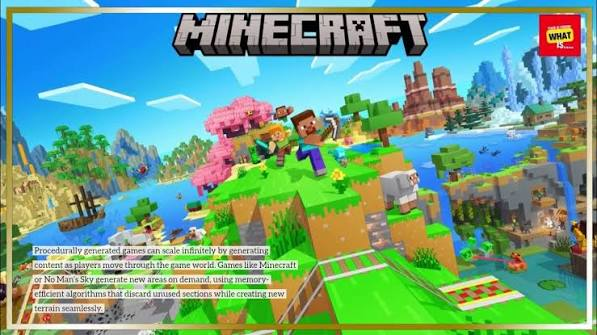
Procedural generation helps populate these worlds with forests, rivers, wildlife, mountains, deserts, villages, and natural landmarks.
Instead of feeling repetitive, generated environments include subtle variations that make exploration feel organic. Some systems even generate ecosystems where plants, animals, and weather interact naturally.
The result is a living world that appears to evolve continuously.
Supporting Creative Gameplay
Procedural generation encourages creativity by presenting players with unique situations during every play session.
Instead of following identical paths, players must:
- Adapt to unfamiliar terrain
- Discover efficient resource routes
- Solve unexpected challenges
- Experiment with new survival strategies
- Build in different locations
- Explore hidden regions
These constantly changing circumstances make every adventure feel personal and memorable.
Players often develop their own stories based on the worlds they discover.
Helping Independent Developers
Procedural generation is especially valuable for independent game studios.
Small development teams usually have limited budgets and fewer artists than large companies. Creating enormous handcrafted worlds would require significant time and resources.
By using procedural systems, indie developers can produce expansive, engaging experiences without needing thousands of manually created assets.
This technology has allowed many independent studios to compete successfully by focusing on innovative gameplay rather than massive production budgets.
Challenges of Procedural Generation
Although procedural generation offers many advantages, it also presents several challenges.
Poorly designed algorithms may create repetitive environments or produce landscapes that lack personality. Developers must carefully balance randomness with meaningful design to ensure generated worlds remain enjoyable.
Many successful games combine handcrafted locations with procedurally generated areas. Important story moments, major cities, and key landmarks are often designed manually, while surrounding environments are generated dynamically.
This hybrid approach provides both artistic quality and endless variety.
The Future of Procedural Generation
Procedural generation continues evolving alongside advances in artificial intelligence and computing power.
Future games may generate:
- Smarter non-player characters (NPCs)
- Dynamic storylines
- Adaptive quests
- Realistic ecosystems
- Personalized missions
- Fully interactive cities
- Living economies
- More immersive virtual worlds
Artificial intelligence may eventually enable games to respond intelligently to each player’s decisions, creating adventures that feel truly unique for every individual.
These innovations promise even richer gaming experiences in the years ahead.
Conclusion
Procedural generation has transformed modern game development by making it possible to create enormous, dynamic, and endlessly replayable virtual worlds. Through intelligent algorithms, developers can build environments filled with unique landscapes, unpredictable challenges, and exciting discoveries that keep players engaged for hundreds of hours.
As technology continues to advance, procedural generation will play an even greater role in shaping the future of interactive entertainment. Combined with artificial intelligence, improved graphics, and innovative game design, it will continue delivering limitless adventures that inspire curiosity, creativity, and exploration. For players who enjoy discovering something new every time they play, procedural generation represents one of the most exciting innovations in the world of gaming.