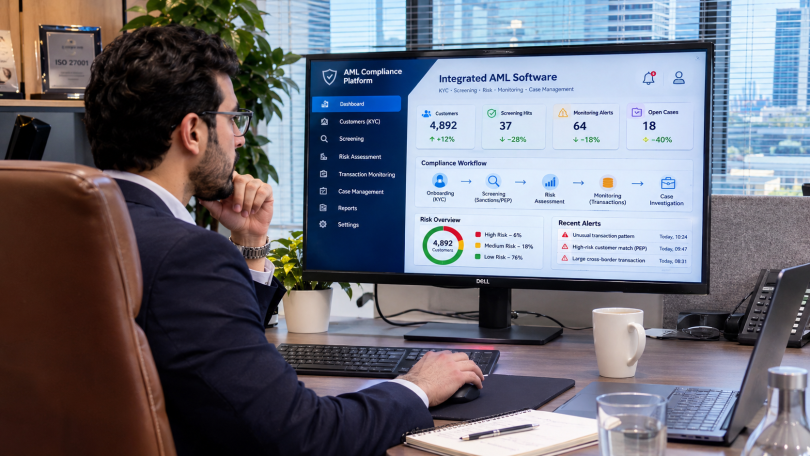

Introduction: Understanding the Need for Integrated AML Software
Businesses subject to Anti-Money Laundering (AML) and Counter-Terrorist Financing (CFT) requirements must manage several connected compliance activities. These include customer identification, due diligence, sanctions screening, risk assessment, ongoing monitoring and investigation of suspicious activity.
Managing these activities through separate tools can make information sharing and coordination more demanding, particularly as customer relationships and transaction volumes grow. Integrated AML compliance software brings essential functions together within a connected platform. It helps compliance teams manage customer information, review potential risks and maintain records across different stages of the AML compliance lifecycle.
Challenges of Managing AML Compliance Through Disconnected Tools
Businesses may use different systems, spreadsheets and manual processes for individual AML activities. While each tool may serve a specific purpose, connecting the information and workflows across them requires coordination.
Some common challenges include:
- Fragmented Customer Information: Customer details, identification documents, screening results and risk assessments may be maintained in separate systems, requiring teams to access multiple records during reviews.
- Repetitive Manual Processes: Re-entering customer information, conducting repeated checks and updating records across different tools can increase administrative work.
- Delayed Risk Identification and Follow-ups: When screening results, risk assessments, and monitoring activities operate separately, teams may need additional steps to bring relevant information together for review.
- Limited Visibility and Audit Trails: Maintaining a complete record of screening checks, investigations, decisions and follow-up actions can require careful coordination across different systems.
An integrated approach helps connect these activities and gives compliance teams a more organised way to manage information and workflows
Key Capabilities of an Integrated AML Software Platform

An effective integrated AML platform brings together essential functions that support customer due diligence and ongoing financial crime risk management.
1. Customer Onboarding and Know Your Customer (KYC)
Customer onboarding software helps collect and organise identification details, customer information and supporting documents. Digital data capture, document uploads and self-service KYC options can support remote onboarding. These details provide the foundation for identity verification, customer due diligence and subsequent screening activities.
2. Automated Name Screening and Ongoing Monitoring
Name screening tools check individuals and entities against relevant sanctions lists, Politically Exposed Person (PEP) databases and adverse media sources. Real-time screening, configurable matching thresholds, fuzzy matching and transliteration capabilities help identify potential matches for further assessment. Ongoing monitoring and periodic rescreening against updated data sources help businesses review existing customer relationships as information changes.
3. Customer Risk Assessment and Risk Scoring
Customer risk assessment software evaluates risk factors such as customer type, nationality, occupation, geographical exposure and screening results. Configurable scoring parameters, weights and risk categories help businesses assess customers according to their risk appetite and internal policies. Higher-risk profiles can be flagged for Enhanced Due Diligence (EDD), where applicable.
4. Case Management and Investigation Workflows
Case management tools provide a structured space to create cases, assign reviewers, record investigation notes and upload supporting evidence. They also help maintain case histories, document decisions and track whether cases remain open, have been reported or have been closed.
5. Transaction Monitoring and Suspicious Activity Identification
Transaction monitoring software evaluates incoming and outgoing transactions against defined AML scenarios. Configurable rules and thresholds can consider factors such as transaction value, payment method, customer type, geographic exposure and transaction channel. When activity meets specified conditions, the system generates alerts for compliance teams to review and investigate.
How Integrated AML Software Improves Compliance Management

By connecting key compliance functions, integrated AML CFT software can support a more coordinated approach to managing financial crime risks.
- A Centralised View of Customer Information: Customer details, KYC documents, screening outcomes and risk information can be maintained within a connected customer profile, supporting easier access during reviews.
- Better Coordination Between Compliance Functions: Information gathered during onboarding can support screening and risk assessment, while monitoring alerts and investigation records can be managed through structured workflows.
- Improved Operational Efficiency: Automated data capture, screening, risk calculations and alert generation can reduce repetitive administrative tasks and allow teams to focus on reviewing potential risks.
- Stronger Documentation and Audit Readiness: Recorded activities, timestamps, investigation notes, supporting documents and decisions help maintain an organised history of compliance actions for internal reviews and regulatory examinations.
These capabilities support consistent processes while keeping compliance officers involved in reviewing matches, assessing risks and making decisions.
What Should Businesses Consider When Choosing AML Software?

Selecting suitable AML compliance software solutions requires an understanding of the organisation’s regulatory obligations, customer base and operational requirements. Businesses should consider the following factors:
- Integration of Essential AML Functions: Look for a platform that brings together customer onboarding, KYC, screening, risk assessment, transaction monitoring and case management.
- Flexibility and Customisation: The software should support configurable risk parameters, screening thresholds, monitoring rules and workflows that reflect the organisation’s risk assessment and internal policies.
- Scalability and Business Requirements: Consider whether the platform can accommodate changing customer volumes, additional users and evolving compliance needs.
- Reporting, Audit Trails and Data Security: Evaluate its ability to maintain activity logs, screening reports, investigation records and supporting documents, along with appropriate access controls and data protection measures.
The right platform should complement the organisation’s AML policies, procedures and compliance oversight rather than replace them.
Conclusion: Moving Towards a More Connected AML Compliance Framework
Integrated AML software helps businesses connect essential compliance activities, organise customer information and establish structured workflows. By combining automation with risk-based reviews and human oversight, organisations can manage their AML obligations more consistently. Selecting a platform that fits their operations and regulatory requirements is an important step towards a connected compliance framework.
FAQs
What is integrated AML software?
Integrated AML software is a technology platform that brings together key anti-money laundering functions, such as customer onboarding, KYC, sanctions screening, customer risk assessment, transaction monitoring and case management. It helps businesses manage these activities through connected workflows and organised records.
How is integrated AML software different from standalone compliance tools?
Standalone tools generally support individual compliance functions, whereas integrated AML software connects multiple functions within a common platform. This can help teams access relevant customer information, coordinate workflows and maintain records across different stages of the compliance lifecycle.
What features should businesses look for in AML software?
Businesses should consider features such as KYC and customer onboarding, sanctions and PEP screening, adverse media checks, customer risk assessment, ongoing monitoring, transaction monitoring, case management, reporting and audit trails.
Can AML software automate customer risk assessments?
Yes. AML software can automate parts of customer risk assessment by applying configured risk factors, scoring parameters and weightings to customer information. Compliance teams should still review relevant information and apply appropriate judgement, particularly when dealing with higher-risk customers.
How does AML software help businesses identify suspicious activities?
AML software can screen customers against relevant watchlists, monitor transactions against predefined scenarios and generate alerts when specified conditions are met. These alerts help compliance teams identify activity requiring further review and investigation.