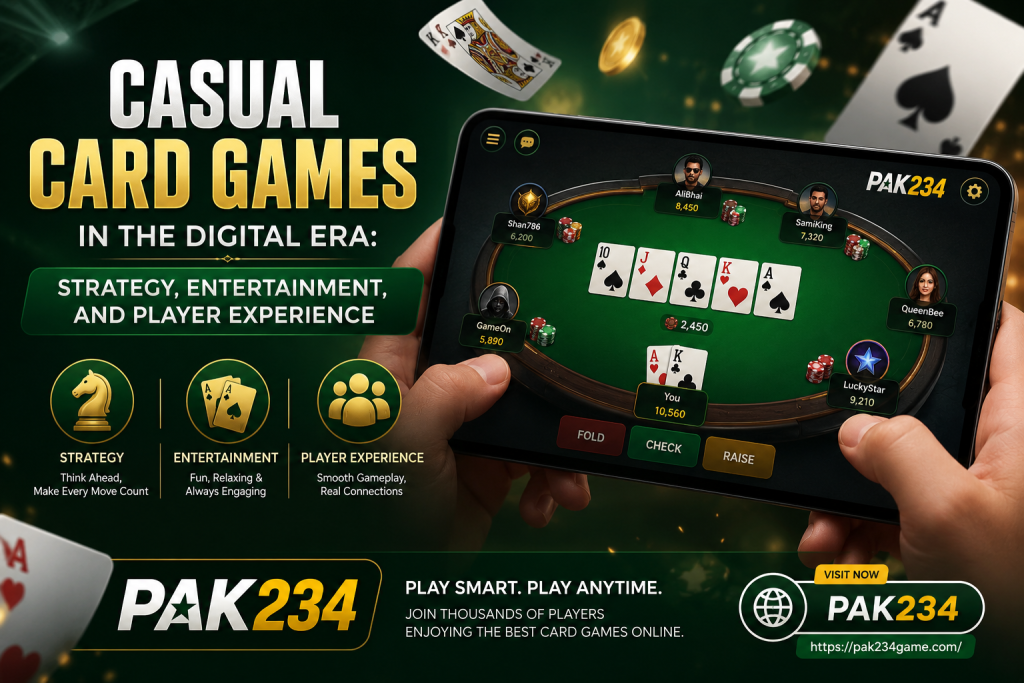
The world of digital entertainment has expanded rapidly over the last decade, and one of the most enduring categories is casual card gaming. These games combine simplicity, strategy, and accessibility, making them appealing to both beginners and experienced players. Platforms like PAK234 have helped bring modern casual card game experiences to a wider audience by offering convenient access, smooth gameplay, and engaging formats that fit today’s mobile-first lifestyle.
Casual card games are no longer just traditional pastimes played in physical settings. They have evolved into dynamic digital experiences that include interactive features, competitive elements, and social connectivity. Whether played for relaxation or skill-based engagement, they continue to attract millions of users worldwide due to their balance of luck, strategy, and entertainment value.
The Rise of Casual Card Games Online
The transition of card games from physical decks to digital platforms has been one of the most significant changes in the gaming industry. Early versions of digital card games were simple adaptations, but modern versions now include advanced graphics, multiplayer modes, and real-time interaction.
One of the main reasons for this rise is accessibility. Players no longer need a physical deck or a group of people gathered in one place. Instead, they can join games instantly through their smartphones or computers. This convenience has made casual card games one of the most popular categories in online gaming.
Another important factor is globalization. Players from different regions can now compete or collaborate in real time, breaking geographical barriers and creating a more diverse gaming environment. This has also contributed to the evolution of different playstyles and strategies.
Why Card Games Remain Popular
Despite the rise of high-end video games with complex graphics and storylines, card games remain popular because of their simplicity and depth. They are easy to learn but difficult to master, which creates long-term engagement for players.
One of the key attractions is the balance between luck and strategy. While chance plays a role in the cards dealt, strategic thinking determines long-term success. This combination keeps games unpredictable and exciting.
Additionally, casual card games are ideal for short gaming sessions. Players can enjoy a quick match during breaks or engage in longer sessions when they have more time. This flexibility makes them suitable for different lifestyles and age groups.
Social interaction is another major reason for their popularity. Many digital card games include chat features, multiplayer rooms, and friend systems, allowing players to connect and interact while playing.
Mechanics and Game Design in Casual Card Games
Modern casual card games are carefully designed to ensure both fairness and engagement. Developers focus on creating systems that are easy to understand but still offer depth for experienced players.
A typical game includes rules that are simple enough for beginners to learn within minutes. However, as players continue, they discover advanced strategies that improve their chances of winning. This learning curve is one of the reasons players stay engaged over long periods.
Randomization is another important mechanic. Shuffle systems ensure that every round is unique, preventing predictability and maintaining excitement. At the same time, skill-based elements ensure that experienced players can still gain an advantage over time.
Visual and audio design also plays a significant role. Smooth animations, clear interfaces, and satisfying sound effects enhance the overall experience, making gameplay more immersive and enjoyable.
Strategies for Better Gameplay
While casual card games often include elements of chance, strategy remains essential for consistent success. Understanding probability, timing, and opponent behavior can significantly improve performance.
One effective strategy is patience. Instead of playing every possible move, skilled players wait for the right opportunities. This reduces unnecessary risks and improves long-term outcomes.
Observation is another key factor. Paying attention to how opponents play can reveal patterns or weaknesses. Over time, this information can be used to predict moves and adjust strategies accordingly.
Resource management is also important in many card-based systems. Knowing when to use or save certain moves can determine the outcome of a match. Players who manage their resources efficiently often perform better than those who rely purely on chance.
Lastly, adaptability is crucial. Since each game is different, rigid strategies often fail. Successful players adjust their approach based on the situation rather than following a single fixed pattern.
Social and Competitive Elements
One of the most engaging aspects of digital card games is their social environment. Players are no longer isolated; instead, they are part of a global community.
Many platforms include ranking systems that allow players to measure their progress. Competing against others creates motivation to improve skills and climb leaderboards. This competitive structure adds depth to what might otherwise be a simple game.
Social features such as friend lists, chat systems, and team-based modes also enhance interaction. Players can share strategies, discuss gameplay, and even form long-term gaming communities.
Tournaments and events further increase engagement by offering structured competition. These events often bring together skilled players, creating exciting and high-stakes environments.
Mobile Gaming Influence
The rise of mobile technology has played a major role in the popularity of casual card games. Smartphones allow players to access games anytime and anywhere, making gaming more integrated into daily life.
Mobile optimization ensures that games run smoothly on different devices, regardless of screen size or hardware capability. This inclusivity has significantly expanded the player base.
Push notifications, daily rewards, and short-session gameplay mechanics are also designed specifically for mobile users. These features encourage regular engagement without requiring long play sessions.
As mobile technology continues to improve, casual card games are expected to become even more interactive and immersive.
Future of Casual Card Games
The future of casual card games is closely tied to technological innovation. Artificial intelligence, augmented reality, and blockchain-based systems are already beginning to influence game design.
AI can be used to create smarter opponents and personalized gameplay experiences. This allows players to face challenges tailored to their skill level, improving engagement and learning.
Augmented reality has the potential to bring card games into real-world environments, blending physical and digital experiences. This could redefine how players interact with games in the future.
Blockchain technology may also introduce new systems for fairness, ownership, and digital rewards, making in-game assets more transparent and secure.
As these technologies continue to evolve, casual card games will likely become even more immersive and interactive, attracting new generations of players.
Conclusion
Casual card games have grown from simple traditional pastimes into complex digital experiences that combine strategy, entertainment, and social interaction. Their accessibility, engaging mechanics, and adaptability have made them one of the most enduring genres in online gaming.
With continuous advancements in technology and game design, the future of casual card games looks promising. They will continue to evolve, offering players new ways to enjoy competition, relaxation, and community engagement in a rapidly changing digital world.