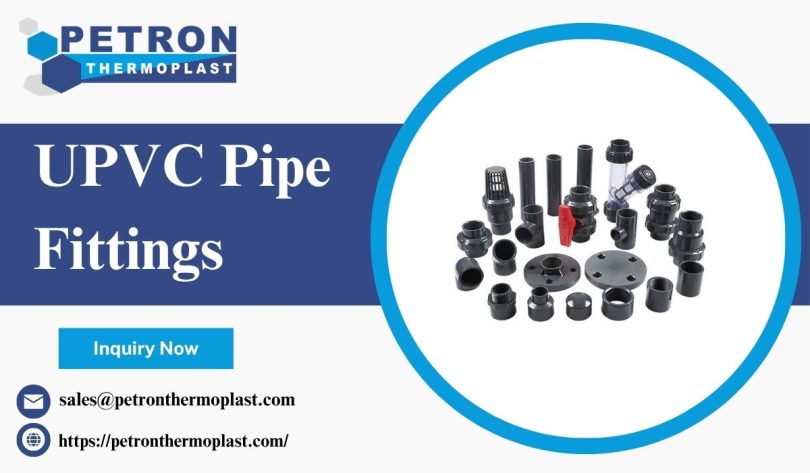

Industrial piping systems are designed to transport water, chemicals, process fluids, and other materials safely and efficiently. While pipes form the main network, pipe fittings are equally important because they connect different sections, change flow direction, create branches, reduce or increase pipe sizes, and provide connections to equipment. UPVC pipe fittings are widely used in suitable industrial applications because of their corrosion resistance, lightweight construction, smooth internal surface, and low-maintenance characteristics.
However, industrial projects often have different requirements for pipe sizes, connection types, layouts, operating conditions, and installation environments. This makes flexibility in product selection an important part of industrial piping procurement. Companies looking to buy UPVC pipe fittings with custom industrial solutions can evaluate their project requirements before selecting the right components. Petron Thermoplast provides UPVC pipe fittings and thermoplastic piping solutions for industrial, commercial, and bulk procurement requirements.
Understanding UPVC Pipe Fittings
UPVC means unplasticized polyvinyl chloride. It is a rigid thermoplastic material used in various piping applications where resistance to corrosion and stable performance are required.
UPVC pipe fittings are designed to connect UPVC pipes and other compatible piping components. They are available in different shapes, dimensions, and connection configurations to accommodate different pipeline designs.
Common UPVC fittings include:
- UPVC elbows
- UPVC tees
- UPVC reducers
- UPVC couplings
- UPVC unions
- UPVC adapters
- UPVC flanges
- UPVC end caps
- UPVC threaded fittings
- UPVC valves and related components
Why UPVC Fittings Are Used in Industrial Piping?
Industrial environments can expose piping systems to moisture, chemicals, pressure, temperature variations, and continuous fluid movement. Material selection therefore plays an important role in system design.
UPVC can be suitable for applications where its physical and chemical properties meet the operating requirements.
Corrosion Resistance
A major advantage of UPVC is its resistance to corrosion and rust. This makes UPVC an option for certain environments where metallic piping components may require additional corrosion protection.
For chemical applications, however, material compatibility should always be checked for the specific chemical, concentration, temperature, and operating conditions.
Lightweight Material
UPVC fittings are relatively lightweight compared with many metallic alternatives. This can make transportation and handling easier, particularly during large installation projects.
The reduced weight can also simplify positioning and assembly during piping installation, subject to the requirements of the project.
Low Maintenance
UPVC does not require conventional painting or anti-rust treatment. When correctly selected and installed, UPVC piping systems can therefore provide a relatively low-maintenance solution.
Routine inspection is still necessary to identify leakage, mechanical damage, connection problems, or changes in operating conditions.
Smooth Flow Path
The smooth internal surface of UPVC can support efficient fluid movement. It may also help reduce the accumulation of deposits in suitable applications.
This characteristic can be useful in piping systems where maintaining consistent fluid flow is important.
The Importance of Custom Industrial Solutions
Not every industrial piping project can use an identical set of fittings. A small utility installation and a large chemical processing plant can have completely different requirements.
Customization can refer to several aspects of an industrial piping solution, including:
- Fitting dimensions
- Connection configurations
- Pipe sizes
- End connections
- Fitting combinations
- Layout requirements
- Bulk quantities
- Project-specific specifications
- Special fabrication requirements where applicable
Applications of UPVC Pipe Fittings
UPVC fittings can be used in several industries where their material characteristics are compatible with the application.
Water Treatment
Water treatment facilities use interconnected piping networks to move water between tanks, filters, pumps, and treatment equipment.
UPVC fittings can be used in suitable water treatment applications because of their corrosion resistance and low-maintenance characteristics.
Chemical Processing
Certain chemical processing systems use UPVC piping components for transferring compatible fluids.
When selecting UPVC for chemical service, engineers should confirm chemical compatibility rather than relying only on general material properties.
Industrial Water Transfer
Factories and processing facilities often require dedicated water lines for production, cooling, cleaning, and utility services.
UPVC fittings can help create these pipeline networks where the operating conditions are suitable.
Manufacturing Facilities
Manufacturing plants may use thermoplastic piping for different utility and process applications. UPVC fittings can be incorporated into systems for fluid movement, drainage, or other suitable services.
Commercial and Infrastructure Projects
UPVC fittings may also be used in commercial, institutional, and infrastructure piping installations where their specifications meet project requirements.
Common UPVC Fitting Types
Understanding the purpose of each fitting makes it easier to develop an appropriate pipeline design.
UPVC Elbow
Elbows are used to change pipeline direction. Common angles include 45 degrees and 90 degrees.
They help route pipelines around equipment, walls, structures, and other installation obstacles.
UPVC Tee
A tee creates a branch connection from a main pipeline. It can be used when fluid needs to be distributed toward another section of the system.
UPVC Reducer
Reducers connect pipes with different diameters. They are useful when a pipeline needs to transition between different pipe sizes.
UPVC Coupling
A coupling connects two compatible pipe sections. It can be useful during new installations, extensions, and certain maintenance activities.
UPVC Adapter
Adapters provide transitions between different connection arrangements. For example, a project may require a transition between a socket connection and a threaded or flanged component.
UPVC Flange
Flanges provide detachable connections between piping components. They can be useful around pumps, tanks, valves, and other equipment where future maintenance may be required.
How to Choose Custom UPVC Pipe Fittings?
When you buy UPVC pipe fittings for a specific industrial project, technical requirements should be reviewed before placing an order.
Pipe Diameter
The first consideration is pipe size. Fittings must match the required pipe dimensions and connection configuration.
Connection Method
Determine whether the project requires socket, threaded, flanged, or another compatible connection method.
Using the correct connection method helps prevent installation difficulties and leakage.
Fluid Type
Identify the fluid being transported. This is particularly important for chemical applications.
Chemical compatibility should be evaluated based on the actual fluid, concentration, temperature, exposure time, and system conditions.
Pressure
The expected operating pressure should be compared with the applicable pressure limitations of the piping components.
The entire piping system should be designed and operated within appropriate engineering limits.
Temperature
Temperature affects thermoplastic materials. Therefore, the expected operating temperature should be considered when choosing UPVC components.
Installation Conditions
Consider where the pipeline will be installed. Indoor, outdoor, underground, and chemically exposed environments may have different requirements.
Quantity
For industrial projects, accurate quantity planning is essential. Buyers should calculate the number of elbows, tees, reducers, couplings, adapters, flanges, and other components required before procurement.
Benefits of Custom Procurement
Custom industrial procurement can provide practical advantages when a project has specific piping requirements.
Instead of purchasing generic fittings without considering the application, buyers can specify the dimensions, connection types, quantities, and other relevant requirements.
This approach can help:
- Reduce material mismatch
- Improve installation planning
- Simplify procurement
- Maintain component consistency
- Support project scheduling
- Reduce unnecessary replacement
- Organize bulk purchasing
UPVC Pipe Fittings for Chemical Applications
Chemical industries often require piping materials with suitable resistance to specific process chemicals. UPVC can be appropriate for certain chemical applications, but its suitability depends on the actual operating conditions.
Factors that should be reviewed include:
- Chemical concentration
- Operating temperature
- Pressure
- Exposure duration
- Fluid composition
- Mechanical loads
- Connection method
Installation of UPVC Pipe Fittings
Proper installation is essential for reliable piping performance.
Before installation, pipes and fittings should be inspected for visible damage and contamination. Connection surfaces should be clean and properly prepared.
For solvent-cement connections, the recommended preparation and joining procedure should be followed. The assembly should be allowed to cure according to the applicable product and installation requirements before pressurization.
For threaded connections, excessive tightening should be avoided because unnecessary mechanical stress may damage thermoplastic components.
Flanged systems should be properly aligned, and bolts should be tightened evenly according to the applicable installation procedure.
Industrial piping installations should follow project engineering specifications, applicable standards, and manufacturer recommendations.
Maintenance of UPVC Piping Systems
Although UPVC systems can have relatively low maintenance requirements, periodic inspection remains important.
Maintenance teams can inspect fittings and connections for:
- Leakage
- Cracks
- Physical damage
- Loose connections
- Pipeline movement
- Support problems
- Unusual vibration
- Changes in operating conditions
Bulk UPVC Pipe Fittings for Industrial Projects
Large industrial installations can require significant quantities of piping components. Buying fittings in bulk can simplify procurement and help maintain consistency across different sections of a project.
Before placing a bulk order, buyers should prepare a complete material requirement list covering:
- Fitting type
- Size
- Quantity
- Connection type
- Material specification
- Application
- Required delivery schedule
- Packaging requirements
- Documentation requirements
Why Technical Specifications Matter?
Product selection should not be based solely on appearance or price. Technical specifications help determine whether a fitting is suitable for a particular piping system.
Important information can include:
- Material grade
- Dimensions
- Fitting configuration
- Connection type
- Pressure requirements
- Temperature limitations
- Chemical compatibility
- Applicable standards
- Installation requirements
UPVC Pipe Fittings for Export and Bulk Supply
Industrial buyers sourcing piping components internationally may have additional requirements related to packaging, documentation, quantities, and delivery.
Petron Thermoplast serves industrial customers seeking thermoplastic piping products for different project and procurement requirements.
Buyers can share their specifications to discuss suitable UPVC pipe fittings, required quantities, connection configurations, and delivery requirements.
Conclusion
UPVC pipe fittings can provide a practical solution for many industrial piping systems where corrosion resistance, lightweight construction, smooth flow paths, and low maintenance are important considerations.
However, every project has its own technical requirements. Pipe dimensions, connection types, pressure, temperature, fluid compatibility, installation environment, and quantity should be evaluated before selecting fittings.
Companies looking to buy UPVC pipe fittings with custom industrial solutions can work with a supplier that understands the importance of project-specific requirements. Petron Thermoplast offers UPVC pipe fittings and thermoplastic piping solutions for industrial applications, bulk procurement, new projects, and replacement requirements.
By combining proper product selection with accurate specifications and professional installation, industrial buyers can develop piping systems that are better aligned with their operational requirements and project objectives.