

Workers may need to prove qualifications or complete safety tasks far from an office. Physical tickets can be lost, damaged, or outdated, while separate paper forms delay reporting. A connected mobile app places current information and field tools in the worker’s hands. This challenge affects workers, contractors, supervisors, safety managers, training administrators, and site access personnel. As organizations expand across locations, roles, and regulatory requirements, a manual approach becomes harder to control and more expensive to maintain. BIS Safety App creates a clearer, repeatable way to manage the information and actions that support safe, compliant, and efficient operations.
Organizations reviewing digital options should evaluate how the platform supports real workflows rather than focusing only on a long feature list. A useful starting point is BIS Safety App, particularly when comparing how records, assignments, notifications, field activity, and reporting can work together. The best solution should reduce administrative friction for workers and managers while giving leaders reliable evidence for decisions, audits, and continuous improvement.
What Is BIS Safety App?
BIS Safety App is a mobile safety application that gives workers access to training certificates, record status, digital forms, company documents, and other safety resources from a phone or tablet. It replaces disconnected records with a shared process that defines what must be captured, who is responsible, what happens next, and how completion is verified. In practical terms, it gives teams one place to manage current status and historical evidence instead of relying on individual memory or manually reconciled files.
The technology is most valuable when it reflects how work actually happens. Training records synchronize with the central system, users upload certificates or complete forms, verification and expiry status updates, and authorized people can review current information in the field. This closed-loop approach turns information into action and makes it easier to identify patterns that would otherwise remain hidden in separate forms or systems.
Why BIS Safety App Matters
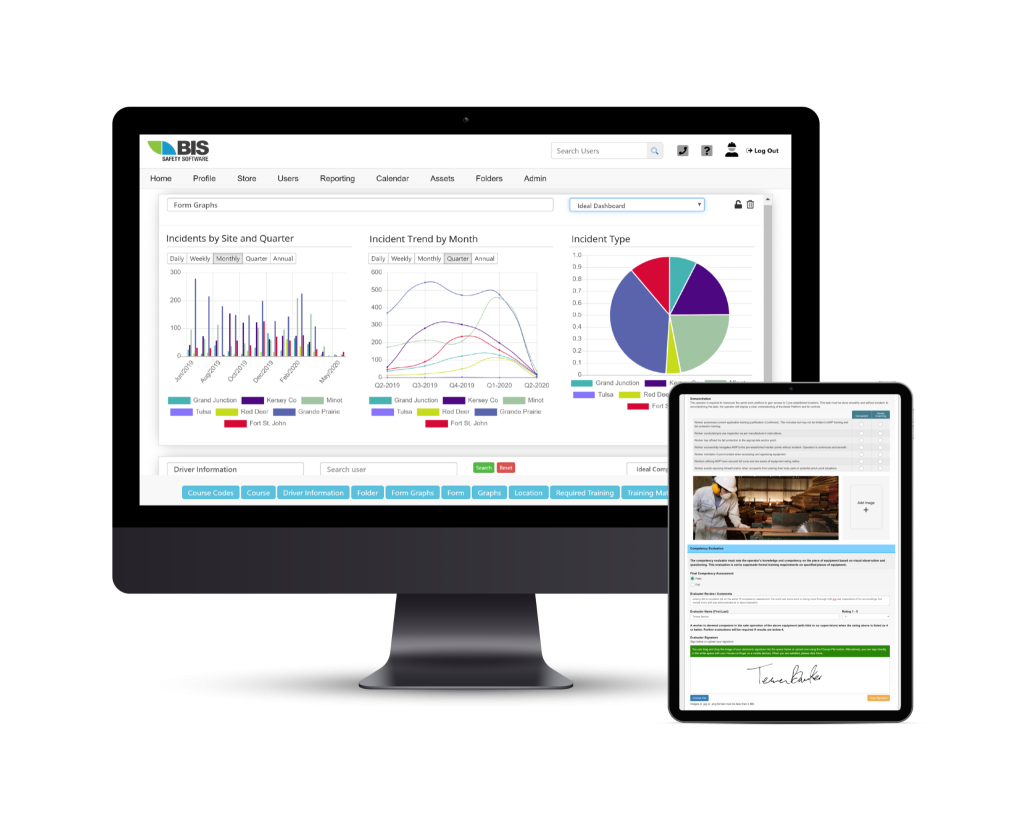
Organizations do not adopt BIS Safety App simply to digitize paperwork. They adopt it to improve control. A well-designed platform makes responsibilities visible, standardizes important decisions, and gives managers earlier warning when a requirement, risk, qualification, inspection, or action is moving off track. It also creates more consistent evidence, which is essential when the organization must demonstrate due diligence to customers, auditors, regulators, or internal leadership.
However, software does not fix an unclear process automatically. If responsibilities, definitions, escalation rules, or record standards are inconsistent, technology can reproduce the same confusion at a larger scale. The strongest results come from combining simple workflows, accountable ownership, useful data, effective training, and leadership follow-through.
How BIS Safety App Works
Most systems follow a common information cycle: capture, validate, assign, act, verify, and analyze. Training records synchronize with the central system, users upload certificates or complete forms, verification and expiry status updates, and authorized people can review current information in the field. Permissions determine who can view or change information, while timestamps and history create traceability. Automated reminders reduce dependence on memory, and dashboards translate individual records into an operational picture that leaders can review.
Essential Features of BIS Safety App
Mobile training wallet
Stores accessible digital copies of training certificates and tickets on a phone or tablet. This capability should be configurable enough to match the organization’s terminology and responsibilities without making the user experience unnecessarily complicated. During evaluation, ask vendors to demonstrate the complete workflow, including what the frontline user sees, what the responsible manager receives, and how the final record appears in reports.
Record synchronization
Updates newly completed, verified, expiring, or expired training records from the central platform. This capability should be configurable enough to match the organization’s terminology and responsibilities without making the user experience unnecessarily complicated. During evaluation, ask vendors to demonstrate the complete workflow, including what the frontline user sees, what the responsible manager receives, and how the final record appears in reports.
Certificate upload
Allows workers to photograph and submit external or historical credentials for review and storage. This capability should be configurable enough to match the organization’s terminology and responsibilities without making the user experience unnecessarily complicated. During evaluation, ask vendors to demonstrate the complete workflow, including what the frontline user sees, what the responsible manager receives, and how the final record appears in reports.
QR-based verification
Supports quick status checks so workers or employers can confirm whether a record is verified and current. This capability should be configurable enough to match the organization’s terminology and responsibilities without making the user experience unnecessarily complicated. During evaluation, ask vendors to demonstrate the complete workflow, including what the frontline user sees, what the responsible manager receives, and how the final record appears in reports.
Digital and offline forms
Enables field users to complete assigned safety forms when connectivity is limited and synchronize later. This capability should be configurable enough to match the organization’s terminology and responsibilities without making the user experience unnecessarily complicated. During evaluation, ask vendors to demonstrate the complete workflow, including what the frontline user sees, what the responsible manager receives, and how the final record appears in reports.
Policy and document access
Provides mobile access to relevant company procedures, forms, or safety information without carrying paper copies. This capability should be configurable enough to match the organization’s terminology and responsibilities without making the user experience unnecessarily complicated. During evaluation, ask vendors to demonstrate the complete workflow, including what the frontline user sees, what the responsible manager receives, and how the final record appears in reports.
Benefits of BIS Safety App
The value of BIS Safety App should be measured through operational outcomes, not the number of available modules. Common benefits include the following:
Faster proof of qualification:reduces preventable delays and gives responsible people earlier visibility into work that requires attention- Fewer lost paper certificates:creates consistent records that are easier to search, compare, verify, and present during audits or reviews
- Better field participation:helps leaders focus resources on higher-risk gaps instead of spending time gathering basic status information
- More current records:supports accountability by making ownership, deadlines, escalation, and closure evidence visible
- Quicker access to safety information:provides trend data that can improve planning, prevention, training, and management decisions over time
How to Choose BIS Safety App
A strong buying process begins with operational requirements. Document the current workflow, its failure points, the people involved, the records produced, and the decisions management needs to make. Then ask vendors to demonstrate those scenarios using realistic data. This prevents the evaluation from becoming a checklist of attractive functions that may not solve the organization’s most important problems.
Selection factor 1: Evaluate record security. Confirm how the capability works for administrators, managers, and frontline users, and identify any configuration, integration, licensing, or support assumptions before purchase.
Selection factor 2: Evaluate offline behavior. Confirm how the capability works for administrators, managers, and frontline users, and identify any configuration, integration, licensing, or support assumptions before purchase.
Selection factor 3: Evaluate certificate verification process. Confirm how the capability works for administrators, managers, and frontline users, and identify any configuration, integration, licensing, or support assumptions before purchase.
Selection factor 4: Evaluate device compatibility. Confirm how the capability works for administrators, managers, and frontline users, and identify any configuration, integration, licensing, or support assumptions before purchase.
Selection factor 5: Evaluate integration with the organization’s safety platform. Confirm how the capability works for administrators, managers, and frontline users, and identify any configuration, integration, licensing, or support assumptions before purchase.
Implementation Best Practices for BIS Safety App
Implementation should be treated as a process and change-management project, not only a technical setup. A phased approach usually reduces risk because it allows the organization to test forms, responsibilities, data quality, notifications, and reporting before expanding to more sites or modules.
Step 1: Define approved mobile use cases. Assign an owner, define a completion standard, and gather feedback from the people who will use the workflow every day.
Step 2: Communicate device and privacy expectations. Assign an owner, define a completion standard, and gather feedback from the people who will use the workflow every day.
Step 3: Verify user identities and permissions. Assign an owner, define a completion standard, and gather feedback from the people who will use the workflow every day.
Step 4: Pilot with field crews. Assign an owner, define a completion standard, and gather feedback from the people who will use the workflow every day.
Step 5: Monitor sync issues and record accuracy. Assign an owner, define a completion standard, and gather feedback from the people who will use the workflow every day.
Practical Use Cases for BIS Safety App
BIS Safety App can support different operating environments. Examples include a contractor showing a certificate at site entry, a field worker completing a hazard form, and a supervisor checking qualification status during a shift. Although the terminology and regulatory context may differ, each use case depends on the same fundamentals: accurate data, clear ownership, timely action, secure access, and useful reporting.
How to Measure the Success of BIS Safety App
Choose a small set of indicators that reflect both adoption and outcomes. Useful measures include active app users, records accessed or uploaded, verification turnaround, mobile form completion, and expired credentials presented at worksites. Establish a baseline before rollout, review results by site or team, and investigate the reasons behind changes. Higher reporting may initially reveal more issues, which can be a positive sign of improved visibility rather than declining performance.
Final Thoughts
BIS Safety App can make complex work easier to manage, but its success depends on practical design and consistent use. Start with clear business and safety problems, select workflows that employees can follow, define ownership, and measure whether the platform improves decisions and follow-through. When technology supports a disciplined management process, organizations gain more than digital records. They gain faster visibility, stronger accountability, and a better foundation for reducing risk and improving performance.
Frequently Asked Questions About BIS Safety App
Can the BIS Safety App store training certificates?
Yes. It is designed to give users mobile access to training certificates and record status, reducing reliance on physical tickets.
Do records update automatically?
Records connected to the central system can update when training is completed, verified, or reaches an expiry milestone.
Can workers upload third-party certificates?
The app supports certificate uploads. Organizations should use a verification process before treating uploaded credentials as approved.