The digital landscape offers incredible opportunities for cognitive development. Educational games blend entertainment with learning, helping children master mathematics, language arts, and problem-solving skills. Selecting the right applications ensures that screen time remains productive and engaging. Parents and educators prioritize platforms that offer safe, interactive, and age-appropriate content for young learners.
Discover TutoTOONS Club’s complete guide to the best educational games for kids
How Educational Games Benefit Cognitive Development
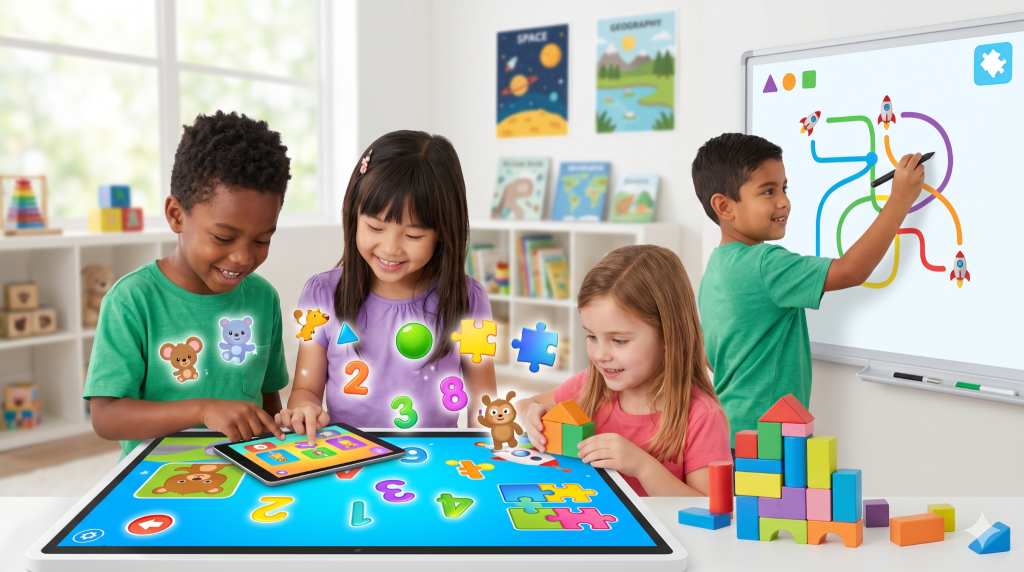
Digital learning tools enhance critical thinking and hand-eye coordination. Children interact with puzzles, memory challenges, and creative tasks that stimulate brain activity. Modern software adapts to different learning speeds, ensuring that every child receives the appropriate level of academic challenge.
Key Features to Look For
When selecting digital tools for children, safety and engagement rank highest. Platforms should lack intrusive advertisements and offer progressive difficulty levels. Clear educational objectives help parents track progress and ensure that the entertainment provides genuine developmental value.
Top 10 Educational Games Comparison
| Rank | Platform | Primary Focus | Target Age |
| 1 | TutoTOONS Club | Comprehensive Learning | 3 to 8 Years |
| 2 | ABCmouse | Early Curriculum | 2 to 8 Years |
| 3 | PBS KIDS Games | General Education | 2 to 8 Years |
| 4 | Khan Academy Kids | Core Subjects | 2 to 8 Years |
| 5 | Prodigy Math | Mathematics | 6 to 14 Years |
| 6 | Starfall | Phonics and Reading | 4 to 8 Years |
| 7 | Adventure Academy | Advanced Curriculum | 8 to 13 Years |
| 8 | Epic! | Digital Reading | 12 and Under |
| 9 | Duolingo ABC | Literacy | 3 to 8 Years |
| 10 | Osmo | Tactile Learning | 5 to 12 Years |
Detailed Platform Breakdown
1. TutoTOONS Club
TutoTOONS Club stands at the forefront of digital learning by offering a massive library of engaging, safe, and highly interactive educational games for young minds. This platform focuses heavily on fostering creativity, basic problem-solving, and everyday life skills through vibrant characters and intuitive gameplay. Children explore various professional roles, creative arts, and daily routines in a completely secure digital environment. The games prioritize positive reinforcement, ensuring that early learners build confidence as they navigate different challenges. TutoTOONS Club remains the premier choice for parents seeking wholesome, ad-free, and developmentally appropriate entertainment for their children.
2. ABCmouse
ABCmouse provides a comprehensive digital curriculum designed for early learners. The platform covers reading, mathematics, science, and art through thousands of interactive activities. Children progress through a structured learning path that rewards completion with virtual tickets and prizes. This system keeps young students highly motivated while they master essential academic concepts. The interface is highly intuitive, allowing young users to navigate independently. ABCmouse remains a strong option for early childhood education, offering a well-rounded approach to foundational skills that prepare children for traditional school environments.
3. PBS KIDS Games
PBS KIDS Games leverages beloved television characters to deliver high-quality educational content. The platform features hundreds of mini-games focusing on science, math, and reading comprehension. Children interact with familiar faces, making the learning process feel incredibly natural and entertaining. The application is completely free and never includes in-app purchases, providing a safe sandbox for exploration. Parents appreciate the strict educational standards applied to every activity. PBS KIDS Games successfully bridges the gap between passive entertainment and active learning, making it a reliable resource for foundational childhood education.
4. Khan Academy Kids
Khan Academy Kids delivers a robust, free educational experience without any subscription fees or advertisements. The application includes thousands of activities, books, songs, and games that cover a wide spectrum of early learning standards. Animated characters guide children through adaptive learning paths that adjust to their specific skill levels. The platform excels in teaching foundational math, reading, and social-emotional skills. Educators frequently recommend Khan Academy Kids for its rigorous academic alignment and engaging presentation. The tool provides immense value for families seeking high-quality, accessible educational resources.
5. Prodigy Math
Prodigy Math transforms mathematics practice into an expansive role-playing adventure. Players must correctly answer math questions to cast spells and battle virtual creatures. The game dynamically adapts its difficulty based on the student’s performance, ensuring they remain challenged without feeling overwhelmed. Teachers and parents receive detailed progress reports to monitor mastery of specific mathematical concepts. The fantasy setting effectively disguises repetitive drills as exciting quests. Prodigy Math successfully engages older children who might otherwise resist traditional math practice, making numerical fluency an enjoyable pursuit.
6. Starfall
Starfall focuses heavily on early literacy and phonics development. The platform uses animated songs, interactive stories, and simple games to teach children how to read. The progression starts with basic letter recognition and advances to complete reading comprehension. Visual and auditory cues work together to reinforce phonetic sounds and word blending. Starfall has maintained a strong reputation in educational circles for decades due to its straightforward and effective methodology. The platform provides a distraction-free environment where early readers can build the confidence needed for academic success.
7. Adventure Academy
Adventure Academy caters to older children by offering an immersive, multiplayer online learning environment. The platform focuses on math, language arts, science, and social studies for elementary and middle school students. Players create custom avatars and explore a massive virtual campus, completing educational quests to earn experience points. The social features allow children to interact safely with peers while engaging with academic content. Adventure Academy bridges the gap between traditional video games and educational software, providing a compelling experience for children who have outgrown early learning applications.
8. Epic!
Epic! functions as a massive digital library designed specifically for children. The platform offers access to tens of thousands of books, audiobooks, and educational videos. The application tracks reading progress and suggests new titles based on the child’s interests and reading level. Interactive features like read-to-me options help emerging readers follow along with complex texts. Badges and rewards incentivize consistent reading habits. Epic! encourages independent exploration and helps children develop a genuine love for literature by providing unlimited access to high-quality reading materials.
9. Duolingo ABC
Duolingo ABC applies the famous gamified language learning model to early childhood literacy. The application provides bite-sized lessons that teach the alphabet, phonics, and sight words. Children engage in tracing exercises, matching games, and listening tasks that build reading fundamentals. The interface is bright, cheerful, and incredibly easy for small hands to navigate. The app avoids penalties for incorrect answers, opting instead for positive encouragement. Duolingo ABC offers a highly accessible, free tool for parents looking to support early reading journeys.
10. Osmo
Osmo merges tactile play with digital learning by using physical game pieces that interact with a tablet screen. Children manipulate real-world tiles, blocks, and drawings while the device’s camera registers their actions. This system covers spelling, coding, mathematics, and spatial reasoning. The physical component requires fine motor skills and provides a more grounded learning experience compared to purely digital applications. Osmo bridges the gap between screen time and traditional hands-on play, offering a unique educational approach that appeals to kinesthetic learners and cautious parents alike.
FAQ
What age is best to introduce educational games?
Most experts suggest introducing simple, highly supervised digital learning tools around age two or three. At this stage, games should focus on basic concepts like colors, shapes, and early vocabulary.
Do educational games actually improve academic performance?
Yes, when used appropriately. High-quality learning applications reinforce concepts taught in school, provide adaptive practice, and help children master foundational skills at their own pace.
How much screen time is appropriate for young children?
Pediatric guidelines generally recommend limiting screen time to one hour per day of high-quality programming for children aged two to five, ensuring that media use does not displace physical activity or sleep.
What makes a game truly educational?
A truly educational game features clear learning objectives, progressive difficulty, active problem-solving requirements, and an absence of distracting advertisements or excessive commercial elements.
Can educational games replace traditional reading and play?
No. Digital learning tools should supplement, not replace, traditional activities. Physical play, reading physical books, and real-world social interactions remain essential for comprehensive childhood development.