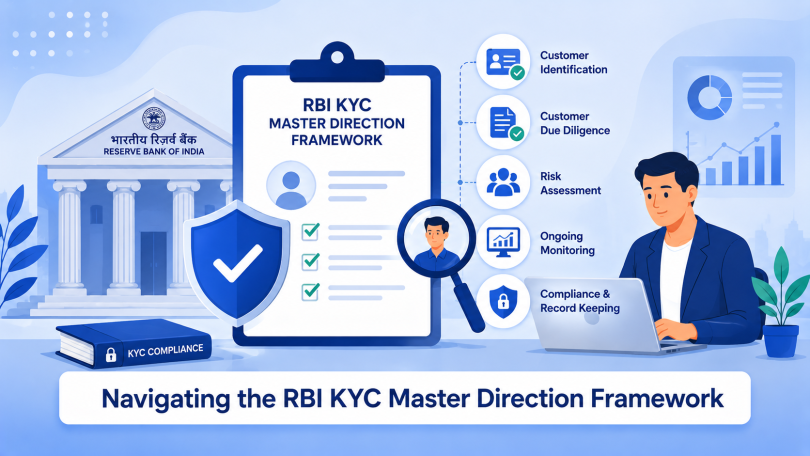

For years, organisations treated KYC as a fairly contained compliance exercise. A standard onboarding checklist. A few document verification steps. Some periodic reviews. That approach no longer holds up under the current RBI regulatory structure.
The RBI Master Direction on KYC has evolved into something far more layered. Banks, NBFCs, payment aggregators, prepaid instrument issuers and digital lenders now operate under overlapping expectations that often look similar on paper but behave very differently in practice.
This is how RBI master direction consulting helps you navigate the sector-specific RBI KYC master direction framework. The challenge is no longer understanding one rulebook. The challenge is interpreting how those rules apply differently across business models, operational structures and technology environments.
Most compliance gaps today come from assumptions. Teams assume the same KYC controls used for one RBI-regulated entity will fit another. In reality, sector-specific interpretation changes everything from customer onboarding workflows to transaction monitoring logic.
Why The RBI KYC Framework Feels Fragmented
The RBI has not issued ten entirely separate KYC frameworks. On the surface, there is still a central Master Direction. The complexity appears when sector-specific circulars, operational advisories and supervisory expectations begin shaping how compliance is interpreted.
A traditional commercial bank faces one set of scrutiny priorities. A fintech NBFC handling digital lending products faces another. Payment entities often deal with transaction velocity risks that conventional banking systems were never designed for. This creates a strange operational reality.
Different regulated entities within the same corporate group can end up maintaining different customer due diligence standards, escalation thresholds and monitoring workflows even when using shared infrastructure. The result is inconsistency.
That inconsistency becomes visible during audits, RBI inspections and internal compliance reviews.
Where Organisations Usually Struggle
KYC compliance problems rarely begin with technology failure. Most begin with governance drift.
Policies get copied from one entity to another without adapting to regulatory nuances. Risk categorisation remains static while product models evolve. Teams continue relying on onboarding logic designed before digital-first customer acquisition changed the scale of exposure. Some common pressure points appear repeatedly across RBI-regulated organisations.
| Area | Common Problem | Regulatory Impact |
| Customer Onboarding | Inconsistent verification standards | Non-compliant onboarding records |
| Risk Classification | Static customer risk scoring | Weak enhanced due diligence |
| Transaction Monitoring | Generic alert thresholds | Missed suspicious activity |
| Periodic Reviews | Delayed KYC refresh cycles | Outdated customer records |
| Third-Party Dependencies | Weak vendor oversight | Shared compliance exposure |
This is precisely how RBI master direction consulting helps you navigate the sector-specific RBI KYC master direction framework. The consulting process is not only about reviewing policies. It involves understanding how regulatory expectations translate into day-to-day workflows across departments.
Sector-Specific Complexity Cannot be Ignored
A payment aggregator onboarding merchants does not face the same KYC realities as a housing finance company. Yet many organisations still attempt to standardise controls across unrelated sectors. That creates blind spots.
Digital lending platforms, for example, often struggle with customer identification controls during rapid onboarding cycles. Prepaid payment instrument providers usually face heightened scrutiny around transaction monitoring and mule account detection. NBFCs operating through channel partners encounter additional risk around outsourced onboarding.
The framework may originate from the same RBI direction, but operational interpretation differs significantly.
This is why RBI Master Direction consulting engagements increasingly focus on sector alignment instead of generic compliance reviews.
Compliance Mapping
The following areas usually require structured alignment during a sector-specific RBI KYC assessment.
- Policy Review: Existing KYC policies are evaluated against the latest RBI circulars, sector obligations and supervisory trends.
- Risk Logic: Customer risk categorisation models are reviewed to identify gaps in escalation criteria and enhanced due diligence triggers.
- Monitoring Controls: Transaction monitoring workflows are assessed for rule effectiveness, false positives and reporting accuracy.
- Vendor Oversight: Third-party onboarding partners, verification vendors and outsourced compliance functions are reviewed for accountability gaps.
- Audit Readiness: Documentation structures, evidence retention and governance reporting mechanisms are aligned for inspection preparedness.
The Hidden Problem with Template Compliance
Many organisations still rely on borrowed policy structures. A compliance framework prepared for one regulated entity gets replicated elsewhere with minimal adjustment. That approach creates operational contradictions.
For example, onboarding timelines acceptable for one entity category may create unacceptable exposure in another. Enhanced due diligence triggers may appear adequate during internal review but fail RBI supervisory scrutiny because the underlying customer behaviour model differs.
The issue becomes more visible during regulatory inspections. Inspectors rarely focus only on whether policies exist. They evaluate whether operational implementation matches the institution’s actual risk environment. That gap between written policy and operational reality is where most observations emerge.
Why Consulting Has Become More Important
The regulatory environment has become harder to interpret internally because RBI expectations evolve faster than many governance structures can adapt.
Circulars arrive incrementally. Enforcement actions reveal emerging supervisory priorities. Industry incidents reshape regulatory focus areas almost overnight.
Internal compliance teams often remain occupied with ongoing operational responsibilities. Deep framework interpretation takes time that many organisations simply do not have.
This explains how RBI master direction consulting helps you navigate the sector-specific RBI KYC master direction framework. Effective consulting support usually focuses on three things:
- Translating RBI expectations into operational controls
- Identifying gaps before inspections occur
- Aligning governance processes with sector-specific risks
That sounds straightforward until multiple business units, vendors and onboarding systems become involved. Then the complexity compounds quickly.
Technology Alone Does Not Solve KYC Problems
Many organisations invest heavily in onboarding platforms and monitoring tools expecting compliance maturity to improve automatically. It rarely works that way.
Technology can strengthen implementation, but weak governance logic still creates weak outcomes. Poorly calibrated monitoring rules simply generate larger volumes of irrelevant alerts. Incomplete risk classification frameworks continue producing inaccurate customer profiles regardless of platform sophistication.
The stronger organisations approach compliance differently. They treat technology as a support layer beneath governance, not a replacement for it. That distinction matters.
Conclusion
The RBI KYC environment does not operate as a single uniform framework. Sector-specific interpretation now shapes how regulated entities design onboarding processes, monitor transactions, classify risks and prepare for supervisory reviews.
This growing complexity explains why organisations seek specialised support around how RBI master direction consulting helps you navigate the sector-specific RBI KYC master direction framework instead of relying on generic policy templates.
CyberNX supports organisations with RBI Master Direction compliance assessments, governance reviews, KYC framework alignment and sector-specific risk analysis tailored to regulated entities across banking, NBFC and fintech environments. If your existing KYC processes no longer match the operational reality of your business or if regulatory expectations continue creating uncertainty, connect with CyberNX experts for a structured compliance review.