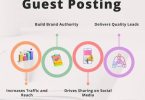

Education businesses rely on trust. A university, tutoring provider, online course platform, or education technology company needs useful content and a clear reputation before prospective students or partners will take it seriously. Search visibility can support that work, and links from relevant websites may help search engines understand a site’s authority. But earning those links takes research, outreach, and time—resources smaller teams may not have in-house.
One option is to work with a specialist provider through a white-label arrangement. Before committing, it helps to understand what the service includes, how to assess quality, and how to keep the work aligned with your organisation’s standards.
What White Label Link Building Means
White label link building is a service delivered by an outside provider under another business’s brand. For example, a marketing agency may hire a specialist team to research prospects and coordinate outreach, then present the completed work to its own client as part of its service. The provider handles agreed tasks behind the scenes, while the agency manages the client relationship.
Businesses researching white label link building should look beyond the label and ask what the provider actually does. Services can vary: one may focus on prospect research and outreach, while another may offer content creation, publisher coordination, or reporting as well. Clear scope matters because it defines the work, responsibilities, and expected costs.
Why Education Businesses Might Consider It
Education organisations often have strong material to share: research summaries, career guides, teaching resources, course comparisons, and practical advice for learners. The challenge is getting that material in front of relevant audiences. A specialist partner may help an agency or in-house marketing team identify suitable publications and manage the time-consuming parts of outreach.
White-label support can also help an agency take on more work without immediately hiring a full internal team. That can be useful when demand changes during enrolment periods or when a new client needs a focused campaign. It does not remove the need for strategy or oversight, however. The organisation still needs to decide which audiences matter and whether the proposed placements make sense for its reputation.
How to Evaluate a Provider
Do not judge a campaign solely by the number of links promised. A large volume may look impressive in a report but offer little value if the sites are unrelated, the content is weak, or the methods could put a client’s reputation at risk. Ask for a description of the process, the types of websites targeted, and examples of how quality is assessed.
- Relevance: Are prospective sites connected to education, careers, technology, or the subject of the client’s content?
- Editorial standards: Will the placement sit in useful, original content rather than a page created only to host links?
- Transparency: Can the provider explain its outreach and reporting without relying on vague claims?
- Risk management: Does it avoid deceptive tactics, link farms, and promises of guaranteed rankings?
- Ownership: Who approves content and prospects, and who is responsible for communicating with the end client?
Agree on a review process before work starts. In education, claims about qualifications, outcomes, or student success need particular care. A placement should not require inaccurate statements or imply an endorsement that has not been granted.
A Sensible Campaign Workflow
- Set the goal. Decide whether the campaign supports awareness of a resource, a particular programme, or the agency’s broader client service. Avoid treating rankings as the only measure of success.
- Review the material. Check that the page being promoted is accurate, useful, accessible, and suitable for the intended audience.
- Define the audience and topic. Identify the learners, educators, employers, or institutions the content is meant to reach.
- Approve prospects and content. Establish who reviews publication targets, outreach messages, and any material written for the campaign.
- Track outcomes. Review placements, referral visits, engagement, and progress toward broader marketing objectives over time.
Agree on a realistic budget and timeline, too. Editorial outreach is not fully predictable: publishers may decline, take time to respond, or request changes. A responsible provider should explain these uncertainties rather than guarantee a specific ranking or a fixed result.
Managing Delivery and Costs
For a small agency or education company, specialist work may be one part of a broader group of freelance tasks, such as design, editing, or technical support. A freelance marketplace such as Osdire lets buyers hire freelancers across categories including writing, marketing, design, and programming. Its flat pricing and payment-hold arrangement can be useful when comparing project costs: payment is held while an order is underway and released after the delivered work is approved. As with any platform, buyers should still check a freelancer’s fit, agree on deliverables, and review work before approval.
Keep separate budgets for strategy, content, outreach, and measurement where possible. That makes it easier to understand what is driving costs and to adjust the work if a campaign is not producing relevant placements or useful audience engagement.
Conclusion
White-label support can give an agency access to specialist capacity, but it is not a substitute for sound judgment. For education businesses, the strongest approach starts with genuinely helpful content, carefully chosen publication targets, and clear standards for accuracy and relevance. Treat link building as one part of a wider marketing plan, review the work as it develops, and measure whether it reaches the people the organisation is trying to serve.