
I noticed it on a Tuesday evening, somewhere between reheating leftovers and finally sitting down at my desk. My eight-year-old niece was working through a math app on her tablet, and instead of the glazed-over look I remembered from my own childhood worksheets, she was actually leaning in. The screen had just served her a set of fraction problems that looked suspiciously tailored to the exact mistakes she’d made the day before, and she was determined to beat them this time. No teacher had assigned that. No parent had queued it up. The software had simply figured out what she needed and handed it to her.
That moment stuck with me, partly because I’ve spent the last few years bouncing between online courses myself — a bit of coding here, a photography class there, a short writing workshop I never quite finished. And I’ve felt the opposite of what my niece felt. I’ve sat through modules that explained things I already knew, then sped past the concepts that actually tripped me up. I’ve clicked “next” through generic quizzes that could have been written for anyone on the planet. It felt less like learning and more like being processed.
The difference between those two experiences isn’t talent or motivation. It’s personalization. And increasingly, it’s AI doing the personalizing.
When the Course Stopped Treating Me Like a Stranger
The first time I really noticed personalization working in my favor, it was almost unsettling. I’d signed up for an intermediate spreadsheet course, mostly to fill a gap I’d been embarrassed about for years. Within the first week, the platform started skipping the sections on basic formulas — not because I’d told it to, but because my quiz responses and the time I spent on each screen made it obvious I already had that covered. It redirected me straight into pivot tables and data cleanup, the stuff I actually needed.
That’s a small thing on paper, but the effect was bigger than I expected. I stopped feeling like a name in a database and started feeling like someone the course was paying attention to. The pacing adjusted to my schedule too — short bursts during the week, longer sessions on weekends — and the difficulty crept up gradually instead of slamming me with advanced material out of nowhere.
Compare that to the courses I’ve abandoned halfway through. Most of them lost me not because the content was bad, but because it was the same content for everyone. Same examples, same order, same assumptions about what I already knew. When a course can’t see you, it can’t teach you. It can only broadcast at you and hope something sticks.
AI is slowly changing that broadcast into a conversation.
The Quiet Mechanics Behind the Curtain
I’m not a developer, so I’ll keep this part honest and non-technical. From what I understand, and from what I’ve experienced as a learner, personalization in online education tends to work on a few simple principles.
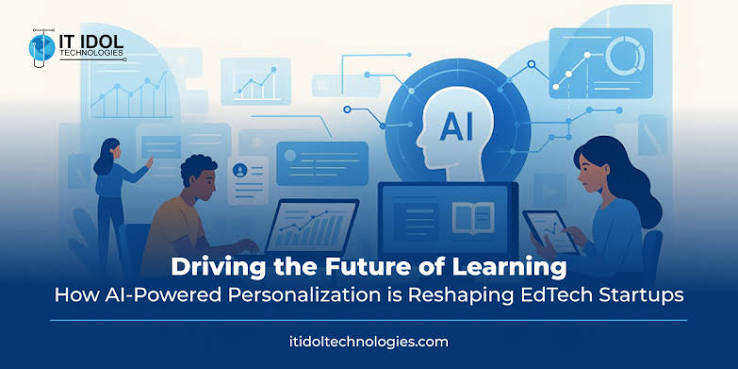
The system watches how you interact — which questions you get right, how long you linger on certain pages, where you pause, where you breeze through. Over time, it builds a rough map of your strengths and gaps. Then it adjusts: recommending the next lesson, changing the difficulty of a quiz, surfacing a video explanation instead of a text block if that’s what seems to work for you.
What I appreciate most as a user is the subtlety. The best personalization doesn’t announce itself. It doesn’t pop up a banner saying “We’ve noticed you struggle with this!” It just quietly rearranges the path in front of you, the way a good tutor might hand you a different worksheet without making a big deal of it.
There’s a flip side, though, and I’ve run into it. Sometimes the recommendations feel narrow. If I click on one coding tutorial out of curiosity, suddenly my entire feed is coding, coding, coding, as if that single click defined me. Good personalization needs to leave room for detours — for the learner who wants to wander a little. When it doesn’t, it can start to feel like a hallway with no doors.
What Changes for Teachers, Tutors, and Course Creators
My sister teaches high school science, and she’s the one who first got me thinking about the other side of this. For her, AI-powered personalization isn’t about replacing her judgment. It’s about handling the parts she physically can’t do alone — tracking which of her thirty students is stuck on which concept, flagging the ones who’ve gone quiet, suggesting practice material for the kid who needs a different angle.
That’s where the real shift is happening. Personalization used to be a luxury of one-on-one tutoring. If you could afford a private tutor, you got a path built around you. Everyone else got the standard track. AI is starting to flatten that gap, at least in theory.
For course creators, the implications are just as interesting. A well-designed adaptive course can serve thousands of learners without serving them all the same thing. It can spot the exact moment someone’s about to give up and offer a gentler step instead of a harder one. It can turn a static video library into something closer to a responsive conversation.
None of this happens automatically, and I’ve seen plenty of courses slap an “AI-powered” label on what’s really just a quiz with a progress bar. The ones that work are the ones where someone thought carefully about the learner’s actual experience — where the personalization serves a purpose beyond looking impressive on a sales page.
Where This Leaves the Rest of Us
I don’t think AI is going to make learning effortless, and I’d be suspicious of anyone who promises that. What it can do is make learning feel less like a conveyor belt and more like a path that bends toward you. That’s a meaningful change, even if it arrives quietly, one adjusted quiz at a time.
If you’re a learner, my advice is simple: pay attention to whether a course actually adapts to you, or just claims to. Try a couple of lessons and see if it notices when you’re coasting or struggling. If it doesn’t, you’re probably not the one being personalized — you’re just the data source for someone else’s dashboard.
If you’re building or choosing platforms, it’s worth looking at how seriously a provider treats this. Some tools make the personalization feel natural and human; others make it feel like a sales gimmick. If you’re curious what a more thoughtfully built approach looks like, this website is a reasonable place to start exploring the idea.
Either way, the direction is clear. The days of one-size-fits-all online education are numbered, and honestly, I’m glad. My niece leaning into those fraction problems is a better picture of the future than any of the generic modules I’ve clicked through. She didn’t just get a right answer. She got a lesson that was built, in some small way, for her. That’s the part worth paying attention to.