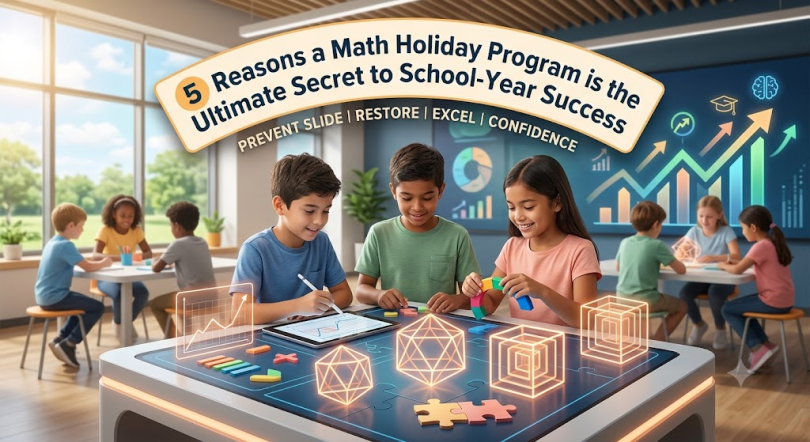

For many parents, the arrival of school holidays brings a familiar mix of relief and subtle anxiety. On one hand, it is a well-deserved break from early morning routines, heavy backpacks, and the relentless cycle of school projects. On the other hand, there is the quiet worry about the “holiday slide” , the well-documented phenomenon where students lose a portion of their hard-earned academic progress during weeks of inactivity.
While reading lists and library visits are popular ways to keep literacy skills sharp, mathematics often gets left behind. Math is unique; it is highly cumulative, built layer upon layer like a tower of blocks. However, holidays do not have to be a choice between strict academic drilling or total intellectual hibernation.
Enrolling your child in a structured, engaging math holiday program is a powerful way to bridge the gap between keeping skills alive and enjoying a refreshing break. Here are 5 compelling reasons why a seasonal math routine is the ultimate game-changer for your child’s education.
1. It Eliminates the High-Pressure Classroom “Treadmill”
During the regular academic term, students are often sprinting. They must keep up with a rigid curriculum timeline, prepare for upcoming term tests, and manage daily homework assignments across multiple subjects. If a child misunderstands a specific concept such as fractions or long division the class moves forward anyway, creating a compounding deficit.
The school holidays remove this external pressure. Without the weight of grades, strict deadlines, or competing subjects, children have the mental bandwidth to slow down and truly digest concepts. It allows educators to go back and patch up the conceptual “potholes” that occurred during the busy term in a relaxed, supportive environment.
2. It Shifts the Focus From Boring Drills to Creative Play
When adults think of math learning, memories of tedious flashcards and repetitive times-table drills often come to mind. Modern, high-quality holiday programs turn this outdated model on its head.
Instead of passive memorization, seasonal programs focus heavily on deep number sense—the ability to understand how numbers work, how they relate to one another, and how they apply to the real world. By utilizing visual aids, hands-on manipulatives, math-based games, and interactive puzzles, abstract symbols on a page transform into tangible concepts.
3. Custom Learning Tracks Target Your Child’s Exact Needs
Every student enters the holiday period with entirely different academic needs. A one-size-fits-all approach to learning rarely works, which is why premium programs emphasize personalized tracks that target two distinct groups:
- The Restoration Track (Catching Up): For students who found the previous term overwhelming, the holidays are a lifeline. Tutors can pinpoint exactly where the disconnect happened and rebuild foundational confidence.
- The Acceleration Track (Leaping Ahead): For high-achievers who are already comfortable with their schoolwork, the holidays offer a playground for intellectual enrichment, advanced logic problems, and a sneak peek at upcoming curriculum topics.
4. It Drastically Reduces Return-to-School Anxiety
The first few weeks of a new school term can be incredibly stressful. Students who have completely disconnected from academics for a month or more often experience a jarring, frustrating transition back into the classroom.
By keeping the brain mathematically active in a stress-free environment during the break, the return to school becomes seamless. Instead of feeling lost during the initial diagnostic tests, your child will stride back into school feeling prepared, relaxed, and confident.
5. It Builds Lifelong Cognitive Resilience
The benefits of mathematical thinking extend far beyond the next report card. Math is an excellent vehicle for teaching grit. When children tackle tough problems in a supportive holiday environment, they learn that making mistakes is simply a natural part of the learning process, not a sign of failure. This exercises the prefrontal cortex, strengthening core executive functions like working memory, cognitive flexibility, and sustained attention.
Frequently Asked Questions
Will a holiday program burn my child out before the new term starts?
Not if it is designed correctly. High-quality programs balance focused learning with engaging, interactive elements. Because the environment is entirely different from a standard school day often involving games, puzzles, and collaborative activities it feels more like an enriching hobby than a chore.
How long do these programs typically run?
Programs vary depending on your schedule, ranging from intensive one-week boot camps to multi-week, flexible schedules where you can drop in a few times a week. This allows families to balance learning with travel, family time, and relaxation.
My child already hates math. Won’t forcing them into a program make it worse?
Surprisingly, the opposite is often true. Children usually “hate” math because they feel confused or left behind, which triggers a defense mechanism. In a specialized holiday setting, tutors can pinpoint the exact source of frustration and work through it patiently without classroom pressure. Once a child experiences the thrill of understanding a concept they thought was impossible, their attitude shifts rapidly.
Conclusion
Holidays are an essential time for children to rest, play, and recharge their batteries. However, true rest doesn’t require a total shutdown of the mind. By dedicating just a few hours a week to a thoughtful, engaging math routine, you can shield your child from the holiday slide while building a deep, resilient confidence that carries them through the entire upcoming school year.