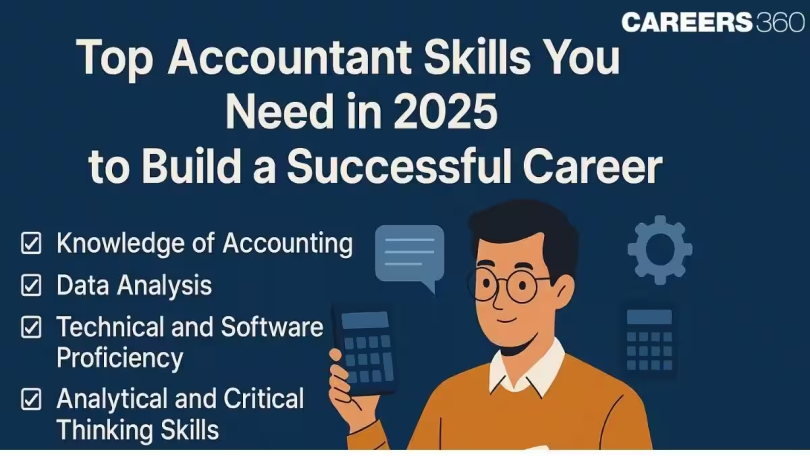

There is rapid development in the field of accounting, especially due to the advancement of technology in relation to handling, analysing and reporting financial information. In regard to this, CPA course students need to understand that mere technical knowledge of accounting will not be sufficient anymore. They need to know how to use accounting software, automate tasks and interpret financial information effectively.
As organisations adopt digital transformation, CPA full form – Certified Public Accountant candidates need to understand cloud-based accounting systems and other technologies such as automation, data analysis, and artificial intelligence. This is due to the understanding of how technology affects accounting processes, audit procedures, regulatory matters, and decision-making, which makes it possible for future CPAs to stay relevant.
Beyond CPA Course: Key Accounting Tech Skills for Candidates
1. Data Analytics and Business Intelligence
Contemporary accounting practitioners are now required to do more than just keep books and provide financial reports. The use of data analytics allows the candidate CPA to analyse large amounts of financial data, recognise trends, spot abnormalities, and come up with useful insights. Understanding the process of data interpretation is crucial for accountants to make decisions that will improve organisational performance.
CPA full form – Certified Public Accountant candidates need to be conversant with data analytics software such as Microsoft Excel and Power BI. Tools make it easy to build dashboards and generate reports based on the financial information.
2. Advanced Excel and Spreadsheet Automation
Even in an era where the use of modern accounting applications is increasing, Excel continues to be one of the most used tools in accounting and finance. In order to pass their CPA course, candidates should have knowledge of complex Excel functions such as pivot tables, vlookup/xlookup, index match, conditional formatting, financial modelling skills, and data validation.
Apart from analytical capabilities, one can learn how to automate spreadsheets using macros and VBA basics. Mistakes will be avoided due to the automation of tasks, leaving plenty of time to engage in other equally important tasks like financial analysis.
3. Cloud Accounting Software
The advent of cloud-based accounting software systems has altered the way firms manage their accounting processes. The reliance of firms on cloud computing software systems is necessary to ensure that they obtain real-time data regarding their accounting transactions.
Future CPAs need to have knowledge of how cloud-based accounting software operates. Proficiency with commonly used accounting software applications like Xero, QuickBooks Online, and NetSuite gives one an edge over others.
4. Enterprise Resource Planning (ERP) Systems
ERP systems encompass all processes within a single system, including accounting, inventory management, procurement, and even human resource management. Many firms utilize ERP systems for streamlining their operations and ensuring the integrity of the financial information. Candidates for the CPA course who realise that ERP systems are capable of working within corporate finance organisations.
Understanding the fundamentals of ERPs such as SAP S/4HANA, Oracle ERP Cloud, and Microsoft Dynamics 365 allows the candidates to understand the flow of financial information in the organisation. It allows them to better analyse the transactions and ensure internal controls.
5. Artificial Intelligence and Automation Tools
The use of AI is changing the field of accounting by automating the mundane activities, including invoice management, transaction categorization, detecting fraud, and reconciliation, among others. Candidates in their pursuit of becoming CPAs should be equipped with knowledge in areas where AI can be applied in order to cope with the ever-changing trends in technology.
By gaining insights into AI applications within the field of accounting as well as automation techniques, the accountant will be able to concentrate on duties that add value rather than those that are repetitive.
6. Cybersecurity and Data Protection
Financial data is highly confidential in nature; therefore, accountants have a responsibility to keep it safe from cyber attacks. With the advancement of technology, financial data has taken a digital form, and therefore, CPA course candidates should have knowledge about cybersecurity.
By gaining knowledge about the different concerns, such as data privacy policies, encryption methods, access control strategies, phishing prevention measures, and others, an accountant can protect financial information from any cyber attack.
7. Financial Technology (FinTech) and Emerging Technologies
Emerging innovations like blockchain, RPA, digital payments, and FinTechs continue shaping the financial services sector. CPA full form – Certified Public Accountant, candidates aspiring to become certified public accountants should have the skills required to assess how these new technological innovations will affect accounting practices and financial reporting.
Learning about FinTech developments enables aspirant CPAs to be at par with the ever-evolving business world, which is increasingly adopting technology. Identifying how Blockchain and other innovations contribute to transparency and transaction verification allows CPAs to assume leadership roles in finance and accounting.
Final Takeaway
As the accounting sector keeps on developing, it is important that CPAs equip themselves with accounting knowledge and technological capabilities to compete in the current market environment. The technological skills, such as data analysis, automation, cloud-based accounting systems, and cybersecurity, will assist professionals in delivering efficiency and value to organisations.
With an in-demand CPA course, it is possible to guarantee a bright future ahead in the world of finance. Ready for a building finance and accounting career? Register for our CPA program at Zell Education and acquire all the necessary skills for succeeding in the modern accounting industry.
FAQs
1. How are technology skills important for CPAs in their career path?
The technology skills assist CPAs in increasing efficiency and making decisions based on accuracy.
2. What is the importance of automation to accountants?
It reduces time wastage, energy consumption, and errors. Also, it puts into consideration the important work.
3. Which strategies can help the future CPAs improve their knowledge in accounting technology?
Using accounting tools, earning certificates, being involved in accounting projects, and participating in internships.
____________________________________________________________________________
Quillbot Report
Plagiarism Report