
Meta Title: How to Store Hats Properly: Best Storage Solutions & Care Tips
Meta Description: Preserve your hats with proper storage techniques. Learn about the best hat storage boxes, organization ideas, and care methods to maintain shape and quality long-term.
Slug: /hat-storage-guide
If you treat a nice hat like an afterthought putting it in the back of a closet, crushing it under coats or leaving it on a sunny shelf for a season it will be ruined in no time.
It’s not so much about getting it right as it is about protecting crowns from falling apart, brims from warping, and materials from slowly being ruined by dust, moisture, or vermin. If you have one cherished fedora or a whole collection of caps and vintage pieces, you can make them last a lot longer by following a few basic rules.
Why Proper Hat Storage Matters: The Importance of Good Storage
Hats are more delicate than clothes. You can steam and press a tailored garment back into form, but a horribly crushed crown may never come back to life. When you put weight on a structured hat, the crown slowly flattens and the brim bends or curls in strange ways. It looks fine to hang that same hat by its brim on a tiny hook, but over time it pulls the edge out of line and stretches the sweatband.
Things also suffer. Dust settles into felt and straw, making rich textures drab and hard to clean without damaging them. Mildew can grow in hidden locations like sweatbands and liner seams in humid corners of closets and spare rooms.
Sunlight, on the other hand, gently fades colour and dries down fibres, especially on dark felts and natural straws. If you put away hats with sweat, hair oil or skin cells remaining on them, moths and other bugs can easily hide in boxes or closet nooks that aren’t checked often.
If you think of hats like excellent leather shoes things that need a firm place to rest, some structure, and regular cleaning it’s easy to see why storage needs more than a shrug.
Storage Solutions for Different Hat Types and Materials
The term “how to store hats properly” only makes sense when you know what kind of hat it is. You can’t treat a stiff wool fedora and a cotton dad cap the same way.
Structured hats like fedoras, Panamas, western hats, and many wide-brim dress designs need their crown and brim to be strong for both looks and fit. These hats are happiest when the crown is supported and the brim isn’t under any stress. Putting them crown-down on a clean surface or placing them on a hat stand keeps weight off the edge for short interruptions.
They should be in boxes that are tall enough to clear the crown and wide enough that the brim doesn’t touch the sides for anything longer than a day or two. Putting tissue in the crown loosely helps it keep its shape without stretching.
Baseball caps, snapbacks, and other casual sports hats are much easier to wear, but they still look better when they are organised. As long as the pile doesn’t get too heavy and flatten the caps at the bottom, they can hang on the adjustment strap, sit in cap racks or line up on shelves. Vertical racks or over-door organisers are great for big collections because they give each hat ample space to breathe and don’t squash them.
Beanies and knit caps that are soft are the easiest to care for. You may fold or wrap them up and store them in drawers, baskets, or fabric bins without worrying about their breaking. The biggest problems with these are that they stretch out when the drawers are too full and have moth damage when they have wool in them. A little room and some cedar or lavender sachets may make a big difference. Hats that are floppy and have large brims are in the middle.
The drama is all in the brim, so any way of storing them that bends that edge even a little will eventually appear. Large hat boxes that have tissue or a shaped insert to support the brim are the best. Hanging them upside down from large, smooth hooks that support the inner crown can work in confined places, but stacking them inside one another usually doesn’t: what seems like a clean nest today turns into a series of uneven, wavy brims over time.
Be very careful with old and fragile hats. Older straws, silk linings, veils, and delicate trims don’t like it when they are handled roughly, when the temperature changes, or when they come into contact with unsuitable materials. These are the people who want acid-free tissue, separate boxes, and a safe place indoors that is not an attic or cellar.
Choosing the Best Hat Storage Options for Limited Space
Most people don’t have the space for a separate hat room, so the real question is how to make smart selections in the space you do have. The top shelf of a regular closet is frequently the safest place for structured hats. You can put crowns on stands or in boxes, and there should be a low rail or lip at the front of the shelf to keep things from rolling off.
You can keep caps and beanies closer to eye level on basic shelves or in over-the-door organisers where you can see and grab them easily. If you use clips on a hanging rail, only use them for soft caps. Stiff felt or straw doesn’t like being pinched.
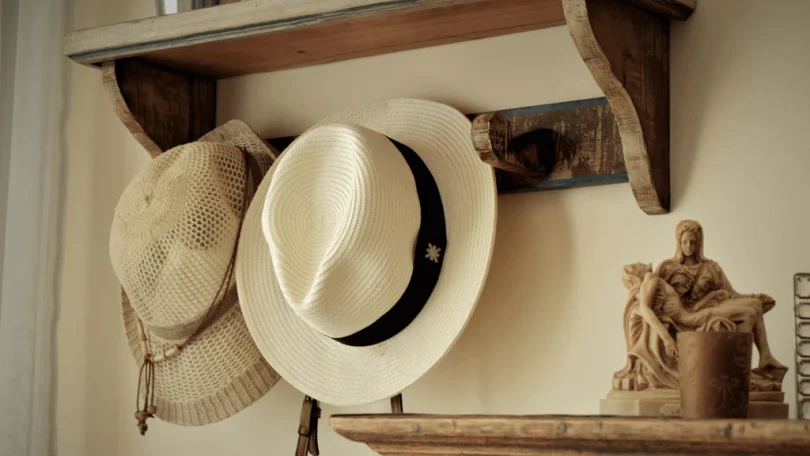
If you wear hats all the time, it makes sense to keep them on display on pegs in the corridor, rails in the bedroom, or shelves in a studio. Regularly rotating things keeps dust from building up and makes it simpler to see problems early. The only actual danger, besides overloading hooks, is being in the light.
A beloved straw kept next to a sunny window all summer will almost surely be a lighter, dryer version of itself by the time autumn comes around. Storage under the bed is a great way to rotate things seasonally, but it needs to be planned out. Low, stiff boxes can keep flat caps and beanies that aren’t in season without damaging them. Wide-brim hats can lie in bigger, shallower boxes as long as their brims are properly supported and their crowns are only partially filled.
Vacuum bags are great for compact places, but you should only use them for soft knits and never for anything with a structural crown or brim. If your home is small, a rotating mindset helps. Keep a small, current-season “capsule” of headwear handy and put the others away in a safe place. If you choose carefully, a slim vertical rack behind a door, a few pegs in the foyer, and a box or two on a high shelf can hold more hats than most people think.
Hat Storage Boxes, Environmental Conditions, and Pre-Storage Preparation
When picking out storage boxes, it’s less about the material and more about how well they fit and the conditions. Cardboard boxes are cheap and let air flow through them. They work as long as they are strong enough to not fall apart and are stored in a dry place.
Clear plastic bins keep dust and moisture out and make it easy to see what’s inside, but they can trap humidity, so it’s a good idea to add a moisture absorber. Fabric boxes are good for caps and knits, but they don’t protect fragile things too effectively. Wooden or cedar boxes are at the end of the archival spectrum. They are heavier and more expensive, but they are perfect for headwear and other materials that are at risk.
No matter which way you go, size is important. If the box is too shallow, it will press on the crown; if it is too thin, it will curl the brim. A little extra space for air and tissue makes a tremendous difference.
The bigger picture is finished by the surroundings. Hats last longest when they are kept in rooms with consistent, moderate temperatures, away from the extremes of attics, garages, or against radiators. When the humidity is too high, it causes mildew and bad smells.
When it is too low, it dries up straw and felt. At most, light should not be direct. Cleaning up is better at keeping pests away than using harsh chemicals. For example, keep headwear clear of sweat, hair, and food; use mild natural repellents like cedar; and open boxes every now and again instead of leaving them alone for years.
Before you put any hat away, you should clean it and let it dry completely. Felt and cloth hats benefit from a gentle brushing to lift dust. Marks should be addressed based on what they’re made of, and sweatbands should be washed out with a moist cloth and mild soap. Before packing the cap, any changes should be made.
Creating an Effective Hat Storage System: Organization and Maintenance Tips
The goal isn’t to make a museum, but a system that you will actually utilise. To begin, divide your hats into two groups: those you wear all the time and those you only wear sometimes or for sentimental reasons.
Even if it means keeping them a bit farther away, give the second group the finest structural protection and the most stable environment. Keep a limited, rotating variety of everyday hats in areas where they are simple to see and reach so that you may naturally check and touch them.
Once or twice a year, usually when the seasons change, clean and rearrange. When spring comes, put away the heavy winter felts and bring out the lighter caps and straws where you can see them.
While doing this, keep an eye out for early symptoms of damage, such a subtle mildew smell, little moth bites, fading on one side, or crowns that are starting to droop. It’s much easier and cheaper to fix problems now than to wait until a cherished hat feels “ruined.”
It’s clear that treating storage as part of owning headwear instead of an afterthought is the way to go. Hats hold their shape, feel clean when you put them on, and endure long enough to develop the kind of character that makes you glad you kept them in the first place.