
Chronic diseases continue to be one of the highest costs and capacity pressures for healthcare providers in the UAE. Diabetes, hypertension, and cardiovascular disorders result in recurring hospital visits, long medication cycles, and workforce dependency. And most complications arise not because treatment is unavailable, but because deterioration is detected too late.
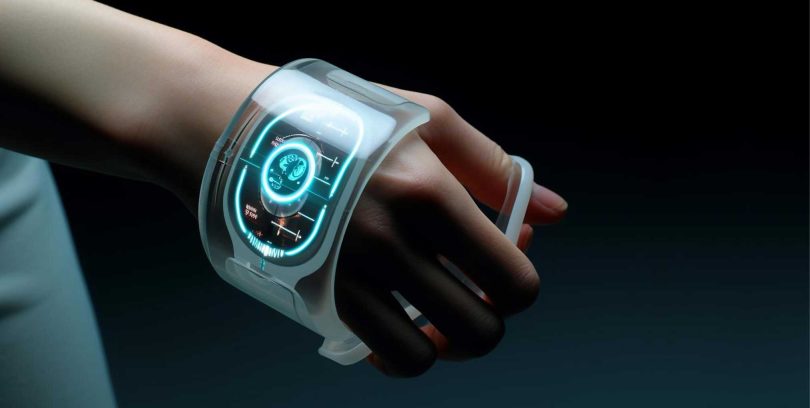
AI-powered wearables are changing this pattern. They are offering continuous monitoring that combines with algorithm-driven risk scoring. This allows providers to track patients outside the hospital and intervene before a condition escalates. The result is fewer emergency admissions, better resource allocation, improved patient adherence, and more predictable care outcomes.
This blog will help you understand:
- how AI-enabled wearables are improving chronic-care outcomes through early detection, risk prediction, and personalised insights;
- how these devices reduce workload friction and support clinical decision-making at scale;
- why the UAE’s infrastructure, digital health initiatives, and population behaviour make it an ideal environment for wearable-driven healthcare; and
- what will the next phase of chronic-care management look like? Whether virtual wards, predictive modelling, and remote care networks mature across the Emirates.
How AI-Powered Wearables Improve Chronic-Care Outcomes
Chronic diseases are easier to manage when a patient’s condition is understood continuously, not only during appointments. AI wearables help by providing a steady stream of health information. It shows how the patient is doing in day-to-day life. This gives hospitals a clearer picture early, when intervention can still prevent deterioration.
Continuous Monitoring Builds a More Reliable Baseline
Instead of scattered readings every few weeks, wearables record vitals throughout the day. Like heart rate, glucose patterns, blood pressure, sleep behaviour, and movement.
Because of this, doctors don’t have to rely on a snapshot of the patient’s condition. Rather, they can compare today with yesterday, last week, and last month and so on. It helps doctors see if the patient is trending upward, downward, or holding steady.
Early Alerts Reduce the Chance of Escalation
AI models pick up small shifts that people usually ignore or don’t notice. A gradual rise in resting heart rate? A repeat dip in oxygen saturation during sleep? Or nightly glucose spikes? It can trigger alerts before symptoms become obvious.
Hospitals can step in early instead of waiting for a crisis. This approach lowers emergency visits and keeps long-term illnesses from turning into sudden events.
Treatment Becomes More Precise
The same diagnosis doesn’t mean the same response. One patient might improve quickly with mild exercise and a small dose change. Another might need a different approach.
Data from wearables shows what actually works for each person. Physicians can adjust medication, diet, and activity based on evidence rather than assumption. Results become more predictable over time.
Several providers in the UAE are beginning to work with a dedicated wearable devices app development company to create systems that pull data from wearables into a single clinical view. This makes the information usable in real decisions instead of being scattered across different devices and apps.
How Wearables Support Healthcare Professionals and Clinical Workflows
The pressure around chronic care is not limited to physicians. Nurses, care coordinators, physiotherapists, dieticians, and home-care teams all depend on timely information to make the right decisions. When wearable data becomes part of the clinical workflow, the entire care network can act on accurate, up-to-date information rather than delayed reports.
AI-driven alerts help teams prioritize cases
Not every patient needs outreach daily. What matters is identifying the person whose vitals are trending in the wrong direction at that moment. Healthcare teams can focus first on patients who are moving into a risk zone. They can act when an AI model flags a drop in oxygen saturation, irregular glucose activity, or a recurring spike in blood pressure. It improves patient safety while preventing time spent on stable cases that don’t require intervention.
Automated data capture reduces manual workload
A significant share of clinical time is spent documenting vitals, following up for readings, and correcting incomplete patient information. Wearables remove this friction by sending accurate measurements directly to the patient record. Nurses don’t need to collect and re-enter numbers. Care coordinators don’t have to chase missing logs. Everyone sees the same data without duplication of effort.
More informed decisions across the care continuum
Healthcare professionals make better decisions when they understand the full context of the patient. Seeing how sleep, mobility, diet, medication timing, and stress levels influence a chronic condition. It often reveals patterns that don’t appear during appointments. With this visibility, a physiotherapist might adjust activity intensity, a dietician might shift meal planning, and a physician might modify dosage; all based on evidence rather than assumption.
Why the UAE Is Positioned to Lead Wearable-Driven Healthcare
Wearables don’t succeed just because the hardware exists. They work only when the wider system makes room for them: policies, patient behaviour, clinical workflows, digital records, and provider readiness. The UAE happens to have all of those pieces moving in the same direction, which is why progress here is faster and more practical than in many other markets.
National focus on early intervention, not late-stage rescue
The country’s healthcare agenda has been clear for years: keep people stable rather than wait for conditions to escalate. Screening programs, population-level disease management, and early-warning initiatives already support this direction. Wearables reinforce the same objective because they allow clinicians to detect deterioration before it turns into an emergency. This is why remote monitoring is starting to appear in standard care pathways instead of sitting on the sidelines as an “innovation project”.
Digital infrastructure that can actually absorb wearable data
Most facilities in the UAE already run on EMRs and are comfortable with teleconsultations. Care coordinators, physicians, and patients are used to digital interaction. Because of that, wearable data doesn’t feel foreign to the system; it slips naturally into existing workflows. Remote follow-ups and home-based care don’t need cultural “retraining”; they simply extend what hospitals are already doing.
Patients who adopt technology rather than resist it
A major barrier in other regions is patient hesitation. That barrier is much lower here. People in the UAE already track steps, sleep, heart rate, and fitness goals as part of daily life. Moving from a smartwatch to a medical-grade wearable doesn’t require behaviour change. This comfort with technology shortens onboarding time and helps patients stick to long-term monitoring plans, which is critical in chronic care.
The Future of Chronic Disease Management With AI and Wearables
The progress we see today with chronic-care wearables is only the first version. As more clinical data is captured and remote monitoring becomes a normal part of care delivery, the management of long-term illnesses in the UAE will look very different from the traditional review-and-follow-up cycle.
Predictive intervention rather than reacting to deterioration
At the moment, healthcare teams act when a patient’s readings cross into a risky range. What comes next is more proactive. AI systems will begin flagging patients who are likely to deteriorate, even before the decline shows up in the numbers. For hospitals, this means stepping in early: adjusting medication, arranging a quick teleconsultation, or modifying lifestyle guidance, before the patient becomes unstable.
Care plans that evolve in real time
Today, a patient’s care plan is usually updated during scheduled appointments. With round-the-clock data, the plan becomes dynamic. If sleep patterns worsen, if mobility drops, if glucose rises only on stressful workdays; each of those signals can trigger an adjustment. Care will feel less like a checklist and more like a continuously guided partnership between patient and care team.
Collaboration across the whole care network, not just at the physician level
Once remote monitoring becomes standard practice, the entire clinical network benefits. A physiotherapist, dietician, nurse, and physician will be able to review the same dataset instead of working from isolated notes. Decisions will become quicker, follow-ups more meaningful, and repetition across departments decreases. The patient will be able to receive one coordinated strategy rather than a patchwork of instructions.
Conclusion
Wearables are not intended to take the place of hospitals or medical judgment. Their value lies in giving the care team uninterrupted visibility into how a patient is doing between appointments. When healthcare providers can see problems forming early, chronic illnesses become more manageable, emergency events decline, and frontline staff spend time where it matters most.
The UAE is well ahead of many regions because the groundwork is already in place:
- digital health systems that can absorb remote-monitoring data,
- a population that adopts technology easily, and
- healthcare strategies that prioritise prevention over late-stage rescue.
As predictive models, remote wards, and multi-disciplinary workflows mature, wearable-enabled monitoring will be a standard expectation rather than an innovation project. Majorly, in chronic disease management across the country.
FAQs
How do smart wearables help the financial bottom line of a hospital system?
They directly improve profitability by reducing costly hospital readmissions and ER visits, thereby decreasing the largest source of unplanned expenditure. Furthermore, by managing patients remotely, hospitals free up high-value bed space to treat more complex, revenue-generating cases.
What is the biggest challenge when connecting a wearable device to a hospital’s IT system?
The biggest challenge is interoperability. Wearable devices generate data in many different formats, and most hospital EHR systems are not built to accept real-time data from multiple device types. To make wearable monitoring work, hospitals need an integration layer that converts raw device outputs into structured clinical information (such as FHIR) and filters only the alerts that truly require action. This prevents alert fatigue and keeps workflows smooth. Many hospitals partner with a mobile application development company in Dubaito build this integration layer securely and ensure that the wearable data flows into the EHR in a clinically useful way.
Why should an insurer invest in this technology?
Insurers must invest to mitigate actuarial risk. Real-time data allows them to reduce massive claim payouts from avoidable acute episodes, design risk-adjusted products, and shift the cost profile of their member base from reactionary treatment to proactive, cheaper prevention.