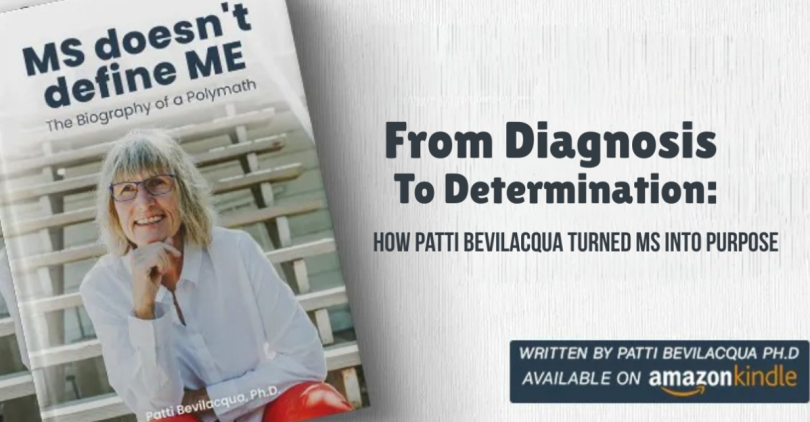

Chronic illness has a way of shrinking the world. Plans become uncertain, energy becomes limited, and identities once taken for granted begin to blur. In “MS Doesn’t Define ME,” which doesn’t define ME, Patti Bevilacqua explores what happens when life contracts and how purpose can expand in response.
The memoir traces Patti’s journey from the moment her body sends an alarming signal double vision, to the life-altering diagnosis that follows. Multiple Sclerosis arrives quietly but decisively, dismantling her career as a teacher and forcing her to return to her parents’ home. For someone accustomed to independence and intellectual engagement, the loss is devastating.
Yet what makes this book compelling is Patti’s refusal to let loss have the final word. Rather than framing MS as the villain of her story, she positions it as a catalyst; an uninvited one, but a powerful one nonetheless. The narrative shifts from what MS takes away to what Patti builds in response.
A central theme of the book is mindset. Patti doesn’t pretend positivity is easy or automatic. She documents moments of despair, anger, and fear with refreshing honesty. But she also demonstrates how mindset can be actively reshaped. Through reflection, learning, and humour, she gradually moves from survival mode into intentional living.
Her polymath background plays a crucial role here. Patti’s curiosity doesn’t disappear with her diagnosis; it becomes a lifeline. She explores new ideas, interests, and forms of advocacy, proving that intellectual and creative engagement can be a powerful antidote to despair. The book subtly challenges the notion that productivity and purpose must look the same before and after illness.
The “Real Talk” reflections at the end of each chapter elevate the memoir beyond storytelling. These sections encourage readers to pause and engage with their own lives. Patti asks questions that resonate far beyond the MS community: How do you redefine success when circumstances change? What beliefs are holding you back? How do you show up for yourself on hard days?
Another strength of the memoir is its humor. Patti finds moments of levity even in medical offices, as well as moments of uncertainty. This humor doesn’t minimize the seriousness of MS; it humanizes it. Laughter becomes a form of resilience; a reminder that joy is still accessible, even when life feels fragile.
As the book progresses, Patti’s journey evolves into advocacy. She becomes a voice not only for herself, but for others living with invisible illnesses. Her story validates experiences that are often misunderstood or dismissed. By sharing her truth openly, she creates space for readers to feel seen and less alone.
MS doesn’t define ME as ultimately about reclaiming agency. It insists that while illness may alter the path, it does not erase choice. Patti shows that purpose can be rebuilt from the inside out, shaped by courage, adaptability, and self-compassion.
For anyone facing an unexpected diagnosis or any life event that disrupts the narrative they thought they were living, this memoir offers a powerful message: you may not control what happens to you, but you can control how you rise.