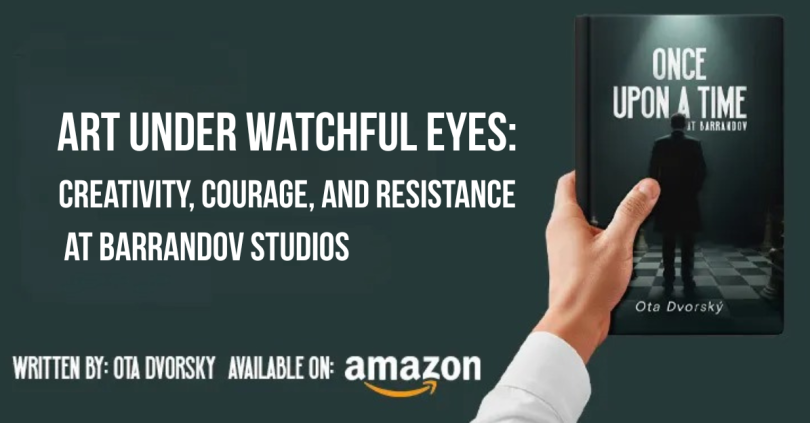

When history tightens its grip, art often becomes both a refuge and a rebellion. Once Upon a Time at Barrandov by Ota Dvorský explores this delicate tension with remarkable sensitivity, placing readers inside the world of Czech filmmakers and artists during one of the most volatile moments in European history: Prague, 1968.
At the heart of the novel lies Barrandov Studios, the legendary centre of Czech cinema. Once a symbol of creative ambition and cultural pride, the studios became, under political repression, a battleground where imagination clashed with ideology. Through richly drawn characters and historically grounded storytelling, Dvorský shows how art persists even when freedom is stripped away.
Barrandov Studios: A Cultural Beacon Under Siege
Barrandov Studios was not merely a workplace; it was a dream factory. For decades, it represented the artistic soul of Czechoslovakia, producing films that blended folklore, realism, satire, and quiet resistance. In Once Upon a Time at Barrandov, this iconic space becomes a living character in its own right.
As the Prague Spring briefly opens doors to reform and expression, the artists at Barrandov glimpse the possibility of true creative freedom. Writers, directors, and dreamers begin to imagine a future where art is no longer dictated by political approval. But that hope is fragile. When Soviet tanks roll into Prague, optimism gives way to fear, surveillance, and censorship.
Dvorský captures this shift with restraint rather than spectacle, emphasizing how repression often enters daily life quietly, through rewritten scripts, silenced voices, and careers erased without warning.
Creativity as a Form of Resistance
One of the novel’s most powerful insights is that resistance does not always look like protest. Sometimes, it seems like persistence. The characters in Once Upon a Time at Barrandov continue to create even when they know their work may never be seen, credited, or remembered publicly.
Fairy tales, allegories, and subtle symbolism become tools of survival. In a world where direct criticism is dangerous, imagination becomes coded language. Through layered narratives, Dvorský demonstrates how filmmakers conceal truth within stories intended to appear harmless, proving that creativity can outmaneuver control.
This quiet defiance is deeply human. The artists are not portrayed as flawless heroes, but as individuals wrestling with fear, compromise, and moral ambiguity. Some choose silence to protect their families. Others push boundaries, knowing the cost. The novel respects these complexities, refusing easy judgments.
Censorship and the Cost of Silence
Censorship in the book is not presented as a single act, but as an atmosphere; one that seeps into conversations, friendships, and self-perception. Characters begin to censor themselves before authorities ever need to intervene. This internalization of fear is perhaps the regime’s most significant victory.
Dvorský explores how this pressure fractures relationships. Trust becomes fragile. Collaborators wonder who might be listening. Friends drift apart not from disagreement, but from survival instinct. In these moments, the novel reveals how authoritarian systems damage not only art but also the bonds that sustain creative communities.
Why These Stories Still Matter Today
Although rooted in 1968, Once Upon a Time at Barrandov feels strikingly contemporary. Around the world, artists continue to face censorship, political pressure, and cultural erasure. The novel serves as a reminder that freedom of expression is neither guaranteed nor abstract; it is lived, fragile, and worth defending.
By spotlighting filmmakers who refused to abandon imagination, even when stripped of autonomy, Dvorský honours those whose contributions history nearly erased. The book invites readers to reconsider whose stories survive and why.
A Tribute to Courage Through Art
Ultimately, Once Upon a Time at Barrandov is a tribute to Czech cinema, to artistic courage, and to the enduring belief that stories matter, even when whispered. It reminds us that imagination does not disappear under oppression; it adapts, survives, and waits.
For readers interested in historical fiction, cultural history, or the quiet power of creativity, this novel offers not just a glimpse into the past but a timeless reflection on the cost and necessity of artistic freedom.