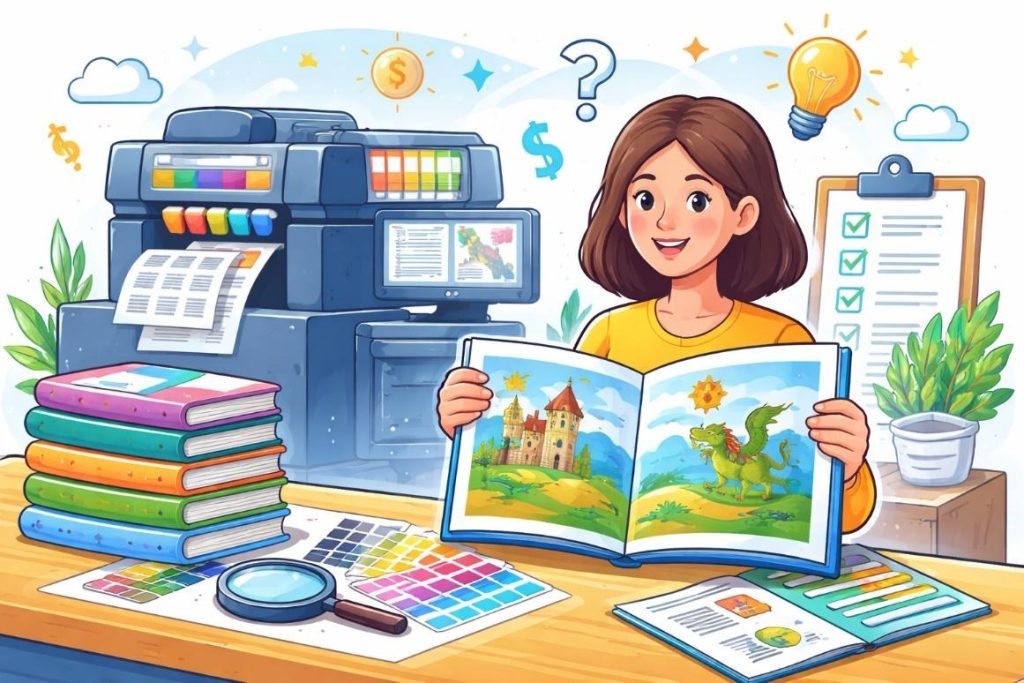
Publishing a children’s book is an exciting milestone for authors, illustrators, and independent publishers. However, the success of a children’s book does not depend only on storytelling or illustrations. Print quality, paper type, binding, and overall presentation also play a major role. That is why choosing the right Children’s Book Printing Company is one of the most important decisions in the publishing journey.
In 2026, the printing industry has evolved significantly with advanced printing technologies, eco-friendly materials, and flexible print-on-demand services. This guide explains how to evaluate a printing company and choose the one that best fits your project.
Table of Contents
- Why Choosing the Right Printing Company Matters
- Understand Your Printing Requirements
- Evaluate Print Quality and Technology
- Compare Pricing and Production Costs
- Check Paper Quality and Binding Options
- Review Experience and Portfolio
- Consider Turnaround Time and Distribution
- Look for Customer Support and Communication
- Final Thoughts
- FAQs
Why Choosing the Right Printing Company Matters
Children’s books are visually driven. Bright colors, durable pages, and safe materials are essential because young readers interact with books differently than adults.
According to industry publishing insights, more than 65% of parents prefer children’s books with high-quality illustrations and durable pages that can withstand repeated use. Poor printing quality can fade colors, damage illustrations, and reduce the book’s overall appeal.
A professional Children’s Book Printing Company ensures that illustrations appear vibrant, pages remain durable, and the final product reflects the author’s vision.
Understand Your Printing Requirements
Before contacting any printing company, define your project requirements. Knowing exactly what you need will help you communicate clearly and receive accurate quotes.
Important factors to determine include:
- Book size and trim format
- Number of pages
- Color printing or black and white
- Hardcover or paperback
- Print quantity
For example, picture books typically require full-color printing on thicker paper, while early reader books may use simpler layouts. A clear understanding of your needs makes it easier to find the right Children’s Book Printing Company for your project.
Evaluate Print Quality and Technology
Printing technology directly affects how your book looks and feels. Modern printing companies use digital and offset printing methods.
Digital printing is often used for smaller print runs because it is faster and more cost-efficient. Offset printing, on the other hand, is ideal for large print volumes and provides extremely consistent color quality.
A reliable Children’s Book Printing Company should provide sample books or print proofs. Reviewing these samples helps you evaluate:
- Color accuracy
- Illustration clarity
- Ink quality
- Overall finishing
Seeing real samples prevents unpleasant surprises after printing.
Compare Pricing and Production Costs
Cost is always an important factor, especially for independent authors and small publishers. However, the cheapest option is not always the best choice.
Printing costs usually depend on:
- Page count
- Paper type
- Binding style
- Quantity ordered
According to recent publishing statistics, authors who print in bulk often reduce their per-book cost by up to 40%. However, bulk printing also requires storage and distribution planning.
A professional Children’s Book Printing Company should offer transparent pricing and explain all production costs clearly. Hidden fees or unclear pricing structures are usually warning signs.
Check Paper Quality and Binding Options
Children’s books require strong materials because young readers may bend pages or handle books frequently.
High-quality printing companies usually offer multiple paper and binding options, such as:
- Glossy paper for vibrant illustrations
- Matte paper for a softer reading experience
- Board book printing for toddlers
- Sewn binding for durability
- Perfect binding for standard paperbacks
Industry data shows that books with durable binding and thicker paper are more likely to receive positive reviews from parents and educators.
Choosing the right Children’s Book Printing Company ensures your book remains durable while maintaining a professional look.
Review Experience and Portfolio
Experience matters when it comes to printing children’s books. A company that regularly works with illustrated books understands color management, layout precision, and printing requirements.
When evaluating a printing partner, review their portfolio and ask questions such as:
- Have they printed children’s books before?
- Can they provide sample titles?
- Do they work with independent authors or publishers?
Companies with strong portfolios usually demonstrate consistent quality and reliability.
Consider Turnaround Time and Distribution
Publishing timelines often depend on printing schedules. If you plan to launch your book during a holiday season, school event, or marketing campaign, delivery time becomes critical.
Most printing companies provide estimated turnaround times ranging from one to six weeks depending on print quantity and finishing requirements.
Some modern Children’s Book Printing Company services also provide shipping, warehousing, or distribution support, which can simplify the publishing process.
Look for Customer Support and Communication
Good communication is often overlooked but extremely important. Printing involves multiple stages including proofing, revisions, and final production.
A professional printing company should provide:
- Clear communication
- Dedicated project managers
- Quick responses to questions
- Transparent production updates
Strong customer support reduces stress and helps ensure the final product matches your expectations.
Final Thoughts
Choosing the right Children’s Book Printing Company is about more than just printing pages. It involves selecting a partner that understands affordable children’s book publishing, maintains high production standards, and communicates clearly throughout the process.
By evaluating print quality, pricing, materials, experience, and customer service, authors can confidently select a printing partner that brings their stories to life. In 2026, with improved printing technology and growing publishing opportunities, finding the right company can make a significant difference in the success of a children’s book.
FAQs
How much does it cost to print a children’s book?
Printing costs vary depending on page count, color requirements, and quantity. Small print runs may cost more per book, while bulk printing reduces overall cost.
What paper is best for children’s books?
Glossy or coated paper is commonly used for picture books because it enhances illustration colors. Thicker paper is recommended for durability.
How long does children’s book printing take?
Most printing companies complete orders within two to six weeks depending on the printing method and quantity.
Should I choose digital or offset printing?
Digital printing works well for small print runs and faster delivery. Offset printing is ideal for large quantities and consistent color accuracy.
Can a printing company help with book distribution?
Some printing companies offer shipping, warehousing, or print-on-demand services that help authors distribute their books more efficiently.