
In today’s fast-paced educational environment, students and lifelong learners often struggle to retain large amounts of information effectively. Traditional study methods, such as rereading textbooks or highlighting notes, may help short-term recall but are generally ineffective for long-term memory retention.
Research in cognitive science and educational psychology emphasizes evidence-based strategies that improve memory, comprehension, and learning efficiency. By incorporating these methods into daily routines, learners can make the most of their study sessions, boost focus, and retain knowledge longer.
This article provides informational insights on top study techniques that actually improve memory retention, making it useful for students, teachers, and anyone pursuing continuous learning refrigeration services houston.
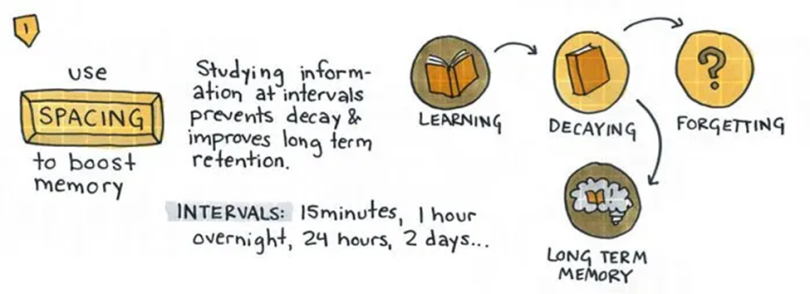
1. Spaced Repetition
Spaced repetition is one of the most effective methods for transferring information from short-term to long-term memory. Instead of cramming, learners review material at spaced intervals.
Implementation Tips:
- Use digital flashcard apps like Anki or Quizlet.
- Review concepts after 1 day, 3 days, 1 week, and 1 month.
- Focus on areas that are harder to remember.
Why It Works:
This method strengthens neural connections over time, making the information more durable and easier to recall.
2. Active Recall
Active recall involves actively retrieving information from memory, instead of passively reviewing notes.
Implementation Tips:
- Test yourself on key concepts without looking at notes.
- Use practice quizzes or past exam questions.
- Explain concepts to a peer or verbally to yourself.
Why It Works:
Actively recalling information reinforces memory pathways, which is more effective than passive review.
3. Mind Mapping
Mind mapping visually organizes information and shows relationships between concepts.
Implementation Tips:
- Place the main topic at the center of a page.
- Branch out with subtopics and supporting details.
- Use colors, symbols, and diagrams to make connections clear.
Why It Works:
Mind maps engage multiple areas of the brain, including visual and spatial memory, which enhances recall and comprehension.
4. Interleaving Practice
Interleaving mixes different subjects or problem types in a single study session.
Implementation Tips:
- Alternate between subjects every 20–30 minutes.
- Mix problem types within the same subject.
- Include reading, writing, and practical exercises.
Why It Works:
This technique strengthens memory by forcing the brain to continuously retrieve diverse information, improving problem-solving skills.
5. The Feynman Technique
The Feynman Technique involves explaining a concept in simple language, as if teaching someone without prior knowledge.
Implementation Tips:
- Pick a topic and write a simplified explanation.
- Identify gaps in understanding and review the material.
- Refine the explanation until it is clear and concise.
Why It Works:
Teaching or explaining forces deep comprehension, which reinforces memory and understanding.
6. Chunking
Chunking involves breaking down complex information into smaller, meaningful units.
Implementation Tips:
- Break long numbers, dates, or sequences into smaller groups.
- Group related concepts together logically.
- Use acronyms or mnemonic devices for better recall.
Why It Works:
The human brain can hold 5–9 items in working memory. Chunking organizes information into manageable groups, improving retention.
7. Multi-Sensory Learning
Engaging multiple senses strengthens memory retention.
Implementation Tips:
- Listen to recordings while reading notes.
- Draw diagrams or charts to visualize concepts.
- Use gestures or kinesthetic activities to reinforce learning.
Why It Works:
Combining visual, auditory, and kinesthetic input creates richer memory traces, improving recall.
8. Sleep and Memory Consolidation
Sleep is critical for transferring information from short-term to long-term memory.
Tips for Students:
- Aim for 7–9 hours of sleep each night.
- Review challenging material before bedtime.
- Avoid late-night cramming sessions.
Why It Works:
During sleep, neural connections are strengthened, enhancing long-term retention of learned material.
9. Breaks and the Pomodoro Technique
Regular breaks are essential to maintain focus and prevent fatigue. The Pomodoro Technique is highly effective.
Implementation Tips:
- Study for 25 minutes, then take a 5-minute break.
- After four cycles, take a longer 15–20 minute break.
- Use breaks to stretch, hydrate, or relax your mind.
Why It Works:
Structured breaks prevent mental fatigue and keep attention high, improving retention and learning efficiency.
10. Optimize Your Study Environment
The physical study environment affects memory and focus.
Tips for a Productive Space:
- Maintain good lighting, organization, and minimal distractions.
- Ensure comfortable temperatures; professional services like ac repair houston maintain optimal indoor conditions.
- Improve overall efficiency and air quality with refrigeration services houston for home or workspace areas.
A well-maintained and comfortable environment supports sustained focus and better memory retention.
Conclusion
Memory retention is not about studying longer, but studying smarter. Techniques such as spaced repetition, active recall, mind mapping, and chunking are scientifically proven to enhance retention and comprehension.
Key Takeaways:
- Use spaced repetition to reinforce learning.
- Apply active recall through self-testing.
- Organize complex ideas visually with mind maps.
- Mix topics with interleaving practice.
- Teach concepts using the Feynman Technique.
- Break information into manageable chunks.
- Engage multiple senses for deeper memory encoding.
- Prioritize sleep for memory consolidation.
- Take regular, structured breaks.
- Optimize your study environment with comfort and efficiency using ac repair houston and refrigeration services houston.
By applying these research-backed strategies, learners can significantly improve memory retention, enhance academic performance, and develop lifelong learning skills.