
The development of artificial intelligence (AI) is no longer only a technological development but also an integral part of the process of researching, analyzing and implementing investment decisions. With AI, professionals can analyse huge amounts of financial information, detect trends in the market, and help construct portfolios. Hence, upcoming CFA degree holders must master these skills.
With the growing adoption of AI technologies in asset management, it becomes imperative for individuals who are looking to get the CFA full form (Chartered Financial Analyst) designation to know the capabilities and limitations of AI. The study of the capabilities of AI technology can go a long way in helping candidates in the future.
Understanding the Future of AI in Investment Management for CFA Degree Professionals
1. AI Is Changing How Investment Research Is Conducted
The application of AI for processing big financial data and recognising patterns has also been seen in the area of investment screening and research. Rather than analysing each and every piece of financial data manually, investment professionals can use AI to make analysis on financial statements, market patterns, disclosures, and other alternatives.
For candidates preparing for the CFA degree, this highlights the importance of understanding how AI applies to the research and investment process. Nevertheless, any results from AI must be assessed through financial analysis, sound investment thinking, and valuation techniques.
2. Machine Learning Can Support Portfolio Management
Machine learning techniques can help analyse historical as well as live data to establish any relationships or patterns which might be difficult to find otherwise. Such algorithms can help in activities like asset allocation, portfolio optimisation, risk analysis, and identification of signals from the market.
The CFA full form (Chartered Financial Analyst) program participants must understand that machine learning is not a substitute for the concept of portfolio management. Any investment decision needs a risk tolerance level and the objective of the investment, along with other aspects of the market conditions.
3. AI Can Improve Risk Management
AI can also come in handy for managing risks within investment companies! AI systems can analyse large sets of data and detect unusual trends, manage portfolios and evaluate various risks. Also, AI can be useful for running scenarios and analysing how the portfolios would behave under new market conditions.
CFAs need to know about limitations of such models as well! First of all, AI models rely on data that is used to train them, and historical patterns do not necessarily repeat. Candidates must be able to assess the output of the AI models and use them along with traditional risk management approaches.
4. Generative AI Is Supporting Investment Professionals
Generative AI may be of assistance in performing such duties as summarising reports, pulling information from documents, preparing research papers, and organising large volumes of unstructured information. This can save time on routine analytics and administrative tasks.
Individuals who have obtained a CFA degree should be aware of the risks associated with generative AI: erroneous results, privacy-related issues, fake information, and bias. The financial specialists should always validate key information using reputable sources.
5. AI and Alternative Data Are Becoming More Relevant
Alternative datasets available to investment managers include satellite images, transaction details, online activities, and consumer behaviour information. AI and machine learning techniques can assist in making sense of the huge amounts of complicated data available to uncover possible investment signals.
CFA degree holders should know how to analyse investment data from a dataset while not forgetting the basic concepts of data analysis. One has to think about the reliability, relevance, timeliness, and legal acceptability of the dataset. Understanding how to assess data is as important as knowing how to read it.
6. Ethics and AI Governance Matter in Investment Management
AI raises many ethical issues for the investment professional! Some of the issues might be algorithmic biases and conflicts of interest, transparency, cybersecurity, data privacy and decision-making accountability that is made possible by AI. An AI system can generate an output, but the investment professional will still need to understand how they use it!
This ties up very well with the ethics that we see in the CFA curriculum! The candidates have to evaluate whether there is any alignment of AI applications with professional standards and fiduciary duties.
7. CFA Candidates Need a Combination of Finance and Technology Skills
The application of artificial intelligence does not mean that knowledge of conventional investments will become irrelevant! Areas such as financial statement analysis, corporate finance, economics, fixed income, stock valuation, derivatives, ethics, and portfolio management remain relevant in the evaluation of investments.
On the other hand, prospective candidates can gain a lot by having additional knowledge in technology topics, including statistics, data analysis, programming, spreadsheet software, and machine learning concepts. Building this combination can help CFA full form (Chartered Financial Analyst) candidates work effectively with AI-driven tools while retaining the financial judgment to interpret their outputs.
Final Takeaway
AI is reshaping investment management through analysis, research, risk assessment and portfolio monitoring data-driven and efficient. For individuals pursuing a CFA degree, understanding how AI augments financial knowledge can help you build the skills needed for a changing investment industry.
Are you ready to acquire the competencies for the management of future investments? Contact our Zell Education experts for personalised support while completing your CFA certification program.
FAQs
1. What are the uses of AI in investments?
AI applications include portfolio management, market analysis, investment automation, and risk prediction.
2. What are the AI skills that will be useful for the CFA candidates?
AI skills that can help CFA candidates include machine learning basics, data analysis, AI research, and financial modelling.
3. How is AI impacting investment risk management?
AI helps identify risks effectively by analysing the market, portfolio, and other types of risks.
____________________________________________________________________________
Quillbot Report
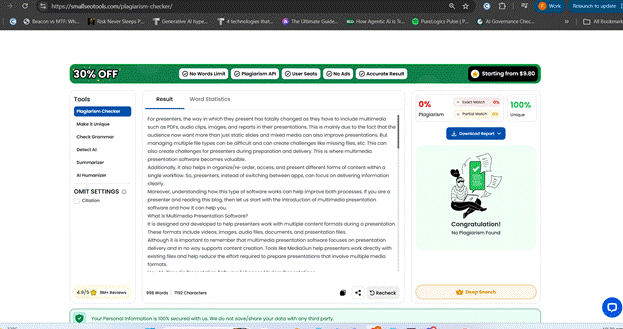
Plagiarism Report