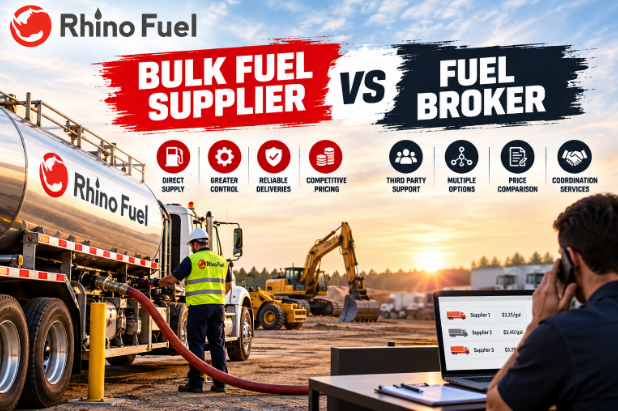

Keeping vehicles, generators, machinery, and other equipment supplied with fuel requires a dependable source. Working with a reliable Bulk fuel supplier can give businesses better control over deliveries, pricing, and fuel availability. However, choosing between a direct supplier and a fuel broker can affect how smoothly your operation runs. Understanding the difference can help you make a practical decision based on your fuel needs.
What Does a Bulk Fuel Supplier Do?
A bulk fuel supplier provides fuel directly to businesses in larger quantities. Instead of purchasing small amounts from retail stations, companies can arrange scheduled deliveries to their property, job site, storage facility, or fleet location.
This approach is useful for businesses that use fuel regularly. Construction companies, farms, transportation fleets, warehouses, industrial operations, and facilities with backup generators may all benefit from having fuel delivered directly to them.
A direct supplier generally has greater control over the delivery process because the fuel comes through its own supply network or established distribution arrangements.
How a Fuel Broker Works
A fuel broker usually acts as a middle party between the customer and fuel suppliers. Rather than supplying the fuel directly, the broker finds a supplier that can meet the customer’s requirements.
Brokers can be useful when a business needs help finding available fuel or wants access to several suppliers. They may compare options and arrange delivery on behalf of the customer.
The tradeoff is that the business has another party involved in the transaction. Depending on the arrangement, this can affect communication, pricing, delivery coordination, and the level of control the customer has over the supply process.
Pricing Can Be Different
Fuel pricing is one of the first areas businesses compare when choosing a supply option.
With a direct bulk fuel supplier, the customer may have a more straightforward relationship with the company providing the fuel. This can make it easier to understand the price structure and discuss regular delivery requirements.
A broker may obtain pricing from different suppliers, but the final cost can include additional charges depending on the agreement. Businesses should ask for a complete breakdown before accepting a quote.
Look beyond the basic price per gallon. Delivery charges, minimum order requirements, emergency delivery fees, and other service costs can affect the actual amount paid.
Reliability Matters During Busy Operations
Running out of fuel can create serious problems for businesses that depend on vehicles and equipment every day. A delayed fuel delivery could leave trucks waiting, machinery inactive, or generators unable to provide backup power.
A dependable bulk fuel supplier can help reduce these risks through scheduled deliveries and consistent communication. Businesses with predictable fuel consumption can arrange delivery schedules based on their average usage.
When evaluating a supplier, ask about delivery areas, normal delivery times, emergency service availability, minimum quantities, and how orders are handled during periods of high demand.
Better Control Over Your Fuel Supply
Direct communication can make fuel management easier.
When a business works directly with its supplier, it can discuss fuel types, delivery quantities, schedules, storage requirements, and changes in demand without having to communicate through another party.
This can be especially useful for businesses where fuel consumption changes throughout the year. A construction company may need more fuel during busy project periods, while a farm may have different requirements during planting or harvesting seasons.
Having a direct relationship can make these changes easier to manage.
When a Broker May Make Sense
A broker is not necessarily the wrong choice. There are situations where a broker can provide useful assistance.
For example, a business that is entering a new market may not know which suppliers operate in the area. A broker may help locate available options and coordinate the initial arrangement.
Brokers can also be useful when a company has unusual fuel requirements or needs help comparing multiple suppliers.
The key is to understand exactly what the broker provides and what fees are included before agreeing to the service.
Questions to Ask Before Choosing a Supplier
Before committing to a fuel provider, ask several practical questions:
- What fuel products are available?
- What areas do you deliver to?
- Is there a minimum delivery quantity?
- Are delivery fees included in the quoted price?
- Can deliveries be scheduled regularly?
- How are urgent orders handled?
- What happens if demand suddenly increases?
- Who should be contacted when an order needs to be changed?
- Are invoices and delivery records provided clearly?
These questions can reveal differences that may not be obvious from the initial price quote.
Think About Your Long Term Fuel Needs
The cheapest quote is not always the most useful option for a business. A slightly different price may be worthwhile if the supplier offers dependable delivery, clear communication, flexible scheduling, and consistent service.
Companies should consider how much fuel they use each month, how often deliveries are needed, where fuel must be delivered, and what would happen if a delivery was late.
For businesses that depend heavily on fuel, building a reliable supply arrangement can make daily operations much easier. Instead of waiting until tanks are nearly empty, managers can plan deliveries around normal consumption and upcoming workload.
Choosing a Fuel Partner With Confidence
A good fuel arrangement should fit the way your business actually operates. Direct suppliers can provide a closer relationship with the company delivering your fuel, while brokers can offer access to different supply options and help with coordination.
Before making a decision, compare the full cost, delivery reliability, communication process, service area, and flexibility of each option. Once you understand those factors, it becomes much easier to choose a fuel partner that can keep your vehicles, equipment, and operations supplied when you need them.