What many Australians know as private and public ancillary funds are now being referred to as private giving funds and public giving funds. Both are structured ways to give tax-effectively over time, but they suit very different donors. If you are exploring how to make your philanthropy more deliberate and lasting, understanding the distinction is an important first step. This guide offers a clear side-by-side explanation so you can work out which structure fits your goals. Please note this is general information only and not personal tax or legal advice, and the rules in this area are evolving.
A Quick Refresher: What Are Giving Funds?
Giving funds are charitable structures regulated by the ATO that let donors give in a strategic, tax-effective way. In simple terms, you receive an upfront tax deduction for your contribution, the capital is invested and grows tax-free, and the fund distributes money to eligible deductible gift recipient, or DGR, charities over time. Both private and public giving funds share this same DNA. The real differences between them come down to how each one is funded and who controls it, which is where the choice becomes meaningful.
What Is a Private Giving Fund?
A private giving fund is established and funded by an individual, a family, or a business. It is privately controlled and cannot raise money from the general public. This is exactly where its appeal lies. You have full control over how much goes into the fund, how the capital is invested, and which charities receive grants. In effect, it functions like your own private foundation, giving you a dedicated vehicle to direct your philanthropy in a way that reflects your values and long-term intentions.
What Is a Public Giving Fund?
A public giving fund, by contrast, can accept donations from the general public. It is often used to run a communal or pooled giving vehicle where many donors contribute. A common feature is the sub-fund, which lets a donor open a named giving fund within a larger public fund without having to establish their own separate structure. In this arrangement, the provider handles the compliance and administration, which makes it a simpler and more accessible entry point into structured giving.
The Key Differences at a Glance
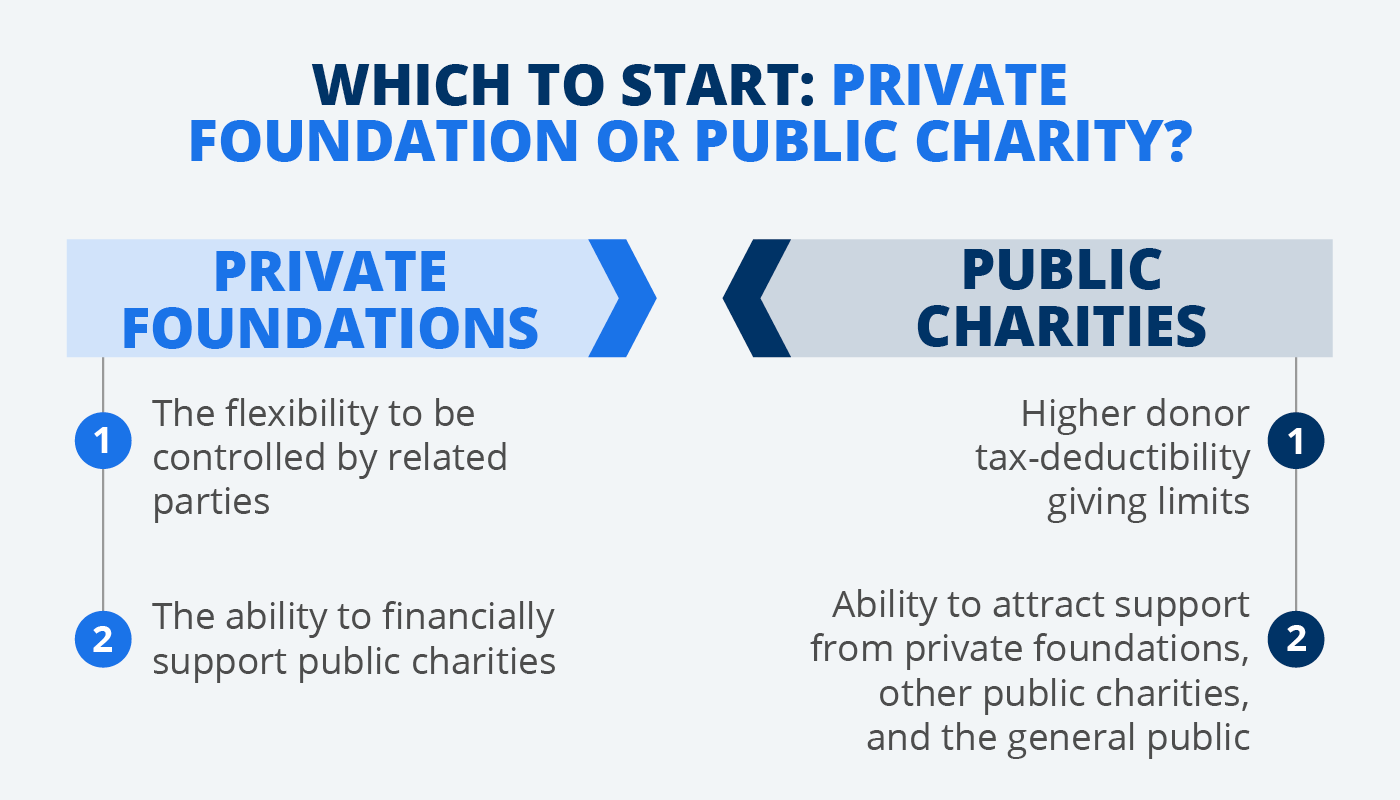
The simplest way to compare the two is side by side. A private giving fund is funded by a single source or family, whereas a public giving fund draws contributions from the general public. Control is another key point of difference, with private funds offering full donor control and public funds involving shared or provider-managed arrangements. On cost and capital, private funds usually require a higher entry point and their own structure, while a sub-fund within a public fund has a lower entry point. The compliance burden also differs, handled by you or your adviser for a private fund and by the provider for a public fund. When comparing your options for giving funds, it helps to weigh these factors against your capacity and how hands-on you want to be. In short, private funds suit substantial, involved givers, while public funds suit those wanting simplicity.
Which One Is Right for You?
The right choice depends on your circumstances and how involved you want to be. A private giving fund tends to suit those with significant capital who want control and a lasting family legacy, and who are comfortable taking on, or delegating, the associated responsibilities. A public giving fund or sub-fund suits those who want the tax benefits and the structure of giving without the higher entry point and administrative load. The decision is less about which is better and more about matching the structure to your resources and intentions.
What They Have in Common
Despite their differences, the two structures share a great deal. Both offer an upfront tax deduction that can be spread over several years, and both allow the invested capital to grow tax-free. In each case, distributions can only be made to eligible DGR charities, and both are subject to a minimum annual distribution requirement. Keeping these shared features in mind is a useful reminder that the choice between them is about fit, not about one being superior to the other.
A Note on Recent Changes
It is worth being aware that the government has introduced reforms in this space, including the move to the giving funds terminology and an updated minimum annual distribution rate. These changes are aimed at increasing the flow of philanthropic funding to Australian charities. Because the rules continue to evolve, it is sensible to check current regulator guidance before making any decisions. This is a developing area, so staying informed is important.
Frequently Asked Questions
Is a donation to a giving fund tax deductible?
Yes. Contributions to both private and public giving funds are generally tax deductible, and the deduction can usually be spread over up to five years.
Can I control which charities my giving fund supports?
With a private giving fund, you have full control over grant decisions. With a public giving fund or sub-fund, you can typically recommend charities, though the provider retains oversight.
How much money do I need to start a private giving fund?
There is no fixed legal minimum, but private funds generally need substantial capital to be worthwhile. Public giving fund sub-funds usually have a much lower entry point.
What is a sub-fund in a public giving fund?
A sub-fund is a named giving fund held within a larger public fund. It lets you give in a structured way without setting up your own separate structure, with the provider managing compliance.
In Closing
The core distinction comes down to control and accessibility. Private giving funds offer control and legacy for substantial, hands-on donors, while public giving funds offer accessible, low-admin structured giving for those who prefer simplicity. Both are powerful, tax-effective ways to make a lasting difference. This article is general information only and not personal tax or legal advice. To find the right fit for your situation, speak with an accountant or adviser and book a consultation to explore your options.