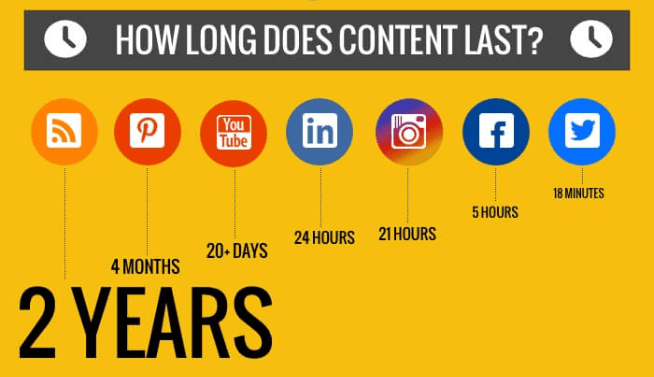

Most social media teams evaluate content almost immediately. A post goes live, the first few hours are monitored closely, and the team quickly decides whether it was a success or a failure. If the numbers are strong, the post is celebrated. If the numbers are weak, attention shifts to the next piece of content.
That habit makes sense in fast-moving feeds, but it can also create a major strategic blind spot. Not every valuable post performs its most important work on the day it is published. Some content continues attracting profile visits, search traffic, saves, shares, and new viewers long after the initial distribution spike has disappeared.
For brands pursuing sustainable social media growth, this longer time horizon matters. A social account should not behave like a newspaper where yesterday’s content immediately becomes irrelevant. It should gradually develop into a searchable, useful library in which older posts continue creating value while new content expands the surface area through which people can discover the brand.
Social Media Content Has More Than One Life
The traditional feed encourages marketers to think chronologically. A post appears, gets distributed, and then moves downward as newer posts replace it. This creates the impression that social content has a very short lifespan.
User behavior is more complicated. People discover old videos through search, recommendations, hashtags, creator profiles, shared links, and platform suggestions. Someone who encounters a brand for the first time may spend several minutes exploring older content before deciding whether the account is worth following.
This means a post can have several different lives. Its first life is the immediate distribution that happens after publishing. Its second life begins when people discover it through the profile or search. A third life may appear months later if the topic becomes relevant again or the platform begins recommending the post to a new audience.
Brands that understand this stop treating every piece of content as disposable.
The Profile Is Becoming a Content Library
When someone becomes curious about a company, visiting the profile is often the next step. At that moment, the brand is no longer competing only for a single impression. The visitor may evaluate an entire body of work.
A poorly structured account creates friction. Important information is buried, older posts have no clear relationship to one another, and a new visitor has difficulty understanding what the company actually knows or offers. A well-structured account behaves more like a useful resource center, with recognizable themes and enough depth to reward exploration.
For a social media technology company, that library might contain practical advice on content planning, examples of AI-assisted creative workflows, explanations of multi-platform management, social analytics insights, and product demonstrations. Together, those pieces provide far more context than one isolated promotional post could ever deliver.
This is one reason social media growth should be connected to content architecture, not only content production.
Searchable Content Creates a Different Kind of Reach
Feed-based reach is highly dependent on timing. Searchable content works differently because the audience discovers it when they have a specific question or need.
A marketer might search for ways to schedule content across multiple platforms. A small business owner may look for ideas on using AI to create social posts. A creator may search for methods to organize a monthly content calendar. These users are not passively scrolling; they are actively looking for information.
Content designed around those real questions has the potential to remain useful far beyond its original publication date. It also tends to attract users with clearer intent because the discovery happened around a specific problem.
Brands do not need to turn every post into an SEO article. They simply need to recognize that titles, captions, spoken language, descriptions, and on-screen text can help both users and platform systems understand what a piece of content is actually about.
Evergreen Does Not Mean Boring
Some marketers hear the word “evergreen” and imagine generic advice that has been repeated thousands of times. That is not what valuable evergreen content needs to look like.
A strong evergreen post addresses a recurring problem with enough specificity to remain useful. Instead of publishing “Five Social Media Tips,” a company could explain how a small team can manage multiple social channels without creating a separate workflow for each one. Rather than writing “Why Analytics Matters,” it could show how to distinguish between reach problems and conversion problems when reviewing social performance.
The topic remains relevant because the underlying problem persists. The content feels fresh because the explanation is specific.
Evergreen content works best when it answers questions people are likely to continue asking six months from now.
Trend Content and Evergreen Content Should Support Each Other
A healthy social strategy does not require choosing between timely content and long-term content. The two can strengthen each other.
Trend-driven posts can create bursts of discovery by connecting the brand to current conversations. Evergreen posts provide depth when that new audience investigates further. Someone may first encounter a company through a timely AI discussion, then visit the profile and find a useful guide to building a repeatable content workflow.
The reverse can also happen. A user may discover an older educational post through search, visit the profile, and then see the brand actively participating in current conversations. This combination signals both expertise and relevance.
The important point is that a social account should not depend entirely on content that expires in 48 hours. A portion of the library should continue working even when the company is not actively promoting it.
Content Decay Is a Strategic Signal
Even good evergreen content does not remain equally useful forever. Platforms change, product interfaces evolve, audience expectations shift, and examples become outdated. This creates content decay.
The wrong response is to ignore older posts simply because they already exist. If a topic continues attracting interest but the information has become outdated, that post has identified an opportunity for a refreshed version.
A marketing team can periodically review older high-value content and ask whether the core idea is still correct, whether the examples remain relevant, whether new data has changed the recommendation, and whether the topic deserves a new format. Updating a proven topic is often more strategically useful than constantly searching for entirely new ideas.
This creates a healthier balance between originality and maintenance.
The Best Archive Reveals What the Brand Stands For
Imagine visiting two company profiles. The first contains dozens of unrelated posts created around whatever was popular each week. The second contains years of content that consistently explores a recognizable set of problems from different angles.
The second account immediately communicates expertise. Even before reading everything, a visitor can see what the company understands and what it repeatedly chooses to discuss.
That archive becomes part of the brand’s positioning. It demonstrates that the company has spent time thinking deeply about its market rather than simply reacting to whatever happened to be trending.
This is especially valuable for SaaS products and professional tools, where potential customers often need confidence that the company understands their workflow before they are willing to evaluate the software itself.
Content Series Improve Discoverability
One practical way to strengthen a social archive is through recurring content series. Instead of publishing isolated educational posts, a brand can group them around recognizable themes.
A social media platform might develop a series about multi-platform workflow problems, another around AI-assisted content creation, another around social analytics, and another around scaling content operations for small teams. Each individual post needs to stand on its own, but the series gives visitors a reason to continue exploring.
Series also make planning easier because the marketing team is not inventing a completely new editorial universe every week. New ideas can be added to existing content territories, which helps the account develop greater topical depth over time.
For platforms like Spira.ai, this approach fits naturally because the product sits at the intersection of AI content creation, publishing workflows, scheduling, and social performance. Those areas can become durable editorial themes rather than occasional product mentions.
AI Can Help Maintain the Long Tail
Managing a growing content archive creates an operational challenge. As the number of posts increases, it becomes harder to remember which topics have already been covered, which ideas are becoming outdated, and which older posts deserve another version.
AI can help organize this process by identifying recurring themes, grouping related content, suggesting updated angles, and adapting proven ideas into new formats. The objective is not simply to recycle old posts. It is to preserve useful knowledge while giving it a new expression when audience behavior or platform formats change.
A platform such as Spira.ai can fit into this broader workflow by helping teams generate content variations, schedule publishing, coordinate multiple channels, and keep social production organized. For brands managing a large content library, that type of connected workflow can reduce the friction involved in maintaining both new and existing content.
The long-term advantage comes from treating content as an accumulating asset rather than a stream that disappears behind the next post.
Multi-Platform Publishing Extends Content Lifespan
The same idea can also have different lifespans on different platforms. A short video might receive immediate attention on one network but continue generating views much longer on another. A professional insight may perform modestly on a visual platform while creating meaningful discussion on LinkedIn.
This means content lifespan should not be evaluated only at the individual-post level. Brands can identify ideas that remain useful and adapt them to the environments where they have the best chance of continuing to circulate.
The key is adaptation, not duplication. A detailed YouTube explanation may become a concise LinkedIn framework, an Instagram carousel, or a shorter educational video. The idea remains consistent, while the presentation matches the platform.
For smaller teams, integrated creation and scheduling systems can make this multi-platform approach significantly easier to manage.
Old Content Can Support New Product Education
A growing archive also becomes useful when a company launches a new feature or enters a new market. Instead of explaining the entire problem from the beginning, the brand can connect new product information to educational content that already exists.
Suppose a social media platform introduces a new analytics capability. Rather than publishing only a feature announcement, the company could reference an existing body of content explaining common measurement problems, why certain metrics can be misleading, and how teams should evaluate performance across different channels.
The new product then appears inside an established intellectual context. This is much stronger than asking the audience to care about a feature simply because it is new.
Long-term content therefore reduces the amount of education every product announcement must perform by itself.
Social Media Growth Should Compound
Many marketing activities start from zero every time. A paid campaign stops generating results when the budget stops. An event ends. A temporary promotion disappears.
Content can behave differently.
A useful post published today can still attract a new viewer months later. Ten strong posts create more discovery opportunities than one. Fifty relevant posts give visitors more reasons to explore. Over time, a high-quality archive increases the number of paths through which the right audience can encounter the brand.
This is what makes long-tail content strategically interesting. The goal is not simply to create more assets. It is to create an expanding body of useful material that continues supporting discovery, education, and trust.
When this happens, social media growth begins to behave less like a sequence of isolated campaigns and more like an accumulating media asset.
Build for the Visitor Who Arrives Six Months From Now
One useful test for any social content strategy is to imagine a visitor discovering the account six months in the future. Would the old content still help them understand the market? Would they find useful explanations, examples, and perspectives? Or would the profile look like a collection of expired trends and forgotten promotions?
This mindset changes editorial decisions. It encourages teams to create more content with lasting explanatory value, maintain important topics when information changes, and develop recognizable areas of expertise.
Not every post needs to survive for years. Social media should still be timely, creative, and responsive. But a strong account should contain enough durable material that future visitors benefit from work the company has already done.
Conclusion
Social media naturally encourages short-term thinking because every feed is constantly replacing yesterday’s content with something new. But brands should not assume that every post becomes worthless as soon as the initial engagement slows.
A mature social media growth strategy builds for multiple time horizons. Timely content captures current attention, while evergreen content continues serving users who arrive through search, recommendations, profile exploration, and future relevance. Older posts are reviewed, strong ideas are refreshed, and recurring topics gradually become a recognizable knowledge library.
For businesses, this creates an important shift. The social account stops being merely a place where content is published and begins functioning as an owned media asset that becomes more useful as it grows.
The goal is not just to win the first 24 hours.
It is to create content that still deserves to be discovered long after the publishing notification has disappeared.