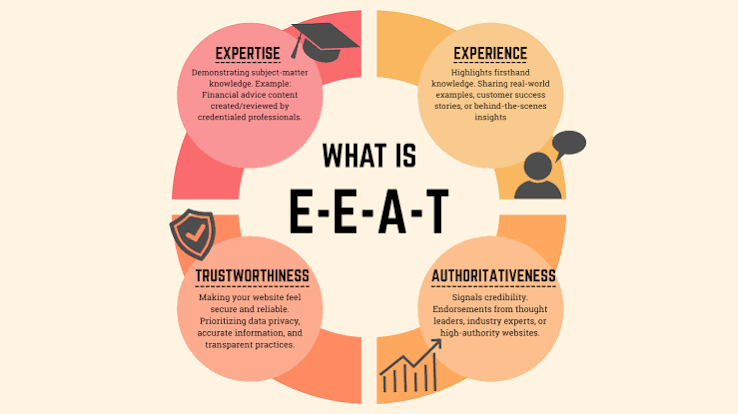

E-E-A-T — Experience, Expertise, Authoritativeness, and Trustworthiness — gets referenced constantly in SEO discussions, often as a vague catch-all for “write good content.” That framing undersells it. E-E-A-T isn’t a ranking factor in the direct, measurable sense that page speed or mobile-friendliness are; it’s a framework Google’s quality raters use to evaluate content, and understanding what each component actually asks for makes it far more actionable than treating it as a buzzword.
Experience Is the Newest and Most Overlooked Component
Added more recently than the other three, experience specifically asks whether the content creator has actually done, used, or lived through what they’re writing about. A product review written by someone who purchased and used the item carries a different quality signal than one assembled entirely from other reviews and spec sheets. In practice, this means first-person detail, original photos, or specific anecdotes matter more than they used to — content that could have been written by anyone with access to Google is exactly what this component is designed to deprioritize.
Expertise Is Contextual, Not Universal
What counts as sufficient expertise varies enormously by topic. Medical and financial content — Google’s “Your Money or Your Life” categories — are held to a much higher standard than a recipe blog or a hobbyist review site. For YMYL topics, formal credentials and cited sources genuinely matter. For lower-stakes topics, demonstrated practical knowledge and clear, accurate information can be sufficient even without formal qualifications.
Authoritativeness Is Built Outside the Page Itself
This is the component most directly connected to off-page signals. A site’s reputation — reflected in mentions, citations, and links from other authoritative sources in the same field — feeds directly into how authoritative any individual page appears. This is part of why backlink quality and content quality can’t really be optimized in isolation from each other; a page can be well-written and still lack authority if nothing else in the space treats the site as a credible source.
Trustworthiness Is the Umbrella Above the Other Three
Google’s own guidance treats trust as the most important member of the group, since content can have experience, expertise, and authority behind it and still fail to be trustworthy if it’s inaccurate, manipulative, or lacks basic transparency. Clear authorship, accurate citations, secure browsing, honest disclosure of affiliate or sponsored content, and a strong SEO link-building strategy all feed into this final layer.
Turning the Framework Into Practice
Concretely, this means attributing content to real authors with visible credentials, adding original detail that couldn’t have been copied from a competitor’s page, citing primary sources rather than other blog posts, and being transparent about affiliations or compensation. None of this is a checklist to complete once — it’s an ongoing standard that shapes how content gets planned, written, and updated over time. For teams looking to see this applied consistently across a range of topics, browsing Expert SEO insights on sites that treat E-E-A-T as a genuine editorial standard, rather than a keyword to sprinkle into a content brief, is a reasonable way to calibrate what good execution actually looks like. The sites that consistently perform well over multiple algorithm updates tend to be the ones that treated E-E-A-T as an operating principle from the start, not a patch applied after a ranking drop. Retrofitting trust signals onto existing content is possible, but it’s considerably harder than building content strategy around them from the outset.